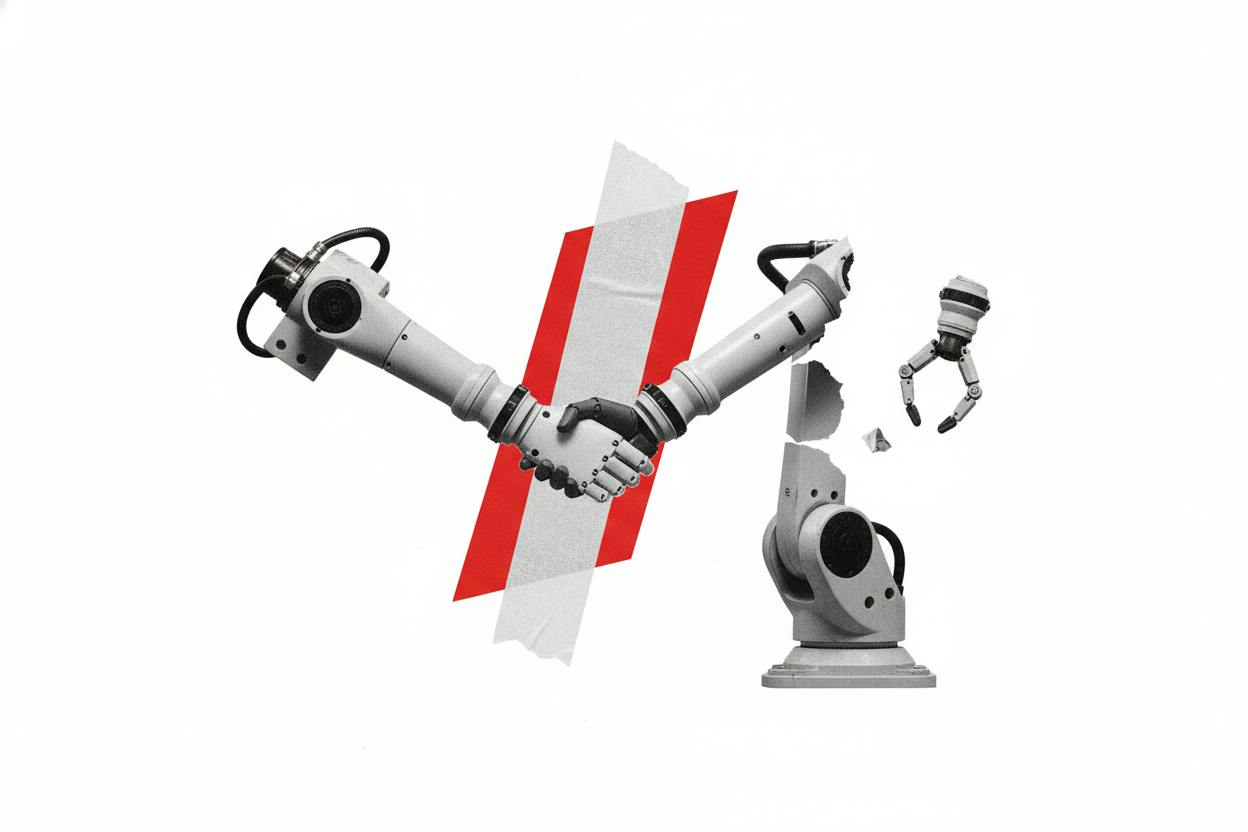
Swiss industrial group ABB is rethinking the future of its robotics division after a Chinese regulatory body blocked its planned $5.4 billion sale to Japan's SoftBank, according to a Bloomberg report on November 7. The decision has forced both companies to consider alternative deal structures that could reduce regulatory friction, including carving out the China operations or spinning off the unit entirely.
The proposed transaction would have given SoftBank, a technology investment firm, a larger foothold in the factory robotics market. But the Office of the Working Mechanism for Foreign Investment Security Review stepped in, halting the deal and leaving both sides to revisit how—not whether—to proceed.
Why the deal hit a wall
Cross-border deals involving sensitive technology or significant market presence often face scrutiny from national security review bodies. In this case, China's review office determined that the sale posed concerns, likely related to the strategic nature of robotics and automation technology. Such reviews are becoming more common globally, as governments tighten oversight of foreign investments in critical industries.
For ABB, the setback is significant. The company had agreed to sell its robotics unit to SoftBank at a valuation of $5.4 billion, a price that reflected the unit's strong market position and growth potential. With that path now closed, ABB's advisers are exploring alternatives that could still unlock value but with less regulatory risk.
Possible paths forward
One option under consideration is a China carve-out, where ABB would sell only the non-China parts of the robotics business, keeping the China operations under its own control. This approach could appease regulators who may be concerned about foreign ownership of technology with potential military or dual-use applications. It would also allow ABB to retain a presence in one of the world's largest manufacturing markets.
Another option is a demerger, spinning off the robotics unit into a separate publicly traded company. This would give ABB shareholders direct exposure to the robotics business while avoiding the need for a buyer altogether. Demergers are often used when a sale is not feasible or when a company wants to unlock value without giving up control.
Bloomberg also cited the possibility of a sale to a different buyer, but at a significantly lower valuation of $2-3 billion. That wide gap—roughly half the original price—highlights how much regulatory uncertainty can erode deal value.
What this means for investors
For everyday investors, this episode is a reminder that deal structure can be worth billions. When a cross-border transaction faces regulatory hurdles, the simplest path to closing disappears. A redesign like a carve-out or demerger adds complexity, makes the asset harder to underwrite, and narrows the pool of buyers willing to take on the risk. As a result, sellers often accept what is known as a regulatory discount—a lower price in exchange for certainty and speed.
This pattern is likely to repeat in other China-exposed industrial and tech assets. Unless companies can ring-fence sensitive operations upfront, bids may come with bigger price cuts to compensate for approval uncertainty. Investors should watch for similar dynamics in other cross-border deals, especially those involving technology, data, or critical infrastructure.
For ABB shareholders, the immediate impact is uncertainty. The company's robotics unit remains a valuable asset, but its future ownership is now unclear. The demerger option, if pursued, could create a new standalone company with its own stock, potentially offering investors a more direct way to bet on factory automation trends. However, the lower sale price option suggests that ABB may have to accept a haircut if it wants to exit the business quickly.
In the broader context, this deal's collapse adds to a growing list of cross-border transactions that have been blocked or restructured due to national security reviews. As governments become more protective of strategic industries, investors should expect more friction in global M&A, particularly in sectors like robotics, semiconductors, and artificial intelligence.
For now, ABB and SoftBank have not publicly commented on the next steps. But the fact that they are exploring alternatives rather than walking away suggests both see strategic value in the robotics business. The question is at what price—and under what structure—that value can be realized.