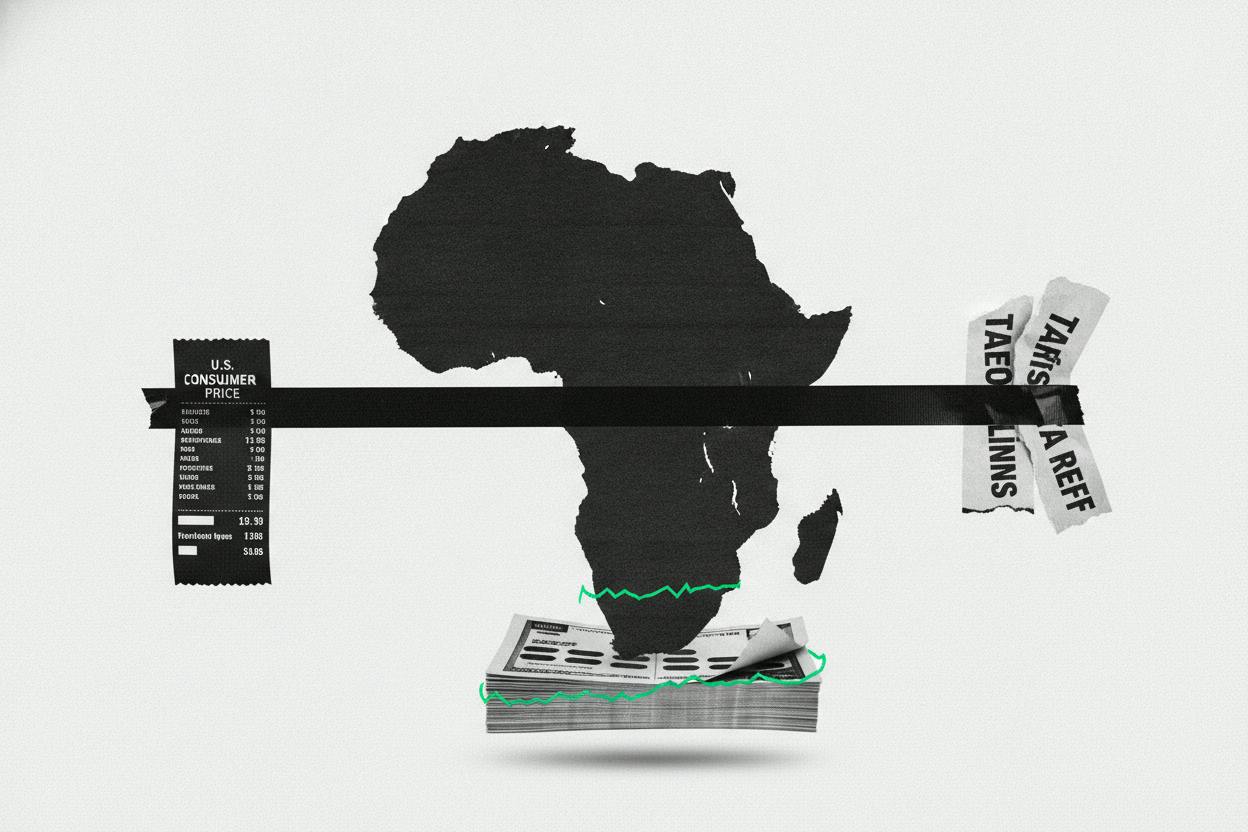
African markets are navigating a tricky global backdrop this week, with investors on edge over renewed US tariff threats and a key inflation reading that could shape Federal Reserve policy. At the same time, Nigeria is making a homegrown fiscal move that could have lasting effects on its bond market and currency.
Global risk-off mood weighs on emerging currencies
The immediate pressure comes from abroad. Fresh talk of US tariffs has rattled Asian markets, particularly chip-heavy economies like Taiwan and South Korea, which are deeply tied to global supply chains. As tariff probe talk hits Asian chip stocks, investors are reminded that trade policy can shift quickly, adding to an already cautious mood.
Add in sliding oil prices, and the environment becomes tougher for many emerging-market currencies. When uncertainty rises, investors tend to favor the US dollar, pulling money out of riskier assets. That dynamic is playing out in South Africa, where the rand softened ahead of the latest US inflation data.
The logic is straightforward: if US inflation comes in hotter than expected, traders may bet on the Federal Reserve keeping interest rates higher for longer. That tends to lift US bond yields, making dollar-denominated assets more attractive and drawing capital away from emerging markets like South Africa.
Nigeria: steady rates, tighter budget
Nigeria's story is more domestic. The central bank held its main interest rate unchanged, arguing that policy is already tight enough to bring inflation down. That decision signals a pause after a prolonged hiking cycle, as policymakers weigh the need to curb price growth against the risk of stifling economic activity.
Separately, President Bola Tinubu has asked lawmakers to trim the 2026 federal budget to 65.2 trillion naira (about $48 billion), down from the 68.3 trillion naira previously approved. The cut is modest in percentage terms, but it carries outsized significance for Nigeria's financial markets.
What a smaller budget means for bonds and the naira
Nigeria's budget math matters because it drives government borrowing. If planned spending drops, the government may need to issue fewer Treasury bills and bonds. With less new debt for local banks, pension funds, and other institutional investors to absorb, those investors often accept a smaller premium for holding longer-dated securities. That can ease yields along the curve, even if the central bank doesn't cut rates.
This dynamic could reshape Nigeria's local yield curve, which has been elevated as the government borrowed heavily to fund deficits. A reduced issuance calendar would be a welcome relief for a market that has been flooded with paper in recent years.
The naira could also get a subtle boost. A smaller borrowing need doesn't solve Nigeria's chronic dollar shortages, but it can reduce fears of fiscal stress. Investors demand a higher risk premium to hold naira assets when they worry about the government's ability to manage its finances. Cleaner fiscal arithmetic, even at the margin, can support near-term currency stability by improving confidence in the funding plan.
What to watch next
For investors, the key near-term catalyst is the US inflation report. A hot number could strengthen the dollar and put further pressure on emerging-market currencies, including the rand and the naira. Conversely, a cooler reading might ease those pressures and give African assets some breathing room.
Beyond the data, tariff developments remain a wildcard. As China tech shares slide on fresh US tariff talk, the ripple effects are being felt globally. For African markets, the transmission is indirect but real: slower growth in Asia could dampen demand for commodities, while a stronger dollar complicates debt servicing for many emerging economies.
Nigeria's budget process will also be watched closely. If lawmakers approve the lower spending figure, it would mark a credible step toward fiscal consolidation. But the real test will be execution—whether the government can stick to the plan and avoid supplementary budgets that blow out the deficit.
Bottom line for everyday investors
For ordinary investors, the takeaway is that African markets are caught between global and local forces. The global backdrop—US inflation, tariff policy, oil prices—sets the tone for currencies and capital flows. Local policies, like Nigeria's budget adjustment, can influence bond yields and currency stability over time.
None of this is a call to buy or sell any specific asset. Rather, it's a reminder that emerging-market investing carries unique risks and rewards. Events like these can create volatility, but they also highlight why diversification and a long-term perspective matter.
As the week unfolds, the US inflation print will likely dominate headlines. But for those focused on Africa, Nigeria's fiscal path deserves equal attention—it may quietly shape the region's investment landscape for years to come.