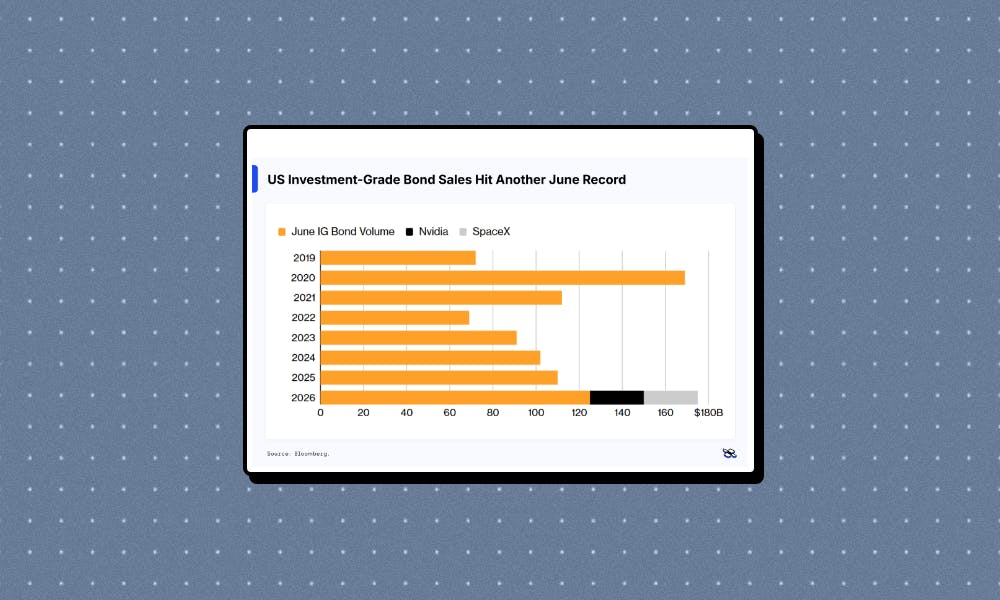
US investment-grade companies have sold a record $175 billion in bonds this June, a 60% increase from the same period last year. The surge, driven by insatiable investor demand and a wave of borrowing tied to the artificial intelligence spending boom, has already surpassed the previous June record set in 2020, when interest rates were at historic lows.
Tech Giants Lead the Charge
The borrowing spree is concentrated among the biggest names in technology. Nvidia and SpaceX each sold $25 billion worth of high-grade bonds this month alone. They join a growing list of tech firms—including Alphabet, Amazon, Oracle, and Meta—that have tapped the bond market this year to fund their AI ambitions.
These companies are raising capital to build data centers, acquire specialized chips, and develop large language models. The bond market, traditionally a source of financing for industrial and financial firms, is now a key funding channel for the AI revolution.
What This Means for Investors
For everyday investors, the record issuance raises an important question: how diversified is your portfolio really? Many investors hold bond funds or ETFs that track the investment-grade market. As tech companies issue more debt, they make up a larger share of these indexes. A portfolio that appears balanced between stocks and bonds may actually be heavily tilted toward the same tech giants.
“If your bond holdings are dominated by the same companies you own in your stock portfolio, you’re not getting the diversification you think,” said a market strategist. “In a downturn, both could fall together.”
This concentration risk is especially relevant given the AI spending boom. While the technology promises long-term growth, it also carries uncertainty. If AI investments fail to deliver expected returns, both the stocks and bonds of these companies could suffer.
Record Demand Meets Record Supply
The $175 billion in June issuance is not just a record—it’s a sign of how hungry investors are for yield. Despite higher interest rates, demand for investment-grade bonds remains strong, particularly from pension funds, insurance companies, and foreign investors. The flood of supply has been absorbed without a significant rise in yields, indicating robust appetite.
However, the sheer volume of new debt could eventually pressure prices. If interest rates rise further or the economy slows, the market may struggle to digest future issuance. Investors should watch for signs of oversupply, such as widening credit spreads.
Broader Market Implications
The bond market surge is part of a larger trend: the AI boom is reshaping capital markets. Tech companies are not only driving stock market gains but also transforming the debt market. This convergence means that traditional diversification strategies may need rethinking.
For context, the previous June record was set in 2020, when the Federal Reserve slashed rates to near zero to combat the pandemic. Today’s record is occurring in a much higher rate environment, underscoring the strength of investor demand.
Investors should also consider the impact on other sectors. As tech companies crowd the bond market, they may crowd out issuers from other industries, potentially raising borrowing costs for non-tech firms. This could create ripple effects across the economy.
What to Watch Next
Market participants will be watching for signs that the AI spending boom is translating into revenue growth. If companies like Nvidia and SpaceX can generate strong returns on their AI investments, the bond market will likely remain supportive. But if the hype fades, the debt burden could become a concern.
For now, the message is clear: the AI revolution is not just a stock market story. It’s reshaping the bond market too, and investors need to look under the hood of their portfolios to understand their true exposure.