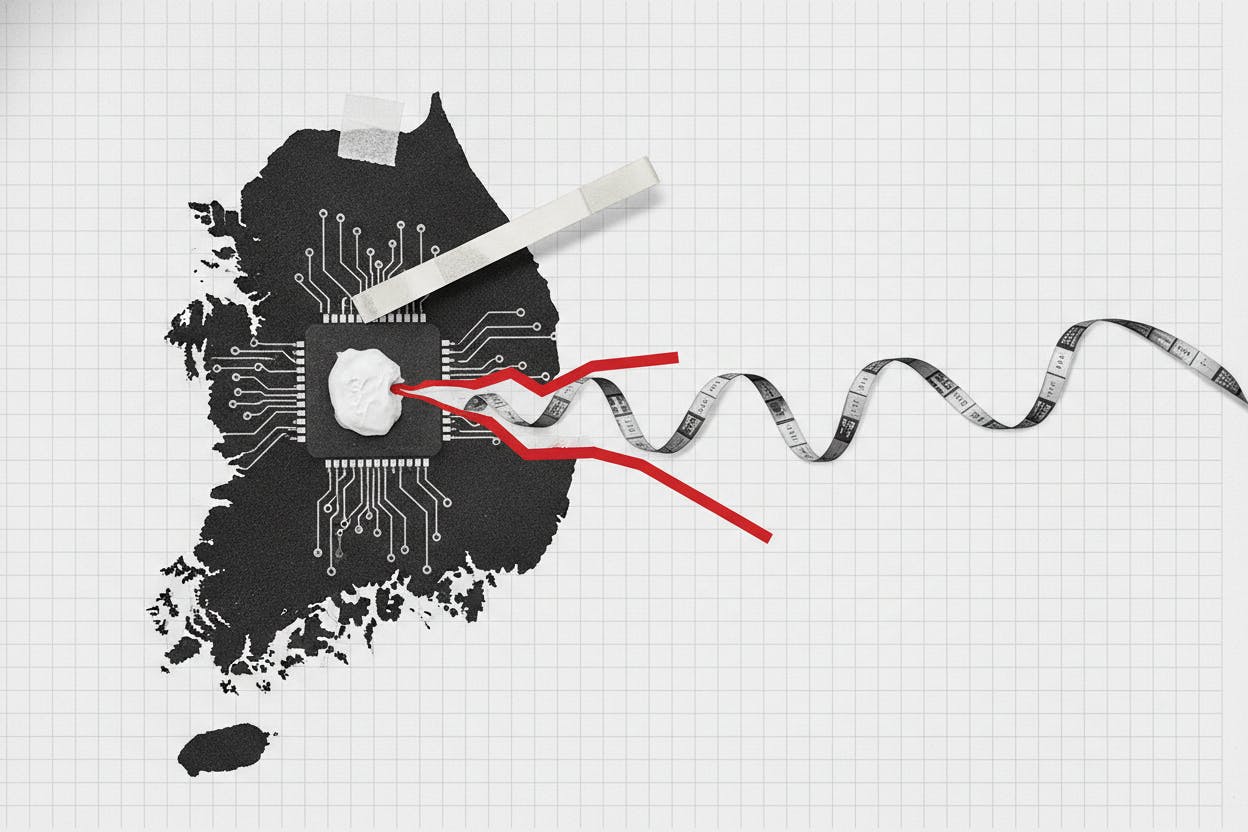
AI stock jitters spread from South Korea to US trading screens on Tuesday after SK Hynix, a key memory chip supplier to the artificial intelligence industry, saw its shares tumble 9.61% even though the company reported a sixfold jump in quarterly profit. The sharp sell-off is a reminder that even the biggest winners in the AI boom can fall hard when investor expectations get stretched too far.
What happened with SK Hynix?
SK Hynix, one of the world's largest memory chip makers, posted a massive profit increase—quarterly earnings surged roughly six times compared to a year ago. That kind of growth would normally send a stock higher. But instead, investors sold off the shares, sending them down nearly 10% in a single session. The reason: expectations had already been priced in, and perhaps overshot what the company could deliver going forward.
The move was part of a broader sell-off in South Korea's stock market. The KOSPI index dropped nearly 6% on Tuesday after plunging more than 10% the previous day to a three-month low. South Korea's finance minister, Koo Yun-cheol, pointed to a specific factor amplifying the swings: single-stock leveraged exchange-traded funds (ETFs). These are funds that use borrowed money to amplify the daily returns of a single stock, often by two or three times. Koo said these products were introduced without enough consideration because they can intensify market volatility.
Leveraged ETFs are popular with retail traders looking for quick gains, but they can also accelerate losses when a stock turns down. In a market like South Korea's, where individual investors are highly active, the effect can be especially pronounced.
Why this matters for the AI trade
The SK Hynix sell-off is not an isolated event. It reflects a growing nervousness about whether the AI boom has pushed stock prices too high, too fast. Over the past year, companies tied to AI—chip makers, data center builders, and software firms—have seen their valuations soar as investors bet on a future powered by artificial intelligence. But as earnings season rolls on, the bar for beating expectations keeps rising.
This week, all eyes are on two of the biggest names in tech: Microsoft and Meta Platforms. Both are scheduled to report quarterly results, and both have heavy exposure to AI spending. Microsoft has invested billions in AI infrastructure and partnerships, while Meta is pouring money into AI-driven advertising and content tools. If their results disappoint or their outlooks fall short of lofty expectations, the jitters could spread further.
Investors are also watching the Federal Reserve, which is set to announce its latest interest rate decision. While the Fed is widely expected to hold rates steady, any hints about future cuts or concerns about inflation could shift the mood in markets. Higher rates tend to hurt high-growth stocks like AI plays because they reduce the present value of future earnings.
The broader backdrop is one of caution. Earlier this month, the Nikkei slid 1.5% as chip stocks retreated ahead of US tech earnings, showing that the anxiety is not limited to South Korea. Meanwhile, other AI-adjacent companies like Generac has ridden the AI data center boom to strong results, but even that kind of success can be overshadowed by broader market jitters.
What it means for everyday investors
For ordinary investors, the SK Hynix episode is a useful reminder that even the most exciting trends come with risk. The AI boom is real—companies are spending heavily on chips, data centers, and software—but stock prices don't always move in a straight line. When expectations get too high, even great earnings can lead to a sell-off.
This is not a reason to panic or to abandon AI stocks altogether. But it is a reason to check whether your portfolio is too concentrated in a single theme. Diversification across sectors and geographies can help cushion the blow when one area of the market gets hit.
Another takeaway: be careful with leveraged ETFs. These products can magnify gains, but they also magnify losses. In volatile markets, they can lead to rapid, painful drawdowns. South Korea's finance minister has flagged this issue, and it's worth keeping in mind if you're tempted by these high-octane funds.
Finally, pay attention to the Fed. Interest rates remain a key driver for growth stocks. If the Fed signals that rates will stay higher for longer, that could put additional pressure on AI and tech shares. Conversely, any hint of rate cuts could reignite the rally.
For now, the AI trade is on shaky ground. The next few days, with earnings from Microsoft and Meta and the Fed decision, will likely determine whether this is just a temporary wobble or the start of a deeper correction.