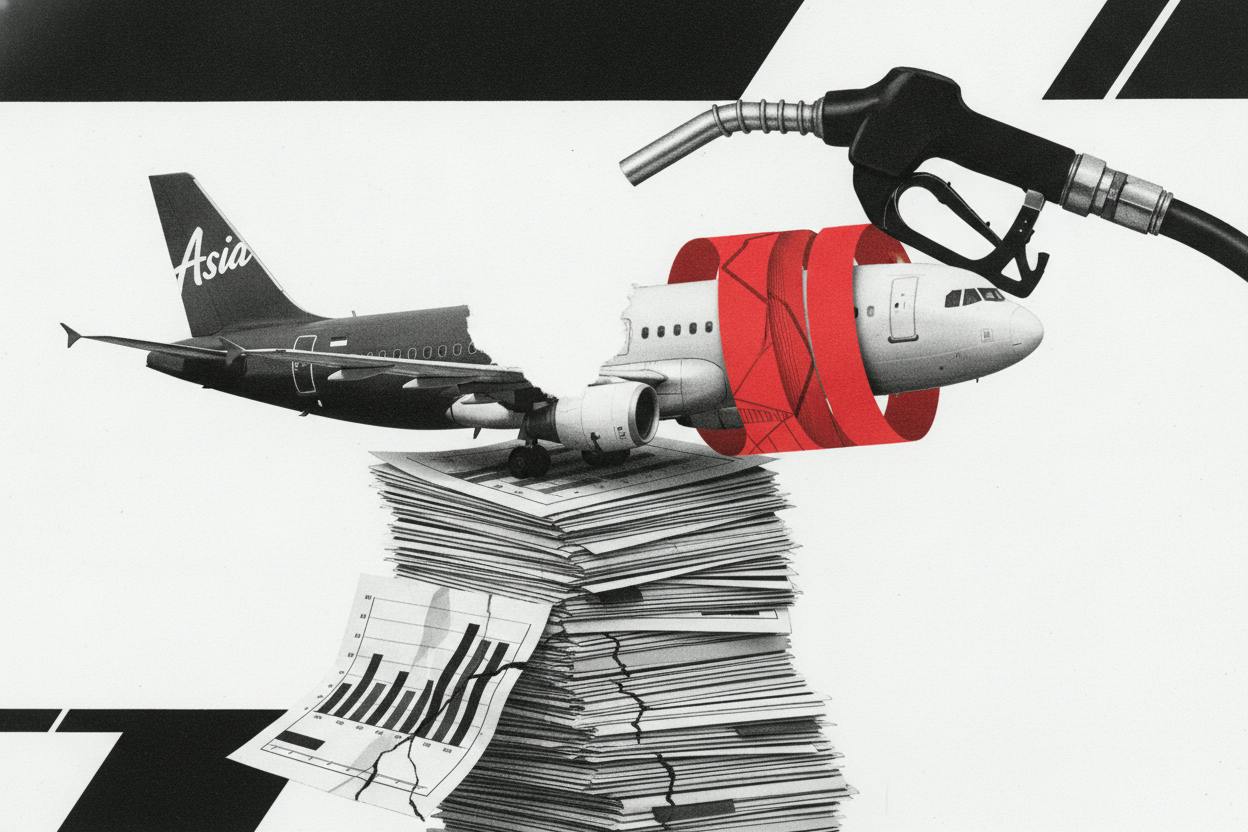
Malaysian budget carrier AirAsia narrowed its third-quarter net loss, but the airline remains firmly in the red as jet fuel costs, currency swings, and a large chunk of its fleet sitting idle continue to bite.
The company posted a net loss of 381.3 million ringgit (about $81 million) for the three months ended September 30th. That's an improvement from the previous quarter, but the airline still faces a tough operating environment. Revenue fell 8.4% year-on-year after the carrier cut capacity by 12% to streamline operations.
Why the losses persist
The squeeze is partly physical. At the end of the quarter, 31% of AirAsia's 234-plane fleet was out of service. That means even when demand is strong, the airline simply doesn't have enough aircraft in the air to fully capitalise. Grounded planes also mean fixed costs—like leasing, maintenance, and crew—are spread over fewer flights, which hurts profitability.
Costs are also working against the airline. Jet fuel is priced in US dollars, and when local currencies weaken against the greenback, fuel bills effectively rise. AirAsia booked a 141.9 million ringgit foreign-exchange loss in the quarter as regional currencies softened. That's a reminder of how vulnerable airlines are to currency movements, especially those that earn revenue in local currencies but pay for fuel in dollars.
The airline's decision to cut capacity by 12% was aimed at streamlining operations, but it also means less revenue coming in. For a budget carrier, keeping planes full and flying is key to covering costs, so a deliberate reduction in flying capacity is a double-edged sword.
What this means for investors
For everyday investors, AirAsia's results highlight the risks that come with airline stocks. The industry is highly sensitive to fuel prices, currency fluctuations, and operational disruptions—all of which are largely outside a company's control. Even when an airline manages to narrow its losses, as AirAsia did, the path to sustained profitability can be slow and bumpy.
The grounding of a significant portion of the fleet is a particular concern. It suggests that the airline's ability to grow revenue is capped until those planes return to service. Investors will be watching closely for updates on when the fleet is expected to be fully operational again.
Fuel costs remain a wildcard. If oil prices stay high or rise further, AirAsia's fuel bill will keep climbing. Conversely, a drop in oil prices could provide some relief. Currency movements are another factor to monitor—if the ringgit strengthens against the dollar, the airline's fuel costs and foreign-exchange losses would ease.
AirAsia is not alone in facing these headwinds. Many airlines across Asia are dealing with similar pressures, from weaker crude prices to regional currency volatility. The broader economic backdrop, including inflation and interest rates, also plays a role in consumer travel demand.
For investors, the key takeaway is that airline stocks are not for the faint-hearted. They can offer big upside when conditions are favourable, but they also carry significant downside risk when fuel prices spike, currencies move against them, or operational issues arise. Diversification and a long-term perspective are essential if you're considering exposure to this sector.
AirAsia's management will need to show progress on bringing planes back into service and controlling costs before the market can feel confident about a return to profitability. Until then, the airline's financial performance is likely to remain under pressure.
As always, it's important to do your own research and consider how any investment fits into your overall portfolio. Airline stocks can be rewarding, but they come with a high level of risk that may not suit every investor.