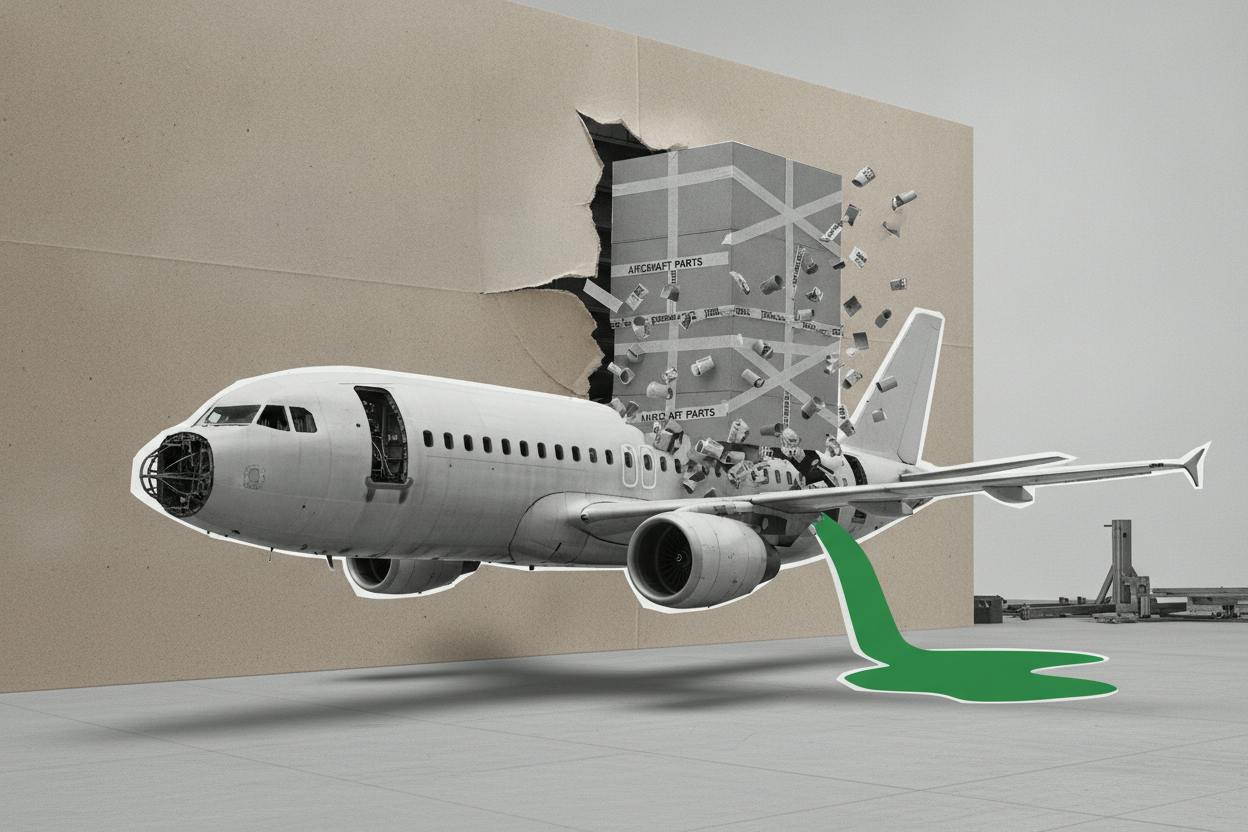
Airbus investors have been waiting for the plane maker to finally get its production lines humming again. On October 28, when the company reports third-quarter results, they may get the reassurance they've been looking for. Metzler Capital Markets, a German broker, expects Airbus to reaffirm its target of roughly 870 aircraft deliveries for 2026, following management's recent comments that final assembly is proceeding without fresh supply-chain problems.
For Airbus, delivery targets are where factory reality meets investor expectations. A plane can be largely built, but the company only books the final sale and collects the big milestone payments when the jet is physically handed over to the customer. That's why delivery numbers are so closely watched — they directly affect revenue recognition and, more importantly, cash flow.
Why the delivery target matters
Airbus has been grappling with supply-chain bottlenecks for years, from engine shortages to problems with other key components. These issues have forced the company to slow production and, at times, park partially completed aircraft. But if management's latest message is accurate, the worst may be over. Metzler's view is that stable final assembly means Airbus can confidently reaffirm its 2026 delivery goal of about 870 jets.
That target isn't just a production number. It's the foundation for Airbus's own financial outlook for 2026: roughly €7.5 billion in adjusted operating profit and about €4.5 billion in free cash flow before customer financing. If deliveries fall short, those numbers become harder to reach.
Metzler's broader point is that cash can recover faster than profit. When deliveries normalize, finished aircraft stop sitting in inventory, working capital comes down, and cash starts landing even if margins don't suddenly improve. So the October 28 update matters less as a single-quarter scorecard and more as a read on whether the delivery "catch-up" is realistic.
What it means for investors
For everyday investors, the key takeaway is that Airbus's 870-delivery target doubles as the path to its €4.5 billion 2026 cash goal. If jets move out the door on schedule, Airbus collects large customer payments and frees up cash that was tied up in parts and completed planes. If they don't, profits can look fine on paper while cash stays stuck on the balance sheet.
That's why signs of a smoother production flow in the October 28 report can shape expectations for cash generation as much as they shape near-term earnings. A reaffirmation of the delivery target would be a positive signal, suggesting that the company's cash flow ambitions are still within reach.
Investors should also watch for any changes to the 2026 financial targets themselves. If Airbus were to lower its delivery goal, it would likely have to trim its cash flow forecast as well. Conversely, if management sounds more confident, it could set the stage for a stronger 2026 than the market currently expects.
Of course, supply chains are notoriously unpredictable. Even with final assembly running smoothly today, a new disruption could emerge tomorrow. That's why Metzler's expectation is just one view — but it's a view grounded in the latest management commentary, which is about as current as it gets.
For those following the broader aerospace sector, Airbus's progress is also a bellwether for the industry's recovery. Other manufacturers face similar challenges, and a smooth Airbus ramp-up would be a good sign for the whole supply chain. In contrast, any stumble could ripple through suppliers and airlines alike.
In the end, the October 28 report is more than a quarterly earnings release. It's a test of whether Airbus can finally turn its production ambitions into reality — and whether the cash flow that investors have been waiting for is truly on the way.



