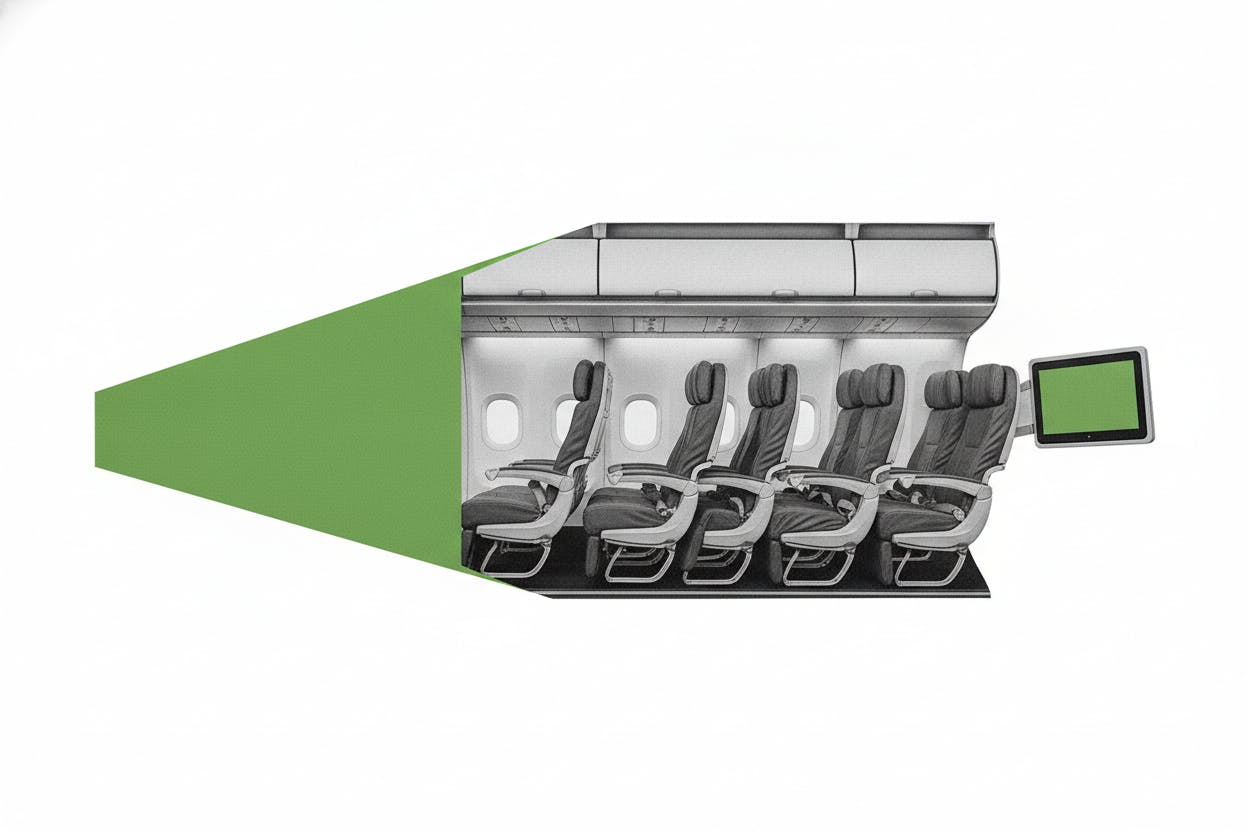
American Airlines is making a big bet on the front of the plane. The carrier said it will significantly expand premium seating on its narrowbody jets—the workhorses of domestic and short-haul routes—and reintroduce seatback entertainment screens, all in an effort to lure travelers willing to pay more and to close a profitability gap with rivals Delta and United.
CEO Robert Isom is doubling down on a strategy that has reshaped the US airline industry over the past decade: selling more seats with extra legroom, wider seats, and upgraded service, rather than competing solely on the lowest fare. American plans to raise the share of premium seats on narrowbody flights to about 40% in the coming years, up from roughly 25% today, by reconfiguring existing planes and taking delivery of new jets with more first-class and extra-legroom options.
Why airlines are obsessed with premium cabins
The shift toward premium seating is not unique to American. Across the industry, airlines have discovered that a relatively small number of high-paying passengers can generate a disproportionate share of revenue. Business travelers, frequent flyers, and even leisure customers on a splurge are willing to pay a premium for more comfort, especially on flights over two hours.
Delta and United have been leaders in this trend, retrofitting their fleets with more premium seats and reporting stronger financial results as a result. American has lagged, and its profitability has trailed its two biggest competitors. By boosting premium capacity, American hopes to capture more of that lucrative demand.
Seatback screens are another part of the equation. Many airlines removed them in recent years, betting that passengers would use their own phones and tablets. But American is reversing course, responding to customer feedback and a competitive landscape where some rivals—notably Delta—have kept the screens. For many travelers, a built-in screen is a signal of a better experience, and it can also generate ancillary revenue through advertising and paid content.
What this means for investors
For everyday investors, this is a story about how airlines are trying to improve their financial performance. The airline industry has historically been capital-intensive and prone to boom-and-bust cycles, with profits often wiped out by fuel price spikes, economic downturns, or operational disruptions. Premium cabins are seen as a way to smooth out those swings by creating a more stable, higher-margin revenue stream.
If American can successfully execute its plan, it could narrow the profitability gap with Delta and United, which might translate into better returns for shareholders. But execution is everything. Reconfiguring planes takes time and money, and there is no guarantee that demand for premium seats will keep growing, especially if the economy slows and businesses cut back on travel.
Investors should also watch how American funds these changes. Adding premium seats and screens requires capital, and airlines often carry significant debt. Any increase in spending could weigh on free cash flow in the near term, even if it pays off later.
The broader airline landscape
The move comes as US airlines navigate a mixed demand environment. Domestic leisure travel has been strong, but business travel has been slower to fully recover from the pandemic. International travel has been a bright spot, with carriers adding routes and seeing healthy demand.
Airlines are also dealing with higher costs, including labor and fuel, and are competing for a limited supply of aircraft. Boeing and Airbus both have large backlogs, so American's ability to add new jets on schedule will be a factor in how quickly it can expand premium seating.
For context, other carriers are also investing heavily in the passenger experience. Some are upgrading lounges, improving Wi-Fi, and adding more premium economy options. The industry-wide push toward premium is a bet that travelers—especially those flying for business—will continue to value comfort and are willing to pay for it.
What to watch next
Investors will be watching American's quarterly earnings for updates on the reconfiguration timeline and any signs that premium revenue is growing. They'll also look at how the airline's unit revenue—a key metric that measures sales per seat mile—compares with Delta and United.
Another thing to keep an eye on is how American prices these new premium seats. If it can fill them at higher fares, the strategy will pay off. If it has to discount heavily to fill them, the margin gains could be muted.
Finally, the return of seatback screens is a reminder that airlines are competing on more than just price. For passengers, that could mean a more comfortable flight. For investors, it's a sign that American is serious about catching up to its rivals—and that the battle for premium travelers is far from over.