Indian biscuit maker Anmol Industries is taking another run at the public markets, filing draft IPO papers for an offering that Reuters said could raise up to 18 billion rupees. The Kolkata-based company has tried to list before, so this is a second attempt rather than a debut.
What makes this filing different is who is selling. The offering is purely a stake sale, with the Baijnath Choudhary & Family Trust — described in draft papers cited by Reuters as Anmol's top investor with roughly an 84% holding — as the only selling shareholder. Anmol is not issuing new shares, so it will not receive any of the IPO proceeds.
Offer for sale versus fresh issue
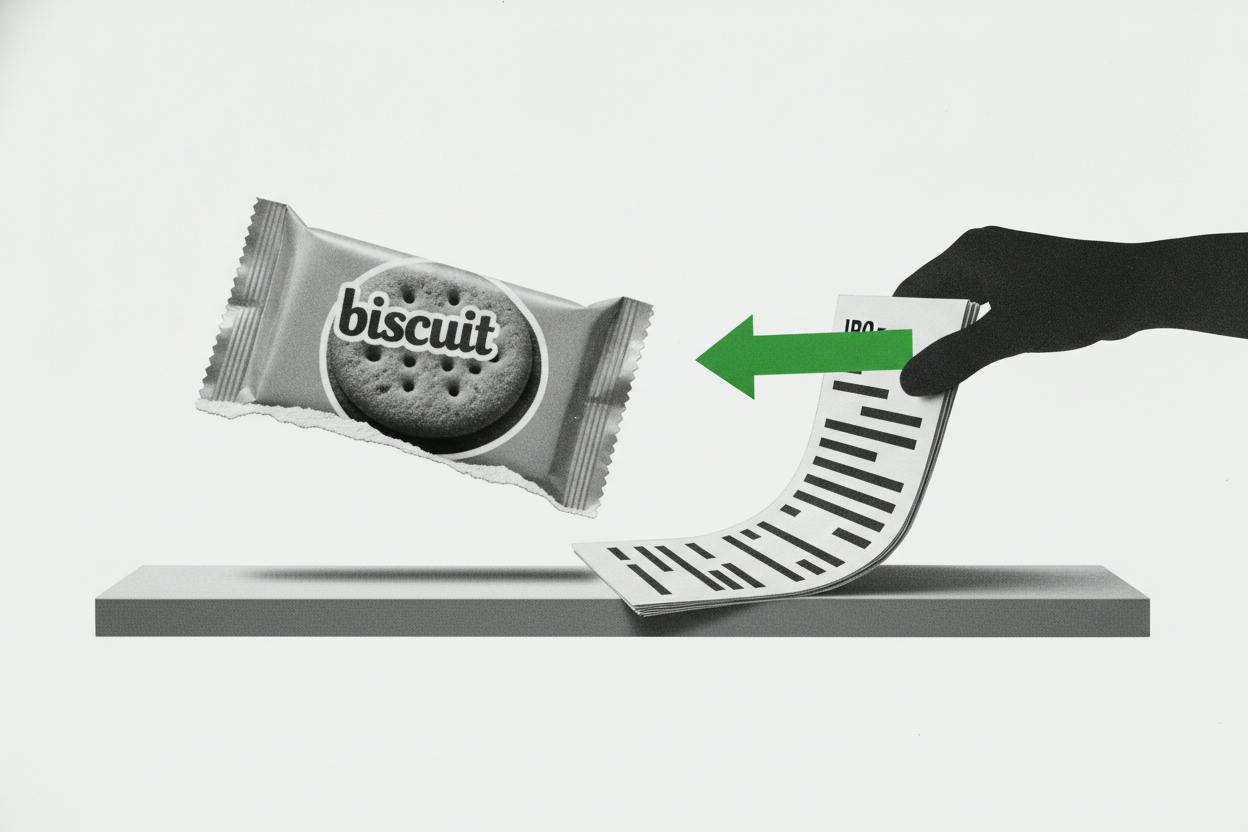
In an Indian IPO, the paperwork usually splits the deal into two buckets. A "fresh issue" means the company creates new shares and keeps the cash, typically to fund expansion, pay down debt or build factories. An "offer for sale," or OFS, means existing shareholders sell part of their stake to the public, and the company gets nothing.
Anmol's filing is entirely the second kind. That distinction matters because it tells investors where the money is going: into the hands of the trust, not into the business. For a company that is not raising growth capital, the listing is more about giving the current owner a path to monetise part of its holding and giving the shares a public market.
It is a common structure in Indian listings, particularly for family-owned consumer businesses. Promoters often use an IPO to trim large holdings while keeping control. With roughly 84% held by the trust, Anmol's promoter group would still own a substantial majority after the sale, assuming the offering is sized as reported.
Why biscuit makers attract investors
Anmol operates in one of India's most competitive consumer categories. Biscuits are a low-ticket, high-volume business with steady demand across income groups, which makes the sector a favourite for investors looking for defensive growth. Larger listed peers in the space have long traded at premium valuations because of that consistency.
The catch is that biscuits are also a crowded market. National brands, regional players and private labels all compete on price, distribution and shelf space. Margins depend heavily on input costs — wheat flour, sugar, edible oil and packaging — which can swing with commodity prices. A listed biscuit maker therefore tends to be judged on volume growth, distribution reach and how well it protects margins when raw material costs rise.
Anmol's brand recognition in its home markets and its scale are likely to be the main selling points in the roadshow. Investors will want to see how the company stacks up against bigger rivals and whether it can grow without heavy discounting.
What it means for investors
For anyone considering the IPO, the key takeaway is that this is a liquidity event for the selling shareholder, not a capital raise for the company. That does not make it a bad deal, but it changes what to look for.
- Valuation is the whole story. Because no new money is coming in, the offer price is essentially a negotiated exit price for the trust. Investors should compare it with listed peers in packaged foods before deciding whether it looks reasonable.
- Watch the promoter stake after listing. A large post-IPO holding can mean the family retains tight control, which affects minority shareholder influence.
- Check the use of proceeds — or the lack of them. With no fresh issue, there is no growth capex to fund. That puts more weight on the company's existing cash flows and balance sheet.
- Lock-in and dilution details matter. Draft papers typically spell out how long promoters must hold their remaining shares and how the offer is structured.
The broader backdrop is also worth noting. Indian equity markets have been active for new listings, with several companies filing draft papers in recent months, including Spinny's confidential filing and Carlyle's planned auto-parts listing. Foreign selling has kept a lid on index gains even as oil prices have eased, as covered in our report on Indian stocks edging higher. A steady IPO pipeline suggests issuers still see windows to list.
Anmol's previous attempt did not reach the finish line, so the market will be watching whether this filing converts into an actual listing. The next steps are regulatory review of the draft papers, updates to the offer document, and then a price band and subscription dates. Until those details are out, the size and valuation remain indicative.
For everyday investors, the practical approach is to treat this like any other offer-for-sale IPO: read the risk factors, compare the valuation with listed competitors, and remember that a company not raising money is not the same as a company with a growth plan. The listing may still be a solid business — but the cash from the IPO is going to the seller, not the biscuit factory.