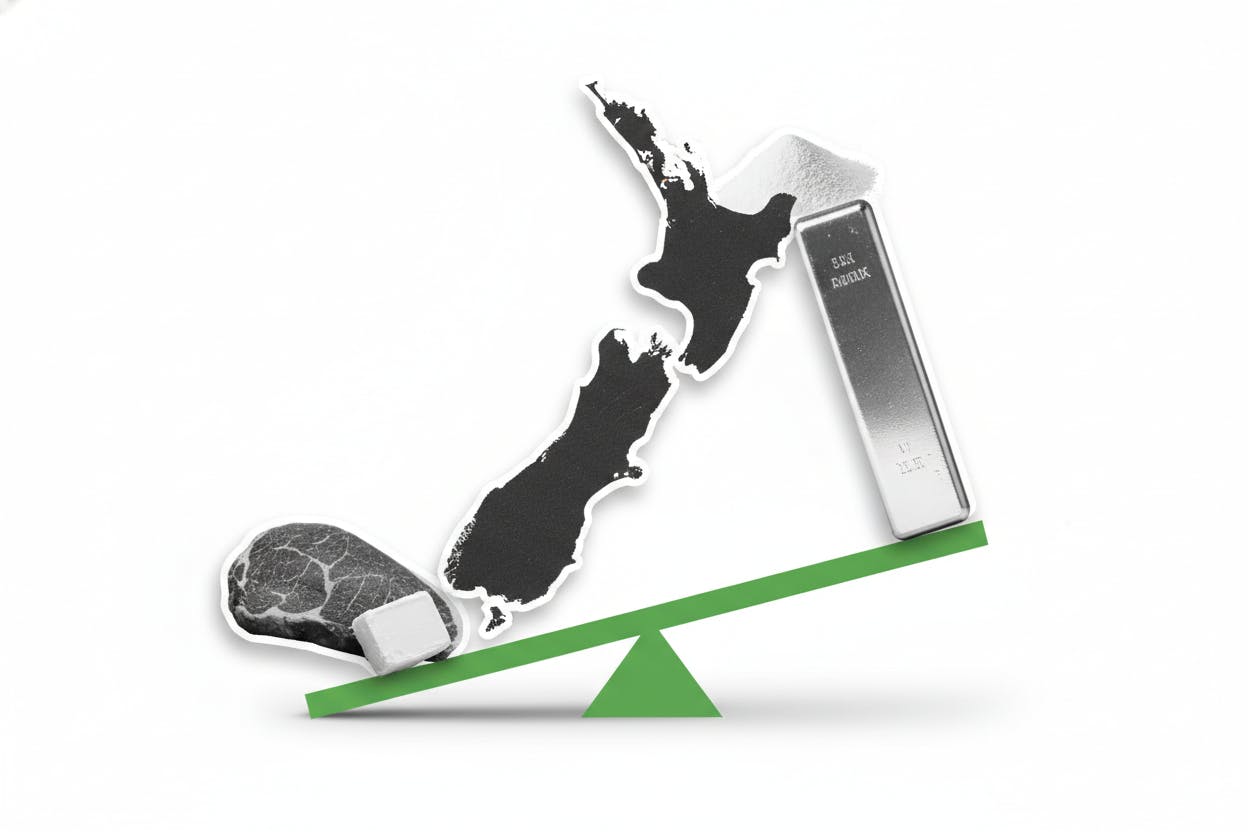
Commodity prices took a small step back in August, according to ANZ's World Commodity Price Index, which slipped 0.4% for the month. The decline was led by weaker beef and butter prices, even as other parts of the basket—like aluminum and skim milk powder—posted solid gains.
The index, which tracks the prices of key commodities exported by New Zealand and Australia, is down 0.6% over the past year. But the headline number masks a more complicated picture beneath the surface.
Beef and butter drag the index
Meat and fiber prices fell 3.3% from July, with US beef cooling after earlier highs. The pullback comes as supply and policy shifts have changed the market's dynamics. Wool also declined, while lamb prices were flat.
Butter, a major dairy export, also weighed on the index. Dairy prices overall rose 1.3% in August, but that gain was driven by other products—notably skim milk powder, which climbed 6.2% in the month and is up 21.6% from a year ago. Whole milk powder also strengthened, though the brief didn't specify its exact move.
The mixed performance highlights how different commodities are moving on their own fundamentals. For everyday investors, it's a reminder that commodity indexes can hide big divergences—what hurts one sector may be offset by strength in another.
Aluminum shines, but broader trends matter
Aluminum rose 3.1% in August, a bright spot in the index. The metal has been supported by supply constraints and steady demand from industries like construction and electric vehicles. However, the broader commodity complex has been under pressure from global economic uncertainty.
Recent data shows mixed signals: US factory growth cooled in August, while Australia's services sector held steady despite rising costs. These trends influence demand for raw materials, from metals to agricultural goods.
For investors, commodity prices are a key indicator of global economic health. When prices fall, it can signal weaker demand; when they rise, it often points to supply tightness or stronger consumption. The August data suggests a mixed picture—some commodities are benefiting from specific supply issues, while others are feeling the pinch of softer demand.
What it means for investors
For everyday investors, the ANZ index is a useful barometer for commodity-exposed sectors. A decline in beef and butter prices could pressure companies in the dairy and meat industries, while rising aluminum and skim milk powder prices might support miners and dairy exporters.
However, it's important not to overreact to a single month's move. Commodity prices are volatile, and the index's 0.6% year-over-year decline suggests a relatively stable overall picture. Investors with diversified portfolios—including exposure to both commodities and other asset classes—are better positioned to weather these fluctuations.
Looking ahead, markets will be watching for further developments in global trade, weather patterns affecting agricultural output, and central bank policies that influence currency values and commodity demand. The Baltic Dry Index's recent surge to its highest level since late 2023 suggests shipping demand is strong, which could be a positive sign for global trade and commodity flows.
For now, the August slip in ANZ's index is a modest reminder that commodity markets are rarely uniform. Investors should focus on the underlying trends rather than the headline number.



