Apple is reportedly exploring acquisitions of chip startups after its in-house server hardware struggled to handle the demands of large artificial intelligence models, according to a report from The Information. The development marks a potential shift in the company's long-standing strategy of bringing key components in-house.
What happened
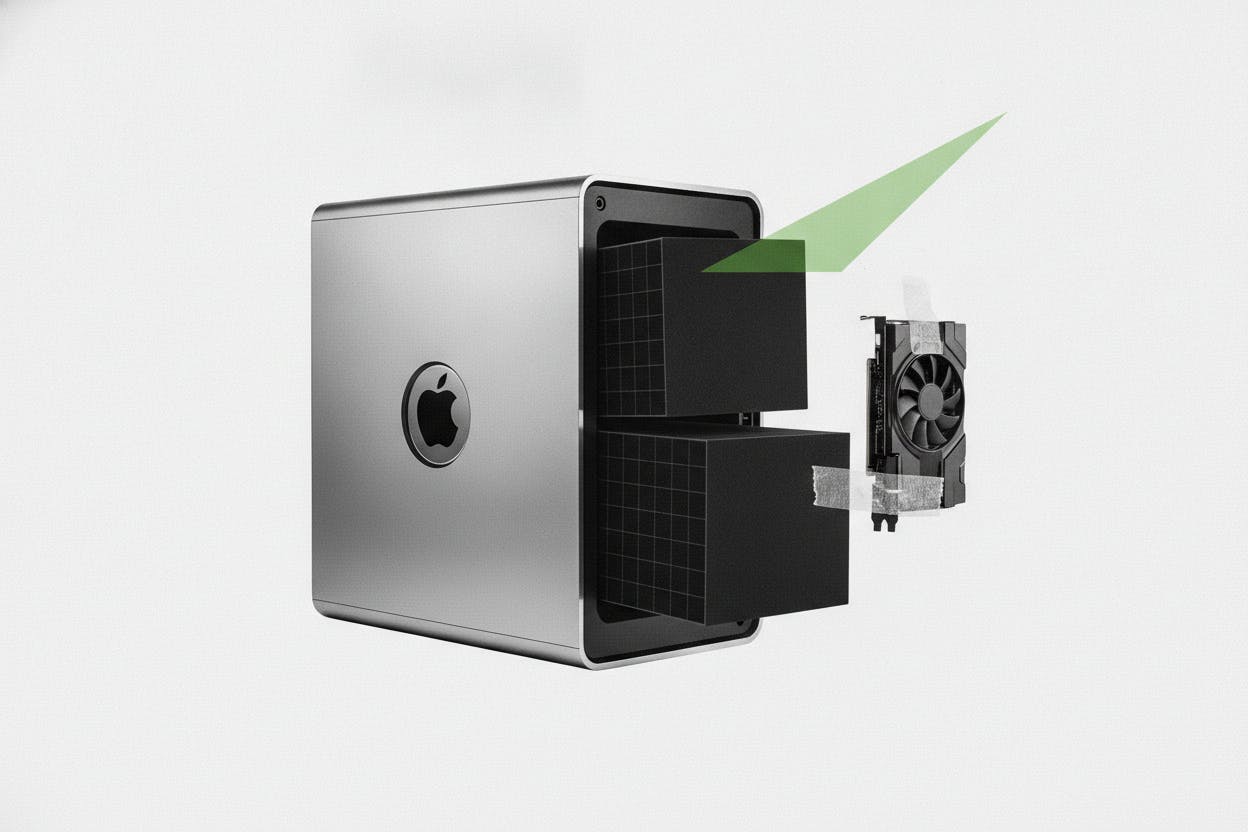
Apple's internal servers, built around its M2 Ultra chips, were unable to run certain large AI models effectively, the report said. That shortfall prompted the company to reach out to chip startups and hold discussions with bankers about potential deals. The server issues reportedly affected a planned overhaul of Siri that involved Google's Gemini models, forcing Apple to offload some tasks onto Nvidia graphics processors rented through Google's cloud.
The M2 Ultra chip, which Apple designed for its high-end desktop computers, is a powerful processor for many tasks. But running modern AI models requires a different kind of computing muscle: massive parallel processing, typically provided by graphics processing units (GPUs) from companies like Nvidia. Apple's server chips, while efficient for general workloads, apparently lacked the specialized architecture needed for large-scale AI inference.
Why it matters
Apple has spent years reducing its dependence on outside chip suppliers, designing its own processors for iPhones, iPads, and Macs. That strategy has given the company tighter control over performance and power efficiency. But AI computing presents a different challenge. The kind of number-crunching needed for large language models is dominated by Nvidia, whose GPUs have become the industry standard for both training and running AI systems.
If Apple cannot build competitive AI server chips on its own, it may need to rely on Nvidia hardware or cloud providers that offer Nvidia chips. That would run counter to Apple's preference for vertical integration and could increase costs. Acquiring a startup with specialized AI chip expertise could help Apple close the gap more quickly than developing the technology from scratch.
The report also highlights the broader challenge facing companies that try to design their own AI chips. Meta's $50 billion AI spending pledge and Google's push for its custom TPU chips show that even tech giants struggle to match Nvidia's performance. Google has been pitching its TPU chips to smaller cloud providers, but Nvidia remains the dominant player.
What it means for investors
For Apple shareholders, the report raises questions about the company's ability to execute its AI strategy without relying on outside suppliers. Apple has been investing heavily in AI features for its devices, including the upcoming Apple Intelligence platform. Apple recently cleared a regulatory hurdle in China by partnering with Alibaba and Baidu for AI models, showing it is willing to work with external partners when necessary.
If Apple acquires a chip startup, it could signal a new phase of investment in AI infrastructure. That would likely increase capital spending in the near term but could reduce reliance on Nvidia over time. For now, the report suggests Apple's in-house chip efforts have hit a roadblock, and the company is scrambling to find a solution.
The broader chip industry is watching closely. Nvidia's dominance in AI chips has made it one of the most valuable companies in the world. Any sign that major customers like Apple are trying to reduce their dependence on Nvidia could affect investor sentiment around the stock. At the same time, a potential Apple acquisition could boost the valuation of smaller chip startups.
Apple's server chip struggles also come at a time when the smartphone market is under pressure. Global smartphone shipments recently hit an 11-year low, partly because AI data centers are consuming memory chips that would otherwise go into phones. Apple has defied the slump in China alongside Huawei, but the broader market remains challenging.
What to watch next
Investors should watch for any official announcement from Apple about chip acquisitions or partnerships. The company's next earnings report may also provide clues about its AI spending plans. If Apple confirms it is buying a chip startup, the size and focus of the deal will matter. A small acquisition targeting specific AI acceleration technology would be less significant than a larger deal that signals a major strategic pivot.
Apple's relationship with Nvidia is also worth monitoring. The two companies have a complicated history, and Apple has used Nvidia chips in the past. Any move by Apple to reduce its reliance on Nvidia could have ripple effects across the AI chip market.
For everyday investors, the key takeaway is that even the world's most valuable company faces challenges in the AI race. Apple's strength in consumer devices does not automatically translate to AI server dominance. The company may need to spend billions to catch up, and that spending could affect its profit margins in the short term.