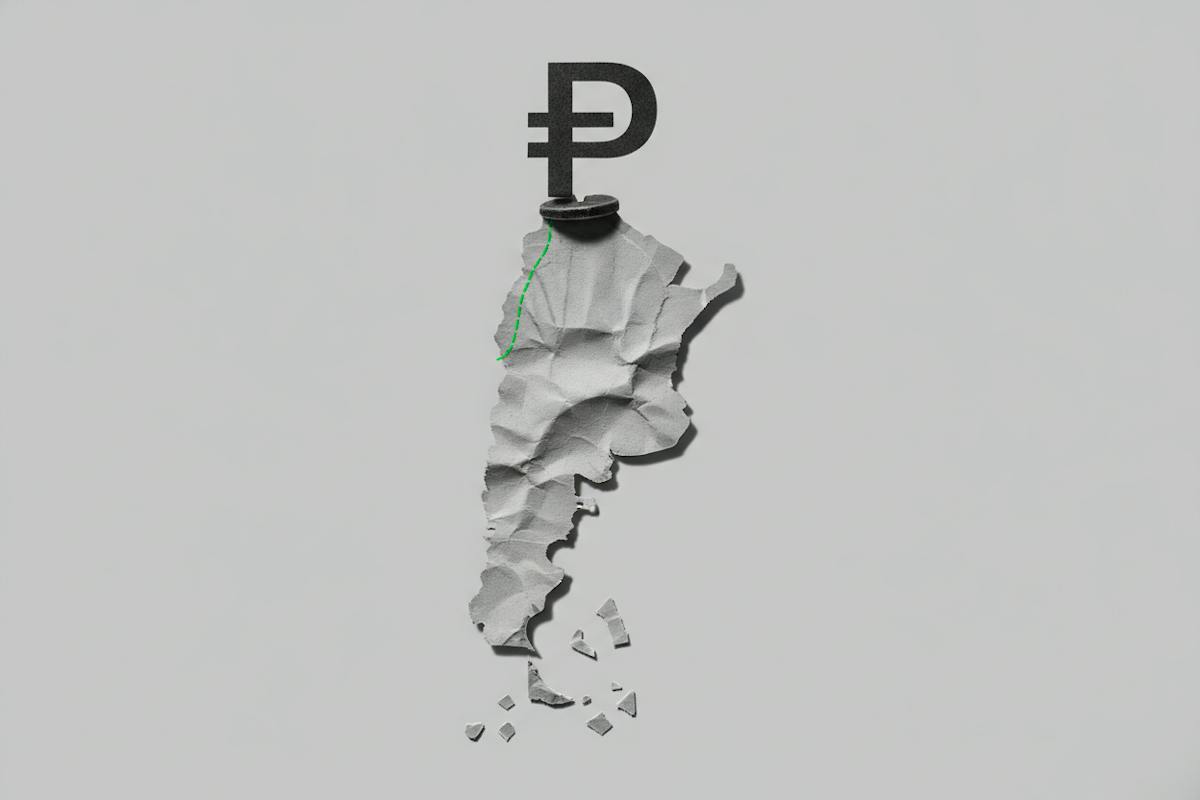
Argentina's economy continued to contract in September, as the deep austerity measures implemented by President Javier Milei take a heavy toll on business activity. Official data released this week showed that the country's Monthly Economic Activity Estimator (EMAE) fell 1.2% compared with the same month a year earlier, marking the third consecutive annual decline.
The EMAE, published by INDEC, Argentina's national statistics agency, is a high-frequency indicator that serves as a proxy for gross domestic product (GDP). It tracks activity across a broad range of sectors and is closely watched by investors as a timely gauge of the economy's health.
Broad-based decline
The headline drop understates the breadth of the downturn. Of the 15 sectors tracked by the EMAE, 10 contracted year-on-year in September. The most dramatic fall came in fishing, which plunged 48.6% compared with the same month last year. Other sectors also struggled, though the report did not provide a full breakdown of all decliners.
On the positive side, mining and quarrying grew 11.1% year-on-year, and electricity, gas, and water supply rose 4%. These gains, however, were not enough to offset the widespread weakness elsewhere.
The data aligns with the broader narrative of Milei's presidency. Since taking office in December 2023, the libertarian leader has pursued an aggressive fiscal consolidation program, slashing public spending, cutting subsidies, and devaluing the currency. The goal is to tame inflation and restore long-term stability, but the short-term cost has been a sharp economic contraction.
Business closures mount
The toll on the business sector is stark. According to estimates from Fundar, a Buenos Aires-based think tank, some 32,300 businesses have closed since December 2023. That figure underscores the strain on small and medium-sized enterprises, which are often the most vulnerable to sudden shifts in demand and credit conditions.
Argentina's economy has been in recession for much of the past year, with high inflation eroding purchasing power and tight fiscal policy dampening domestic demand. The latest EMAE reading suggests that the recovery, which many hoped would begin in the second half of the year, has yet to take hold.
What it means for investors
For investors, the continued contraction is a double-edged sword. On one hand, the austerity measures are seen as necessary to address Argentina's chronic fiscal imbalances and to rebuild credibility with international markets. On the other, the prolonged downturn raises the risk of social unrest and political pushback, which could derail the reform agenda.
Foreign investors have been cautiously optimistic about Milei's reforms, but the economic pain is real. The country's sovereign bonds and the MSCI Argentina index have both been volatile, reflecting the uncertainty. A sustained recovery will likely depend on inflation coming down faster and on a rebound in consumer spending and investment.
The September data also has implications for Argentina's agricultural sector, which is a key export earner. While mining and energy have shown resilience, the broader economy remains heavily reliant on the farm sector, which has faced its own challenges, including drought and policy uncertainty.
Investors should watch for signs of stabilization in the coming months. The government has projected a return to growth in 2025, but that forecast hinges on continued progress on inflation and on the implementation of structural reforms, including labor and tax changes.
For now, the message from the EMAE is clear: Argentina's economy is still shrinking, and the road to recovery remains long.