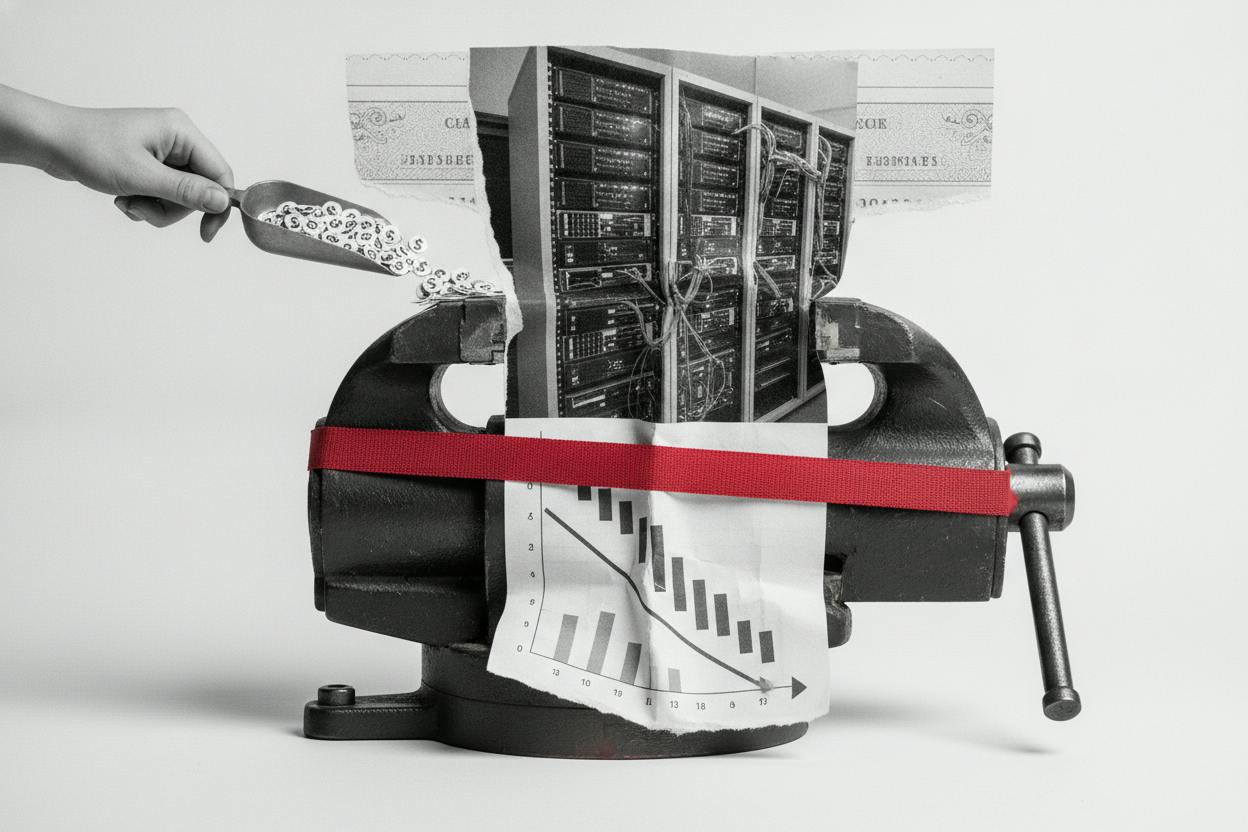
Cathie Wood's ARK Invest added to its position in CoreWeave on Wednesday, buying 188,665 shares even as the AI infrastructure company's stock tumbled more than 15% and its long-term debt showed signs of stress. The purchase, disclosed on ARK's website, was split across two transactions.
The bigger signal, however, came from CoreWeave's bonds. Its 9.625% senior unsecured notes due 2032 fell to about $78 from roughly $85 earlier this month, pushing the yield from 13.36% to above 15.5%, according to TRACE, the US bond trade reporting system. When bond prices fall, yields rise—meaning investors are demanding more compensation for the risk of holding that debt.
What is CoreWeave?
CoreWeave is a cloud computing company that specializes in providing graphics processing units (GPUs) for artificial intelligence workloads. It has grown rapidly by renting out powerful chips to AI startups and tech giants, riding the wave of demand for computing power needed to train and run large language models.
The company went public in March 2025, and its stock has been volatile since. ARK, known for its high-growth, innovation-focused funds, has been a notable buyer of CoreWeave shares, betting that the AI boom will continue to fuel demand for its services.
But the debt market is telling a different story. The sharp rise in CoreWeave's bond yield suggests that fixed-income investors are worried about the company's ability to service its debt, which has ballooned as it finances massive data center expansions. CoreWeave has taken on significant borrowing to build out its infrastructure, and higher interest rates or a slowdown in AI spending could strain its finances.
Why the bond market matters
For everyday investors, the bond market can be a useful warning system. When a company's bond yields spike, it often means lenders are pricing in a higher chance of default. That can be a red flag for the stock, because debt problems can force a company to cut spending, issue new shares, or even face bankruptcy.
In CoreWeave's case, the yield on its 2032 notes has climbed from 13.36% to over 15.5% in just a few weeks. That is a significant move, and it suggests that some investors are worried about the company's cash flow and debt load. The stock's 15% drop on Wednesday likely reflects those same concerns.
ARK's purchase, meanwhile, shows that some growth investors see the selloff as an opportunity. Wood has long argued that innovation stocks are undervalued and that short-term volatility is a chance to buy at lower prices. But the divergence between ARK's optimism and the bond market's caution is striking.
What it means for investors
For those holding CoreWeave stock, the key takeaway is that the company's debt situation is worth watching. A rising bond yield can be a leading indicator of trouble, and it may signal that the market is questioning the sustainability of the AI infrastructure boom.
For broader markets, CoreWeave's struggles are part of a larger narrative. AI-related stocks have been under pressure recently, as hot inflation data has revived fears of Federal Reserve rate hikes. Higher rates make it more expensive for companies like CoreWeave to borrow, and they also make future profits less valuable today.
There are also concerns about the debt-fueled data center boom. Many AI companies are borrowing heavily to build infrastructure, and if the economy slows or interest rates stay high, that debt could become a problem. The bond market's reaction to CoreWeave is a reminder that not all AI bets are risk-free.
ARK's move is a bet that the company will grow into its debt and that the AI boom has legs. But for most investors, it's a reminder to look beyond the stock price and consider the balance sheet. A company can have great technology and still struggle if it's drowning in debt.
As always, it's important to do your own research and understand the risks before investing in any single stock. The AI sector is exciting, but it's also volatile, and the gap between stock and bond markets shows that even the most promising stories can have cracks.