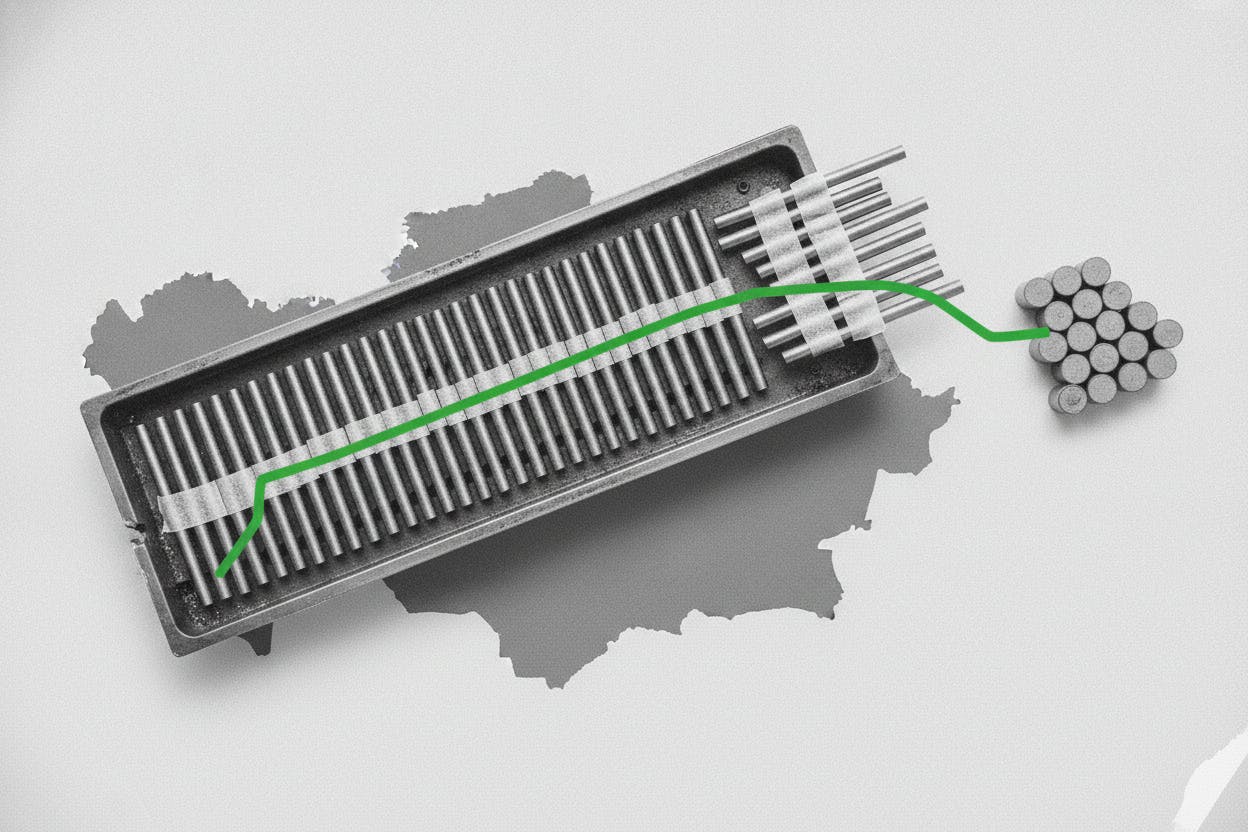
Arras Minerals, a Canada-listed mineral exploration company, announced it has doubled its planned 2026 drill program to 40,000 meters after raising C$25 million in a recent financing round. The expanded campaign will focus on stepping up drilling at its Berezski prospects and testing new targets along the Aimandai Trend in Kazakhstan.
What's Driving the Expansion?
The company said the larger program will run through the end of the year and is split into two main components. The first is "definition drilling" at Berezski North, Central, and East, aimed at better mapping known mineralized zones. The second is step-out drilling to explore whether the broader mineral system extends into new areas.
Immediately, Arras is launching a 6,000-meter "top of bedrock" (KGK) program. Assay results from this initial phase are expected in the coming months. The KGK technique is designed to sample the uppermost part of the bedrock, which can help identify mineralized zones that may be hidden beneath surface cover.
Context: Why Kazakhstan?
Kazakhstan is a significant mining jurisdiction, known for its large copper and gold deposits. Arras Minerals holds a substantial land package in the country, including the Berezski project, which is part of a broader exploration trend. The company's strategy follows a pattern seen across the mining exploration sector: raising capital to fund aggressive drilling programs when commodity prices are supportive and geological targets look promising.
For comparison, other explorers like Marimaca Copper have also expanded drilling after positive results, while Metallis Resources is preparing for drilling in Idaho. The sector often sees companies raise funds through share placements or other equity offerings to finance exploration.
What It Means for Investors
For everyday investors, this news signals that Arras Minerals is confident enough in its geological models to commit significant capital to drilling. A larger drill program increases the chances of discovering or expanding a mineral deposit, which could add value to the company. However, exploration is inherently risky—many drill programs fail to find economically viable deposits.
The C$25 million raise provides Arras with a strong cash position to fund the work, reducing the immediate need for further dilutive financing. Investors should watch for assay results from the KGK program, as positive results could drive share price momentum. Conversely, disappointing results could weigh on sentiment.
It's also worth noting that the company is listed in Canada, where many junior mining explorers trade. These stocks can be volatile, and investors should consider the broader commodity price environment—particularly for copper and gold—which influences the economics of any potential mine.
Looking Ahead
The next key catalyst for Arras will be the release of assay results from the initial 6,000-meter KGK program. If those results confirm high-grade mineralization, the company may further expand its drilling plans. The Aimandai Trend targets are also a wildcard—success there could open up a new growth avenue.
Investors should also keep an eye on the company's cash burn rate and any future financings. While the C$25 million provides a runway, exploration costs can escalate quickly. For now, the market will focus on the drill bit and the data it produces.