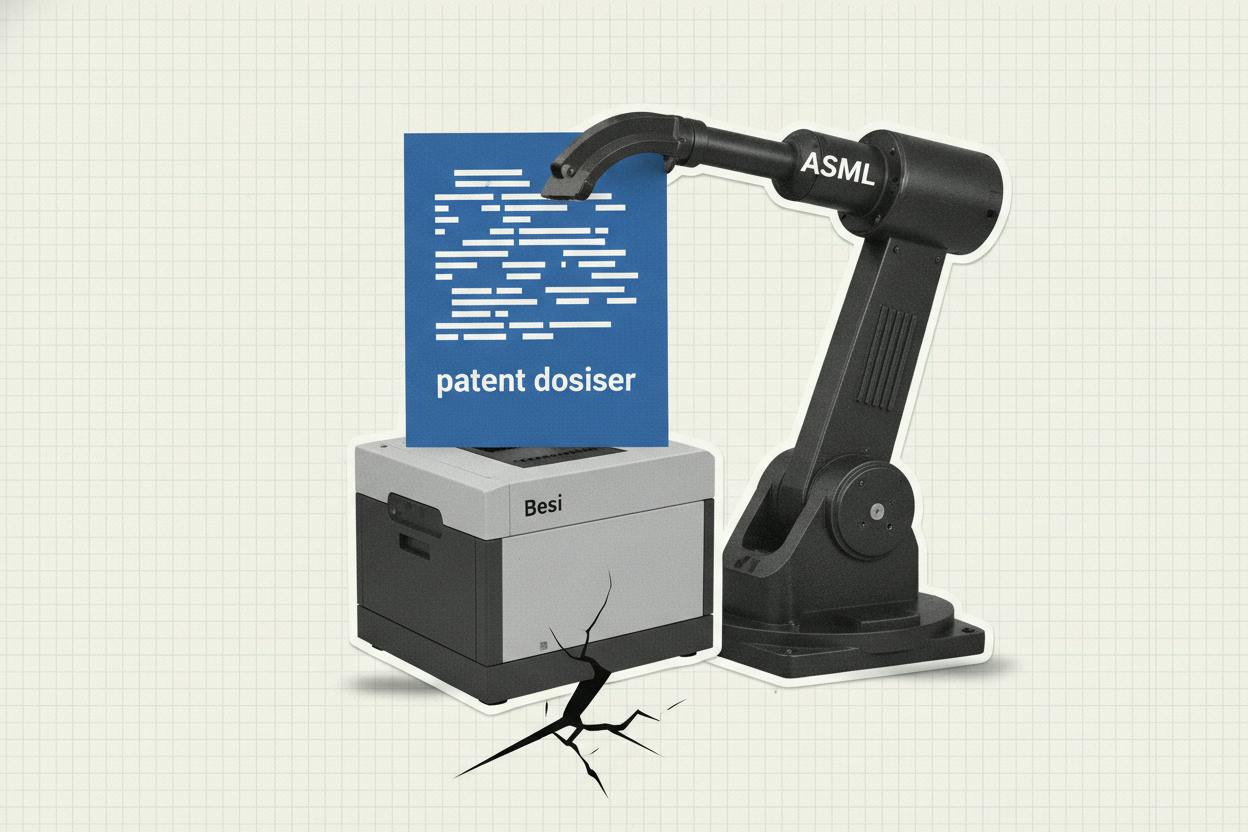
Shares of BE Semiconductor Industries (Besi) dropped 3% in Amsterdam trading on Friday after a research report suggested that ASML, the Dutch chip-equipment giant, may be developing a tool for hybrid bonding—a technology that is central to Besi's growth strategy.
The report, from semiconductor research firm SemiAnalysis, said it reviewed 27 ASML patent filings and found clues pointing to a hybrid bonding product in the works. ASML did not confirm the claim, declining to comment on the report but pointing to its launch last year of a first advanced packaging tool, when it said it was tracking how “3D integration” is evolving and where its know-how could help.
What is hybrid bonding?
Hybrid bonding is an advanced chip-packaging method that fuses stacked chiplets together, allowing signals to travel faster and use less power. It helps push performance beyond what smaller transistors alone can deliver, making it a key technology for the next generation of semiconductors.
Besi is one of the best-known specialists selling tools for this process. ASML, by contrast, is the much larger Dutch chip-equipment maker best known for lithography machines, which are used to print circuits onto wafers. The two companies operate in different parts of the chip supply chain, but hybrid bonding could bring them into direct competition.
Why the market reacted
Investors didn't wait for a competing product to ship before repricing Besi's story. The company's appeal rests on the idea that hybrid bonding remains a scarce capability, with limited competition meaning stronger pricing power and a longer runway as more chips move to stacked designs.
Even the credible prospect of ASML entering that niche changes the valuation math. If investors start to believe a deep-pocketed rival can lean on existing customer relationships and fund years of development, they typically mark down the “best-case” outlook for the smaller player's long-run margins. That shows up first as a lower valuation multiple, not an immediate hit to earnings.
Friday's split screen—Besi down to €158.50 while ASML rose 1.1% to €1,480—hints at the new setup. Besi may stay extra sensitive to packaging headlines because the market is now pricing a wider range of outcomes for its hybrid-bonding business than it was when the company looked like the uncontested specialist.
What it means for investors
For everyday investors, the episode is a reminder that in fast-moving tech niches, a single research report can shift sentiment quickly. Besi's share price now reflects not just its current earnings but also the market's guess about future competition. If ASML does enter hybrid bonding, Besi could face margin pressure; if it doesn't, the sell-off may prove overdone.
The broader context is that chip packaging is becoming a more important battleground. As traditional chip shrinking gets harder and more expensive, companies are looking to stack and connect chips in new ways. That trend has made hybrid bonding a hot area, and it explains why ASML's patent filings would draw so much attention.
Investors should also note that ASML's interest in packaging is not entirely new. The company has said it is tracking how 3D integration evolves and where its expertise could help. The patent report is just the latest sign that ASML may see packaging as a serious next leg of growth, not a side project.
For those holding Besi, the key question is whether the company can maintain its edge in hybrid bonding as larger rivals potentially move in. For those watching ASML, the news reinforces its position as a broad chip-equipment leader, though any new product would likely take years to reach the market.
In the meantime, expect more volatility in Besi's shares whenever packaging-related headlines emerge. The market is now pricing a wider range of outcomes, and that means bigger swings in both directions.