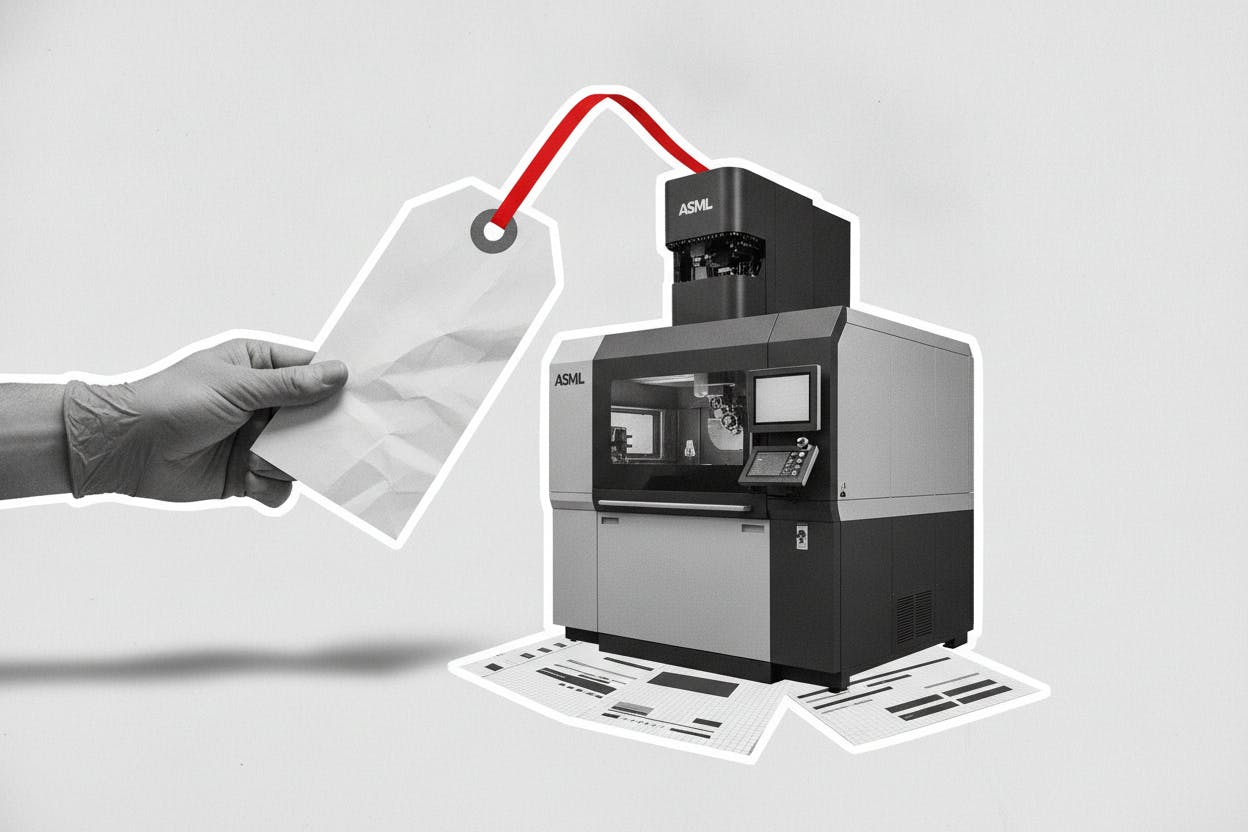
ASML, the Dutch company that dominates the market for the world's most advanced chipmaking tools, is planning to raise equipment prices even as its biggest customer, Taiwan Semiconductor Manufacturing Co (TSMC), pushes back, according to a report from The Information on Wednesday.
The move is a direct test of ASML's pricing power — the ability to charge more without losing orders — in an industry where it holds a near-monopoly on the extreme ultraviolet (EUV) lithography systems needed to produce the most cutting-edge chips. For everyday investors, this story matters because pricing power is one of the clearest signals of a company's competitive strength and future profitability.
What is ASML and why does pricing power matter?
ASML makes the massive, complex machines that print microscopic circuits onto silicon wafers. Its EUV systems are essential for producing the most advanced chips used in smartphones, AI accelerators, and data centers. Because there are no viable alternatives to ASML's EUV tools for the latest chip designs, the company has historically been able to command premium prices.
Pricing power is a key metric for investors. When a company can raise prices without losing customers, it can increase revenue per system while many of its costs — like research, development, and support — stay roughly the same. That tends to widen gross margin, the share of sales left after direct production costs. Higher margins often translate into stronger earnings and, over time, higher stock prices.
ASML's situation is unusual: most companies face intense competition that limits their ability to raise prices. But ASML's near-monopoly on EUV technology gives it a rare degree of leverage. The question is whether that leverage is strong enough to overcome pushback from TSMC, which is both ASML's largest customer and one of the world's most powerful chipmakers.
What the price hike means for TSMC and the chip industry
TSMC is not just any customer. It manufactures chips for Apple, Nvidia, AMD, and most of the global semiconductor industry. If TSMC accepts higher prices from ASML, it will likely pass those costs along to its own customers, potentially raising the price of everything from smartphones to AI servers.
The pushback from TSMC suggests that even the most powerful chipmaker is feeling pressure on its own margins. TSMC has been investing heavily in new factories in the US, Japan, and Germany, partly driven by geopolitical concerns and government incentives. Those investments are expensive, and any increase in equipment costs could squeeze its profitability.
For investors, the outcome of this pricing dispute will be a bellwether for the broader chip industry. If ASML succeeds in raising prices, it could signal that the company's monopoly power is intact and that it can continue to deliver strong earnings growth. If TSMC forces a compromise, it might indicate that even dominant suppliers face limits when their biggest customers push back.
What investors should watch next
ASML's earnings reports are closely watched for clues about pricing and order trends. In its most recent quarterly results, the company reported strong demand for its EUV systems, driven by the AI boom and the need for more advanced chips. But investors will be paying close attention to any commentary about pricing negotiations with TSMC.
Another factor to watch is the broader semiconductor cycle. Chip demand is cyclical, and a downturn could weaken ASML's pricing power. However, the current AI-driven surge in demand for advanced chips has kept ASML's order books full, giving it more leverage in price talks.
For everyday investors, the key takeaway is that ASML's ability to raise prices is a sign of its competitive strength, but it's not guaranteed. The outcome of this dispute will have ripple effects across the entire chip industry, from TSMC's margins to the cost of the devices we use every day.
As always, it's important to remember that pricing power is just one factor in a company's investment case. Investors should consider the full picture, including market cycles, competition, and geopolitical risks, before making any decisions.