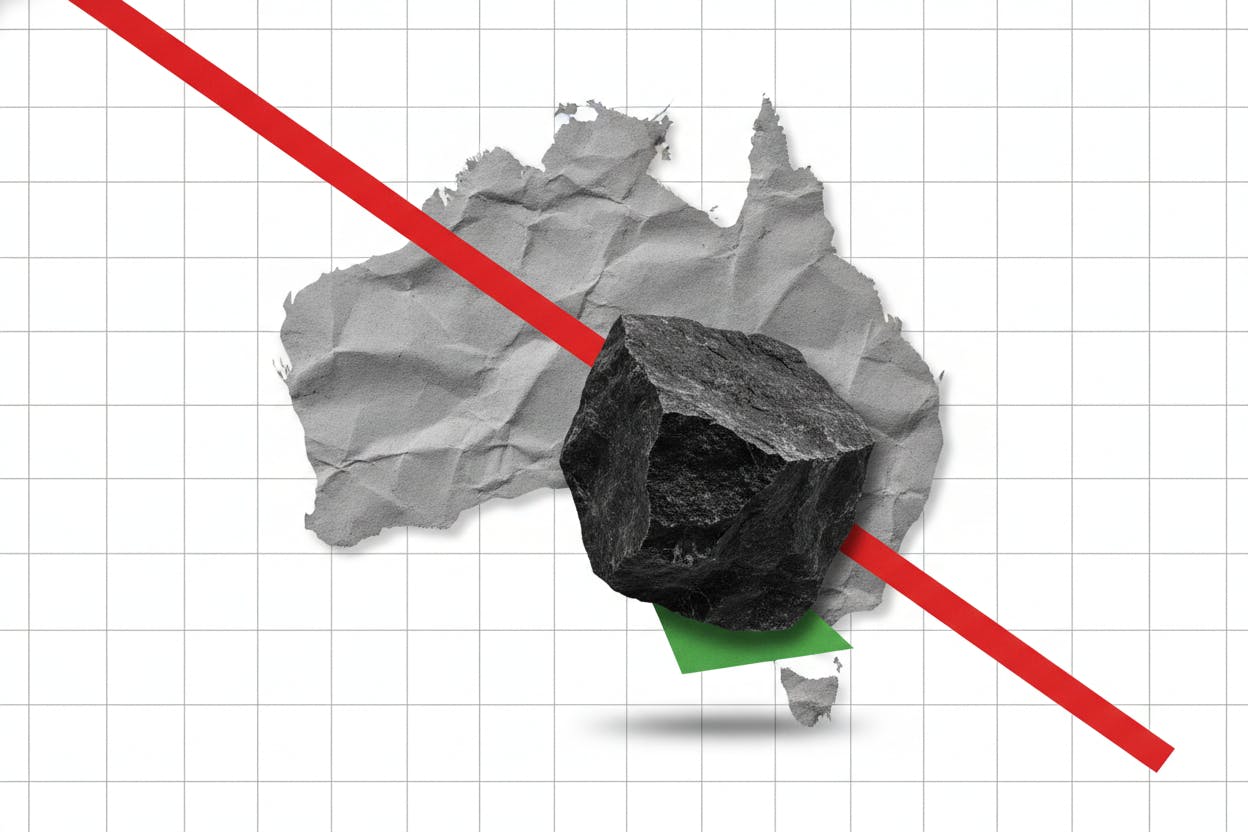
Australia's benchmark ASX 200 index closed the week in the red, pulled lower by a sharp slide in mining stocks led by BHP. The decline came as iron ore and copper prices softened, while energy shares managed to climb on the back of rising oil prices fueled by renewed tensions between the US and Iran.
Mining Sector Weighs Heavy
The mining sector, which carries outsized weight in the ASX 200, was the main drag on the index. BHP, one of the world's largest miners, fell more than 5% over two sessions. The drop was driven by a combination of lower commodity prices and the company's own warning that its copper output is likely to decline next year.
When commodity prices fall, miners face a challenge known as operating leverage: their costs don't drop as quickly as their revenue, so profits can shrink faster than sales. That's why investors often demand a higher risk premium—extra return for taking on additional risk—from mining stocks, which can lead to faster valuation declines compared to the broader market.
Rio Tinto, another heavyweight miner, also declined, adding to the pressure on the index. The weakness in iron ore and copper, two key revenue drivers for Australian miners, has raised concerns that profit forecasts may be trimmed if prices stay low.
Energy Stocks Buck the Trend
While miners struggled, energy stocks moved in the opposite direction. Higher oil prices, driven by escalating US-Iran tensions, provided a cushion for the sector. Oil prices have risen as geopolitical risks in the Middle East threaten supply, benefiting energy companies that produce and sell crude.
However, the energy sector's gains were not enough to offset the drag from mining heavyweights. The ASX 200's top-heavy composition means that moves in resources often matter more for the benchmark than shifts in smaller sectors.
What It Means for Investors
For everyday investors, the week's action highlights the risks of concentration in a market dominated by a few sectors. The ASX 200's heavy reliance on mining means that shifts in commodity prices can have an outsized impact on the index's performance.
If iron ore and copper prices remain soft, analysts may continue to cut profit forecasts for miners, and their share prices could fall further as markets reprice future cash flows. That sensitivity means the index's next move is likely to hinge on whether these commodities stabilize, not on whether energy stocks keep benefiting from higher oil.
Investors should also keep an eye on broader economic factors. The recent dip in copper prices, for example, has been linked to concerns about global demand and inflation, as noted in our coverage of Copper Dips as Middle East Tensions Lift Oil, Stoking Inflation and Rate Fears. Meanwhile, the energy sector's resilience is part of a larger trend where oil price spikes have not always translated into sustained stock gains, as discussed in Oil Prices Jump to $80+ but Energy Stocks Stay Flat: What Investors Missed.
Looking Ahead
The coming weeks will be critical for the ASX 200. Investors will be watching commodity prices closely, particularly iron ore and copper, to gauge whether the mining sector's weakness is a temporary blip or the start of a longer-term trend. Any escalation in US-Iran tensions could keep oil prices elevated, providing support for energy stocks, but that may not be enough to lift the broader index if miners continue to slide.
For now, the market's direction remains tied to the fortunes of its largest components. As always, diversification across sectors and geographies can help reduce the impact of such concentrated moves on a portfolio.