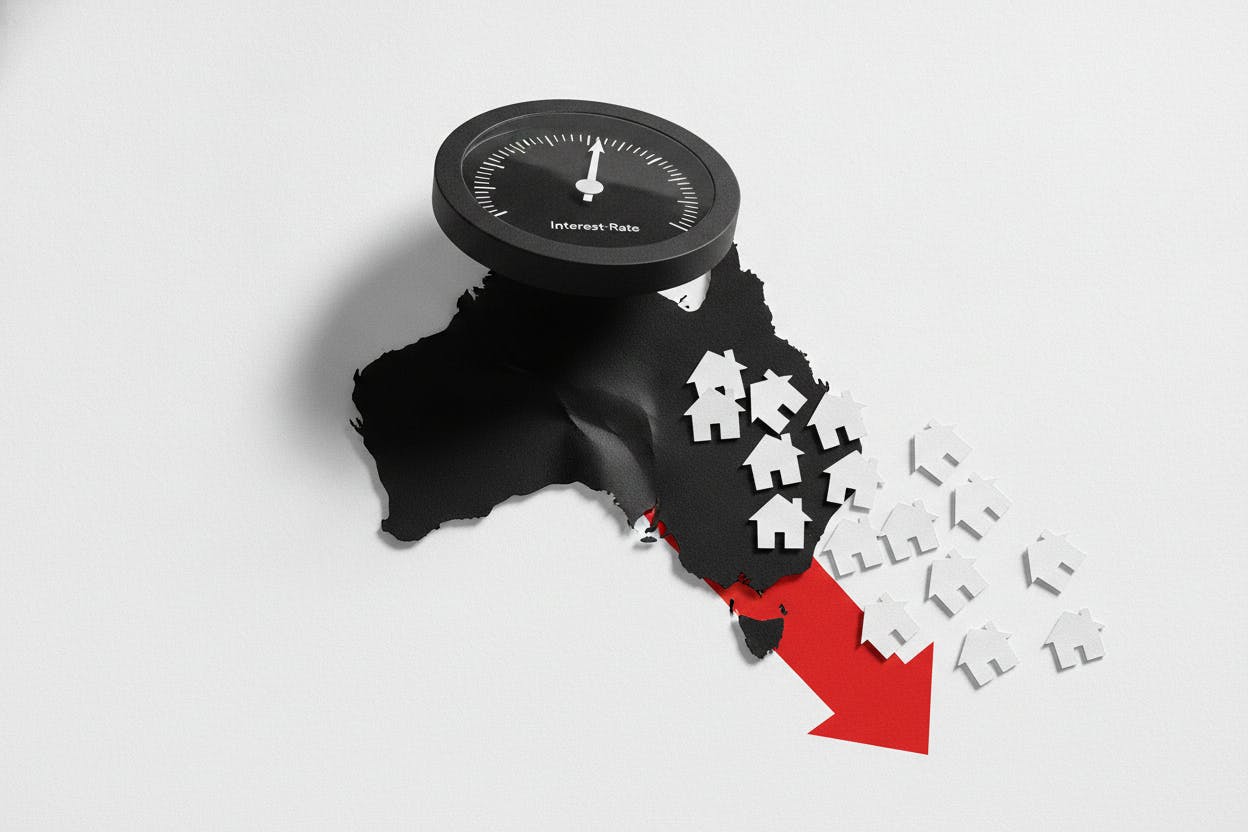
Australia's benchmark ASX 200 index slipped on [day], closing about 0.5% lower as investors weighed fresh signs that higher borrowing costs are starting to bite. The decline was led by rate-sensitive sectors after Commonwealth Bank, the country's largest listed lender, flagged a sharp drop in mortgage applications.
What happened
Commonwealth Bank (CBA) said mortgage applications fell 15% after property tax changes introduced in May, adding to concerns that high interest rates and inflation are weighing on household budgets. The bank's comments echo recent remarks from Westpac and National Australia Bank, which have also noted cooling demand for home loans.
Meanwhile, mining heavyweight BHP fell late in the session, dragging the index further into the red. The moves came as investors positioned ahead of the latest US consumer price index (CPI) report, a key data point that could influence global interest rate expectations.
Why it matters
The drop in mortgage applications is a clear signal that the Reserve Bank of Australia's aggressive rate hiking cycle is filtering through to the housing market. Higher borrowing costs mean fewer Australians can afford to take out a home loan, which in turn slows property activity and can weigh on consumer spending.
For investors, this is a double-edged sword. On one hand, cooling demand could help bring inflation down, potentially reducing the need for further rate hikes. On the other, it raises concerns about the health of the broader economy, as housing is a major driver of household wealth and spending.
BHP's late decline also reflects broader worries about global demand, particularly from China, which is a major buyer of Australian iron ore and coal. Any slowdown in Chinese industrial activity could hit Australian miners hard.
What to watch next
All eyes are now on the US CPI print, due for release later this week. A hotter-than-expected reading could reignite fears of prolonged high interest rates in the US, which would likely pressure global markets, including Australia. Conversely, a cooler number could boost hopes that the Federal Reserve is done hiking, providing some relief to risk assets.
Back home, investors will be watching for further commentary from the big banks on the state of the housing market. CBA's warning is the latest in a series of cautious signals from lenders, and any further deterioration could weigh on bank stocks, which are a major component of the ASX 200.
What it means for investors
For everyday investors, the key takeaway is that the Australian economy is feeling the pinch of higher rates. This could mean more volatility in the market, particularly for rate-sensitive sectors like banks, property, and consumer discretionary stocks.
It's also a reminder that the housing market is a key barometer for the broader economy. If mortgage demand continues to fall, it could lead to weaker consumer spending and slower economic growth, which would be negative for corporate earnings.
However, it's not all bad news. If cooling demand helps bring inflation under control, it could pave the way for rate cuts down the line, which would be a positive for both the housing market and the stock market.
As always, it's important to focus on your long-term investment goals rather than reacting to short-term market moves. Diversification and a clear understanding of your risk tolerance are your best tools in uncertain times.
For more on how the big banks are navigating this environment, see our earlier coverage of CBA's record profit and mortgage warning. And for a global perspective, check out how Brazil is handling its own inflation battle.