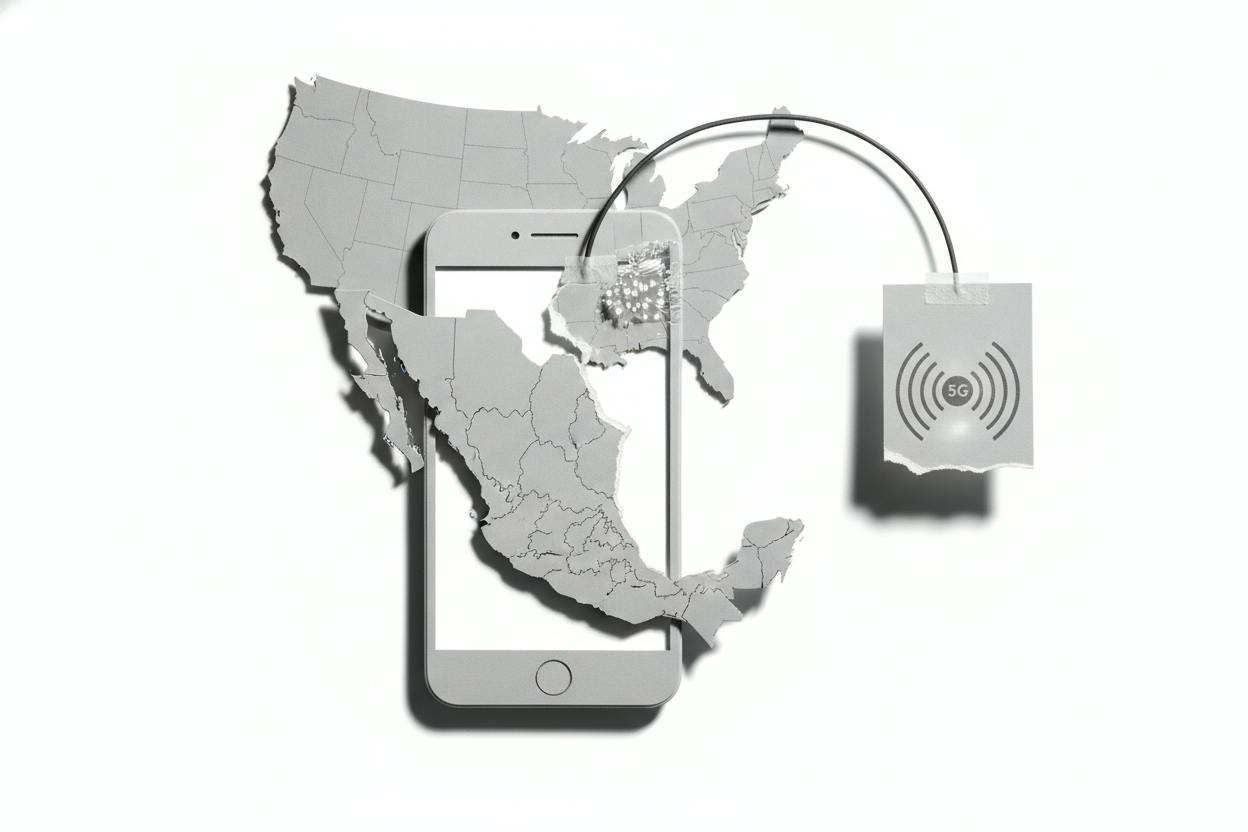
AT&T has agreed to sell its Mexico wireless operations to a 50-50 joint venture between Grupo Televisa, the Mexican media giant, and Fintech Holdings, an investment firm, for $2 billion in cash. The deal, announced today, marks a significant step in AT&T's strategy to narrow its focus on its home market, where it is pouring billions into fiber-optic networks and 5G infrastructure.
The transaction is expected to close in the first quarter of 2027, pending regulatory approvals. AT&T Mexico is the country's second-largest mobile operator, with roughly 24.7 million subscribers as of December 2025, according to Televisa. The unit generated 85.4 billion pesos (about $4.2 billion) in revenue and 1.4 billion pesos in operating income in 2025.
Why AT&T is exiting Mexico
For years, AT&T has been trimming its international footprint to concentrate on its core US business. The sale of AT&T Mexico follows a similar divestiture of its pay-TV operations in Latin America and other non-core assets. The company's CEO, John Stankey, has repeatedly argued that the future of telecom lies in what he calls "converged networks"—dense fiber lines paired with wireless 5G to handle the explosion of data traffic driven by artificial intelligence and streaming.
By exiting Mexico, AT&T can redirect capital and management attention to its US network expansion, where it faces intense competition from Verizon and T-Mobile. The $2 billion price tag, while not transformative for a company of AT&T's size, provides a cash infusion that can be used to pay down debt or fund further fiber and 5G investments.
The deal also includes provisions for potential additional payments. AT&T noted that the final price could be adjusted through closing adjustments, and there may be extra contractual or contingent payments tied to the unit's performance. That means the total consideration could end up higher than the headline $2 billion.
What the deal means for the buyers
For Grupo Televisa, the acquisition deepens its bet on telecommunications. The company already operates a mobile virtual network operator (MVNO) in Mexico, and buying AT&T's infrastructure gives it a much larger scale. Fintech Holdings, an investment firm with a history of telecom investments, brings financial muscle to the venture.
The buyer group gets a business with a solid subscriber base and positive operating income, though the Mexican telecom market is highly competitive, with America Movil—owned by Carlos Slim—dominating the sector. The consortium will need to invest to keep pace with network upgrades and customer demands.
Accounting impact: 'held for sale' and what it means
One detail that could affect AT&T's financial statements before the deal closes: the company plans to classify AT&T Mexico as "held for sale" in its third-quarter 2026 filing with the SEC. That accounting label is more than a formality. When a business is classified as held for sale, it is moved to a separate line on the balance sheet and measured at the lower of its carrying value or fair value minus selling costs.
In practice, this can pause depreciation on the assets, which may flatter reported profits in the short term. It can also trigger one-time remeasurement or impairment charges if the expected sale price is below the book value. For investors parsing AT&T's 2026 and 2027 results, these accounting moves could create noise, making it harder to compare quarterly performance with prior periods.
AT&T has said it expects to record a gain or loss on the sale, but the exact figure won't be known until the deal closes. The company has not provided guidance on any potential impairment.
What it means for investors
For AT&T shareholders, the sale is a positive step toward simplifying the business and reducing risk. The company has been under pressure to cut its hefty debt load, which stood at around $130 billion at the end of 2025. The $2 billion in cash, while modest relative to that debt, signals a continued commitment to deleveraging.
More importantly, the divestiture allows AT&T to present a cleaner story to investors: a US-focused telecom with a growing fiber business and a 5G network that is gaining traction. The company's stock has been a favorite among income investors for its dividend, and the sale could help protect that payout by freeing up cash.
However, the accounting quirks of the held-for-sale classification mean that near-term earnings could be volatile. Investors should look through the one-time charges and presentation changes to focus on the underlying performance of AT&T's US operations.
The deal also highlights a broader trend of telecom companies retreating from international markets to concentrate on domestic growth. Similar consolidation is happening across the sector, as companies seek scale in their core geographies.
For everyday investors, the key takeaway is that AT&T is making a deliberate choice to bet on the US market. Whether that bet pays off will depend on its ability to execute its fiber and 5G expansion while managing competition and debt. The Mexico sale is a step in that direction, but the real test lies ahead.