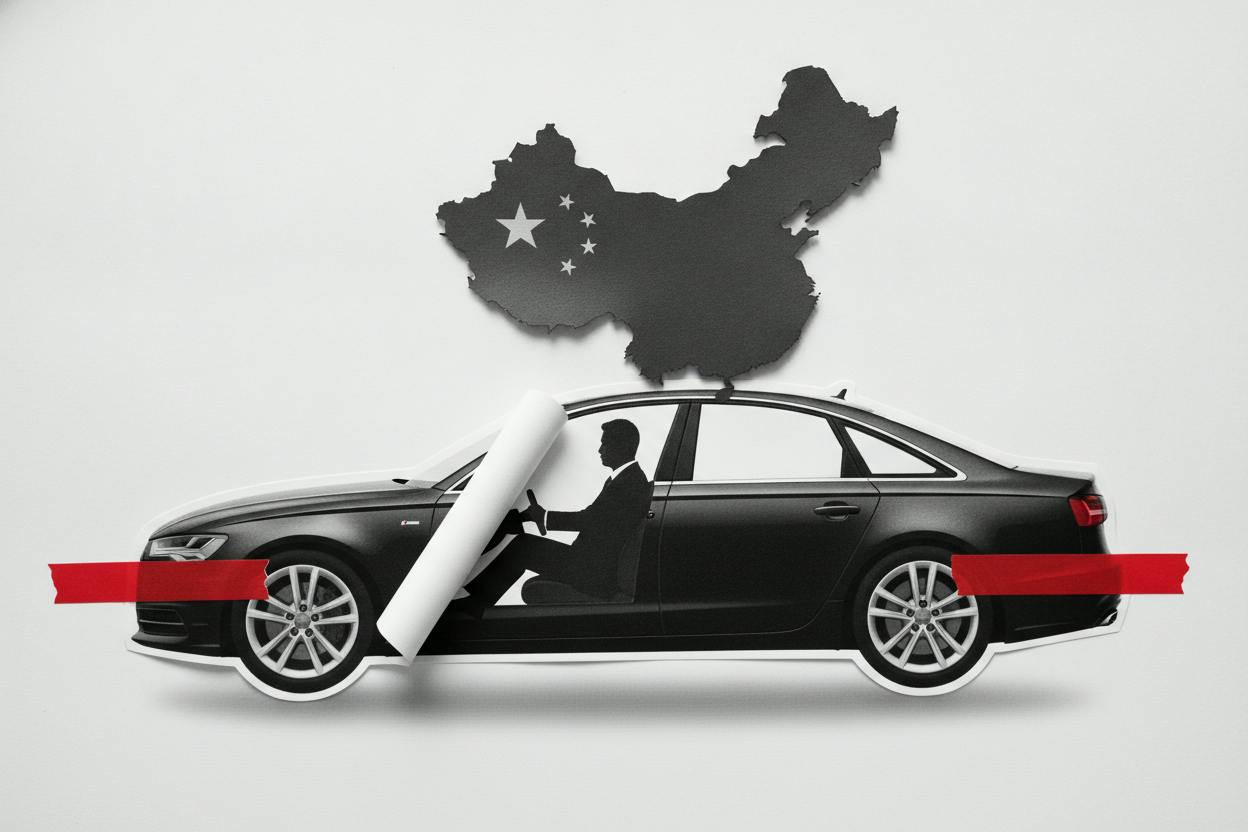
Audi is shaking up its leadership in China, its largest market, after a sharp drop in sales. The German automaker announced that Jeff Zhang, the former CEO of Chinese carmaker Chery, will become president of Audi China starting November 1. He will replace Johannes Roscheck, who is returning to Germany after what Audi CEO Gernot Doellner described as a “period of profound transformation” in the country.
The move comes as Audi, along with its parent company Volkswagen and sister brand Porsche, struggles to keep pace in a market that has rapidly shifted toward electric vehicles (EVs). Local Chinese brands, many offering lower-priced EVs, have been grabbing market share, and intense price competition has squeezed foreign automakers. Reuters described Audi's China sales as being “in freefall,” a stark warning for a company that once dominated the premium segment there.
Why China matters so much to Audi
China has long been the world's biggest car market, and for German luxury brands it has been a crucial profit engine. Audi, Volkswagen, and Porsche have all relied on strong Chinese demand to offset slower growth elsewhere. But the landscape has changed dramatically. Chinese consumers are embracing EVs faster than almost any other market, and domestic brands like BYD, NIO, and Xpeng have become formidable competitors. They offer advanced technology and competitive pricing, often undercutting foreign rivals.
The shift has been painful for traditional automakers. Audi's sales decline in China is not an isolated problem; it reflects a broader trend affecting many international car companies. The company's response is to put a local expert in charge. Jeff Zhang brings deep experience in the Chinese auto industry, having led Chery, one of the country's largest state-owned automakers. His appointment signals Audi's intent to better understand and adapt to local market conditions.
Alongside Zhang, Audi is also appointing Rolf Michl as chief operating officer, effective November 1, 2026. The staggered timing suggests a planned transition, giving the new leadership team time to settle in and implement changes.
What this means for investors
For investors, this leadership change is a clear acknowledgment that Audi's current strategy in China is not working. The company is betting that a local insider can revive sales and restore competitiveness. But turning around a business in a market as dynamic and cutthroat as China's is no easy task.
Investors should watch whether Audi can stabilize its market share and improve profitability in China. The success of this leadership change will likely be measured by sales figures and margin trends over the next few quarters. If Audi can halt the decline, it could ease concerns about Volkswagen's overall performance, since Audi is a major contributor to the group's profits.
However, the challenges are significant. The EV price war in China shows no signs of easing, and local brands continue to innovate rapidly. Audi's new leadership will need to move quickly to refresh its EV lineup, adjust pricing, and strengthen its brand appeal to Chinese buyers.
For everyday investors, this story is a reminder that even established global brands can face sudden shifts in consumer preferences. Companies that fail to adapt to technological changes, like the EV transition, can see their market position erode quickly. Diversification across regions and sectors remains a key principle for managing such risks.
As Audi embarks on this leadership transition, the broader auto industry will be watching closely. The outcome could influence how other foreign automakers approach the Chinese market, and whether they follow Audi's lead in tapping local talent to navigate the new reality.