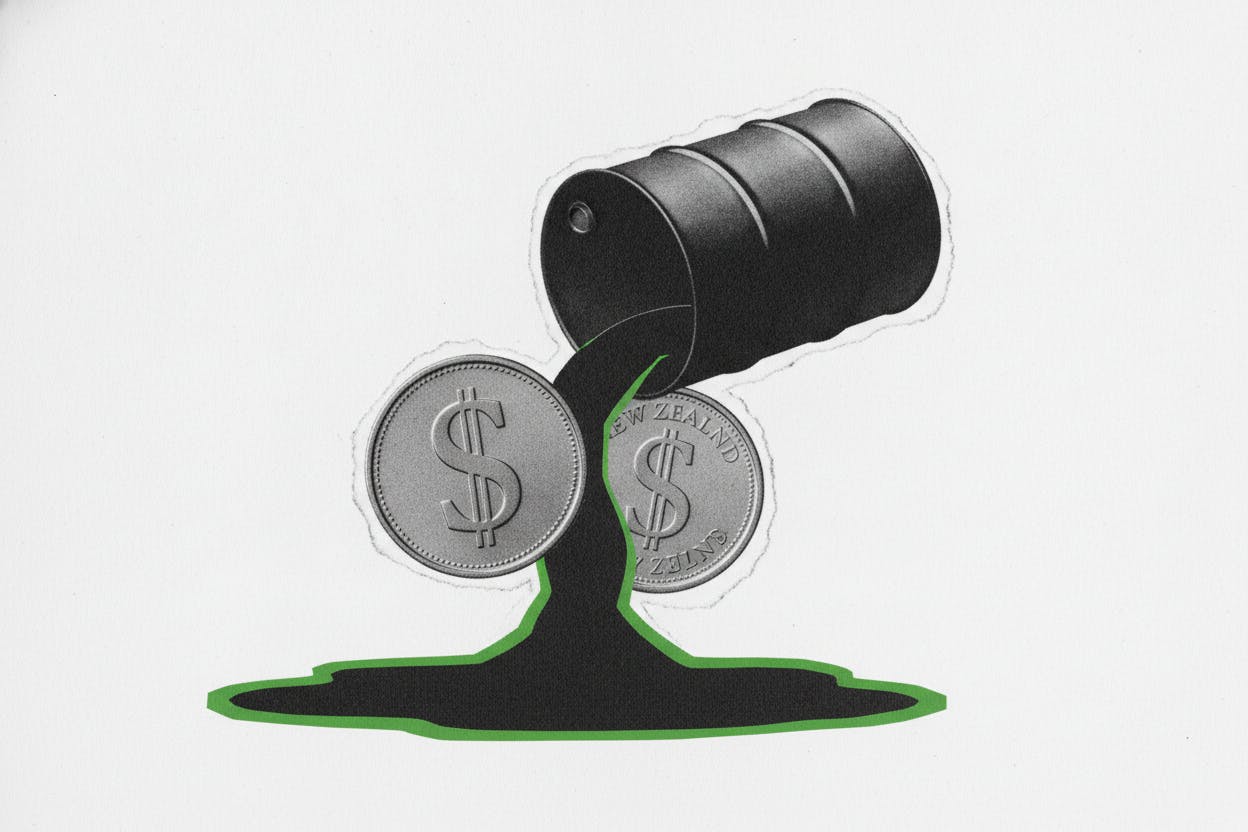
The Australian and New Zealand dollars are holding near multi-week highs against the yen and euro, as rising oil prices and stubborn inflation force traders to rethink the path of interest rates in both countries.
Higher energy costs are reshaping the inflation debate. When oil prices climb, investors worry that overall price pressures will stay elevated for longer. That leads them to scale back bets on near-term interest rate cuts, pushing bond yields higher. This shift is particularly significant for Australia and New Zealand, where central banks remain focused on bringing inflation back to target.
Oil’s Ripple Effect on Rate Expectations
Oil prices have been on the rise, driven by supply disruptions and geopolitical tensions. For example, recent shipping disruptions in the Strait of Hormuz have added to upward pressure on crude. Higher oil costs feed through to transport and production costs, making it harder for central banks to declare victory over inflation.
In New Zealand, the Reserve Bank of New Zealand (RBNZ) is already grappling with inflation that came in at 4.1% in the June quarter—well above its 1-3% target range. The central bank has signaled it may need to tighten policy further, and traders are now pricing in a greater chance of additional rate hikes. This has supported the New Zealand dollar, as higher interest rates tend to attract foreign capital seeking better returns.
Across the Tasman Sea, the Reserve Bank of Australia (RBA) faces a similar dilemma. While the RBA has held rates steady at 4.35% since November, sticky inflation and rising energy costs are pushing back expectations for when it might start cutting. Some economists now see the first rate cut delayed until 2025, which has helped the Australian dollar hold its ground.
What This Means for Investors
For everyday investors, the key takeaway is that currency markets are reacting to a shift in the interest rate outlook. When a central bank is expected to raise rates or keep them higher for longer, its currency tends to strengthen. That’s what we’re seeing with the Aussie and Kiwi dollars right now.
But higher rates also have implications for other assets. Bond yields in both countries have climbed, which can make fixed-income investments more attractive relative to stocks. Investors holding Australian or New Zealand government bonds may see better returns, but rising yields can also weigh on equity valuations, especially for growth-oriented companies.
The energy sector itself is a mixed bag. While higher oil prices benefit producers, they squeeze industries that rely heavily on fuel, such as airlines. For instance, Alaska Air recently warned that rising jet fuel costs are hitting its profit forecast. Similarly, higher energy costs can feed into broader inflation, affecting consumer spending and corporate margins.
Broader Economic Context
The current dynamic is part of a larger global story. Central banks around the world are wrestling with how quickly to ease policy as inflation proves stickier than expected. In contrast to New Zealand and Australia, some central banks are cutting rates. Hungary’s central bank, for example, recently lowered its key rate to 5.75% as inflation cooled and a deal with the European Union eased risks.
In Australia, recent data from the Westpac Leading Index suggests the economy is losing steam ahead of key inflation data. That could complicate the RBA’s decision-making: a weakening economy might argue for rate cuts, but persistent inflation argues for restraint. The RBA will be watching oil prices closely as it prepares for its next meeting.
For now, the Aussie and Kiwi dollars are benefiting from a repricing of rate expectations. But investors should keep an eye on oil markets and inflation data in the weeks ahead. Any sign that energy costs are easing could quickly reverse the current trend, while further spikes could reinforce it.
Looking Ahead
The next major test for both currencies will be upcoming inflation reports and central bank meetings. If inflation remains elevated, the RBNZ and RBA may be forced to act, which could provide further support for their currencies. Conversely, if oil prices retreat or economic data weakens significantly, rate cut bets could return, putting pressure on the Aussie and Kiwi dollars.
For investors, the message is clear: in a world where oil is changing the rate story, staying informed about energy markets and central bank policy is more important than ever.



