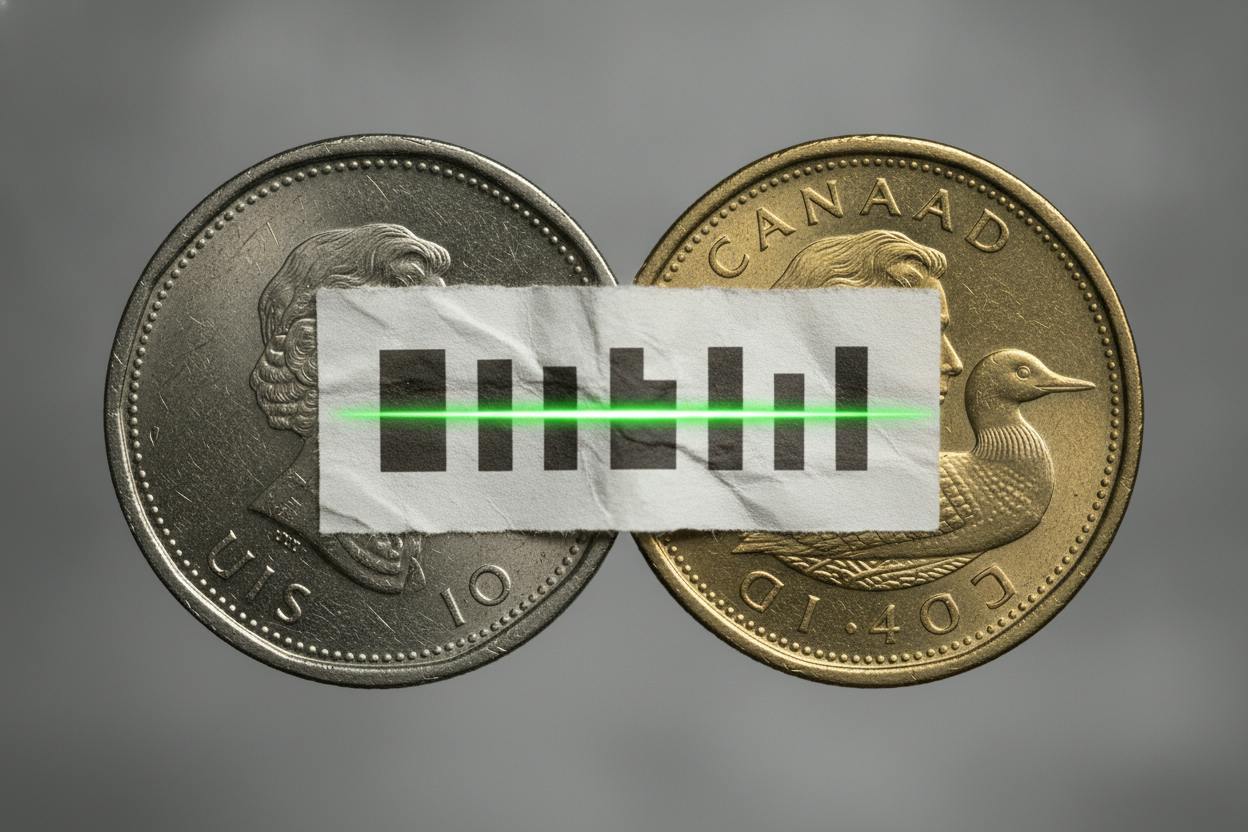
For the first time in more than eight years, the Australian dollar has reached parity with the Canadian dollar—a quiet but telling shift in currency markets. The move comes as investors look for signs that the artificial-intelligence boom is still backed by real money, not just hype.
Two signals are drawing particular attention: the buzz around Meta’s new AI model, “Muse,” and reported demand for SoftBank’s massive high-yield bond sale, which is expected to raise more than $10 billion.
What the currency move tells us
Currency pairs like the Australian dollar and the Canadian dollar are often seen as barometers of global risk appetite. Both are “commodity currencies”—their values are closely tied to the prices of raw materials such as iron ore, coal, and oil. When investors feel optimistic about global growth, these currencies tend to strengthen; when fear takes over, they tend to weaken.
The fact that the Aussie has caught up to the loonie—the nickname for the Canadian dollar—suggests that markets are pricing in relatively strong demand for commodities, particularly from China, Australia’s biggest trading partner. It also reflects a shift in relative interest-rate expectations between the two countries.
But the bigger story may be what this says about investor sentiment. Currency moves often happen before stock-market moves, and the fact that the Aussie is holding its own suggests that, at least for now, the global growth outlook is not collapsing.
SoftBank’s bond sale: a test of risk appetite
SoftBank, the Japanese tech-investment giant, is in the market with a high-yield bond deal expected to raise more than $10 billion. High-yield bonds—often called “junk bonds”—are issued by companies with lower credit ratings, so they must offer higher interest rates to attract buyers. Demand for these bonds is a classic measure of risk appetite: when investors are willing to lend to riskier companies, it usually means they are feeling confident.
SoftBank is a major player in the AI space through its Vision Fund, which has backed companies like Arm and OpenAI. A successful bond sale would signal that investors are still willing to fund big AI bets, even after a year of massive spending on data centers and computing power.
If the sale struggles, it could be an early warning that the market’s enthusiasm for AI is cooling. That would have ripple effects not just for SoftBank, but for the entire tech sector.
Meta’s Muse: the next wave of AI agents
Meanwhile, Meta has been generating buzz with “Muse,” its latest AI model. While details are still emerging, the model is reportedly focused on the next wave of AI agents—software that can perform tasks autonomously, rather than just generating text or images.
For investors, the significance of Muse is less about the technology itself and more about what it represents: continued heavy investment in AI by the biggest tech companies. Meta, like Microsoft, Google, and Amazon, is spending billions on AI infrastructure, and the market is watching to see whether those investments will eventually pay off.
If AI models like Muse can deliver real-world applications that generate revenue, the current optimism is justified. If not, the market could be in for a correction.
What it means for investors
For everyday investors, the key takeaway is that the AI trade is still very much alive, but it is being tested. The currency move and the bond sale are two ways to gauge whether the market’s enthusiasm is sustainable.
If you hold tech stocks or funds, you might want to keep an eye on how these signals evolve. A strong reception for SoftBank’s bonds would be a positive sign; a weak one could be a red flag. Similarly, if the Aussie starts to lose ground against the loonie, it could indicate that risk appetite is fading.
It’s also worth remembering that currency moves can affect your portfolio in unexpected ways. If you own international stocks or funds, a stronger Australian dollar can boost the value of your overseas investments when converted back to local currency.
As always, it’s important to focus on the long term. Short-term market moves—whether in currencies, bonds, or tech stocks—are normal. The underlying question is whether the AI revolution will deliver on its promise. That will play out over years, not days.
For now, the market is giving AI the benefit of the doubt. But the next few weeks, as SoftBank’s bond sale concludes and more details about Muse emerge, could provide a clearer picture of whether that confidence is well placed.