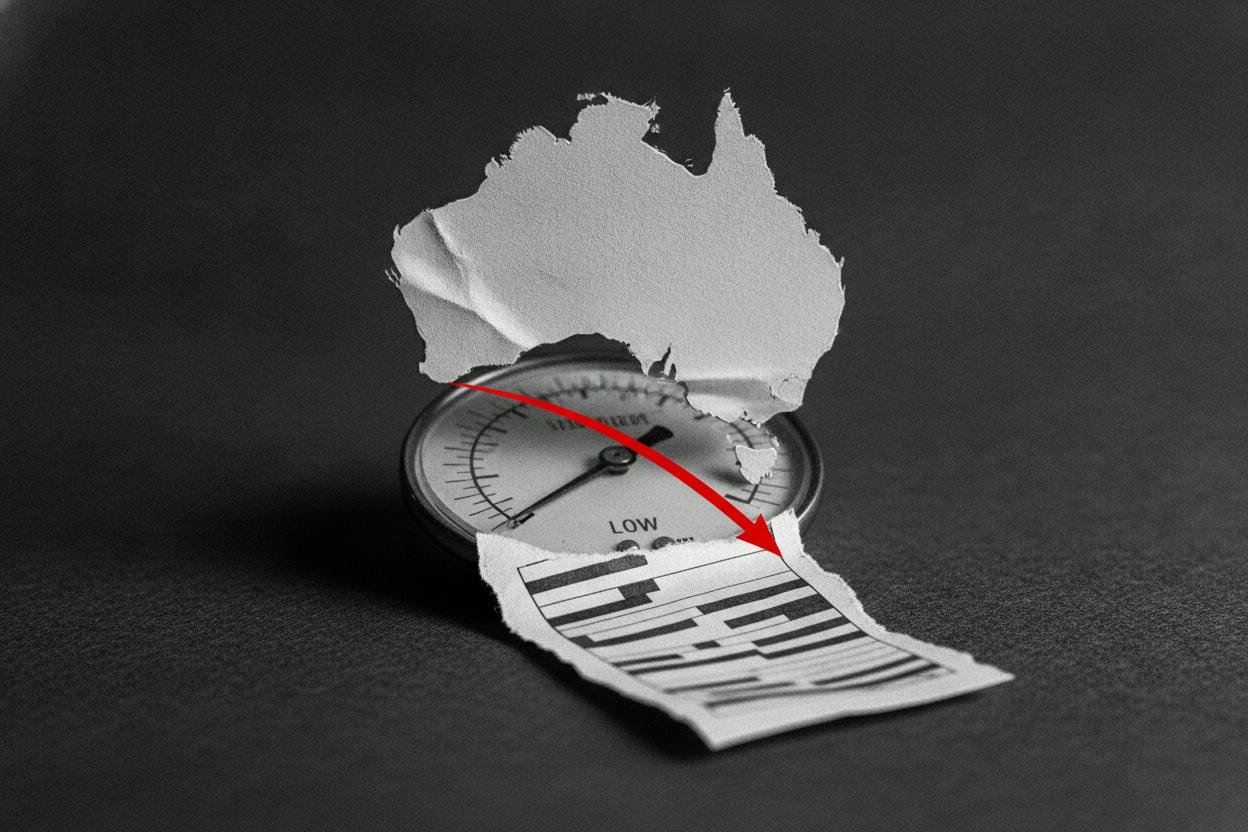
Australia's private sector is contracting at a faster pace, according to fresh survey data that points to a broadening slowdown in the economy. S&P Global's flash composite purchasing managers' index (PMI) fell to 46.1 in November, down from 48.2 in October. Any reading below 50 signals that more businesses are reporting deteriorating conditions than improving ones, so the drop indicates the downturn is deepening.
What the numbers show
The composite PMI is a weighted average of two sub-indexes: one for services and one for manufacturing. In November, both weakened. The services activity index sank to 46.2, while manufacturing's headline PMI slipped to 48.7. More tellingly, the manufacturing output gauge fell to 45.3, a sharp decline that suggests factories are cutting production at a faster clip.
S&P Global noted that new orders fell for the first time in five months, with companies pointing to tight budgets and the drag from high interest rates. That's a key signal because new orders are a forward-looking indicator—if businesses aren't seeing new demand, they're likely to reduce output and hiring in the months ahead.
Why PMIs matter to investors
PMIs are among the first economic indicators released each month, giving investors a timely read on business conditions before official GDP data arrives. They're based on surveys of purchasing managers at hundreds of companies, asking whether activity, orders, employment, and prices are rising or falling compared with the previous month.
Because they're released quickly, PMIs can move markets. A sharp drop like this one can raise concerns about economic growth and corporate earnings, which is why investors watch them closely. For everyday investors, the takeaway is that the Australian economy is losing momentum, which could weigh on company profits and share prices, particularly in cyclical sectors like manufacturing and discretionary services.
What's behind the slowdown
The brief points to two main culprits: tight budgets and high interest rates. The Reserve Bank of Australia has kept rates elevated to combat inflation, and that's squeezing households and businesses. Consumers are spending less, and companies are reluctant to invest or hire when borrowing costs are high and demand is uncertain.
This isn't just an Australian story. Global risk sentiment has been fragile recently, with tech selloffs and currency swings adding to uncertainty. But Australia's reliance on commodity exports and its housing market make it particularly sensitive to rate moves.
What it means for your money
For investors, a deepening contraction is a warning sign. It suggests that the economy may be heading for a period of slower growth, or even a recession, which typically hits corporate earnings and share prices. Defensive sectors like healthcare and utilities often hold up better in such environments, while cyclical stocks—like retailers, miners, and manufacturers—tend to struggle.
That said, PMIs are just one data point. They can be volatile, and a single month's reading doesn't make a trend. Investors should watch for confirmation in upcoming official data, such as retail sales, employment figures, and GDP growth. The RBA's next moves will also be crucial—if the economy weakens further, the central bank may be forced to cut rates sooner than expected, which could provide some support to markets.
For now, the message is clear: Australia's private sector is in a downturn, and it's getting worse. Australian shares have already been under pressure from global factors, and this domestic weakness could add to the headwinds. The local market has struggled to find momentum even when global tech rallies, so a softening economy doesn't bode well.
Investors should keep an eye on how companies in interest-rate-sensitive sectors—like housing, construction, and consumer discretionary—report their outlooks in the coming weeks. If the contraction persists, earnings downgrades could follow.
The bottom line
Australia's private sector is contracting at a faster pace, with both services and manufacturing weakening and new orders falling for the first time in five months. The data suggests the economy is losing steam, and investors should brace for potentially softer corporate earnings and a more cautious market environment. While one month doesn't define a trend, the direction is concerning.