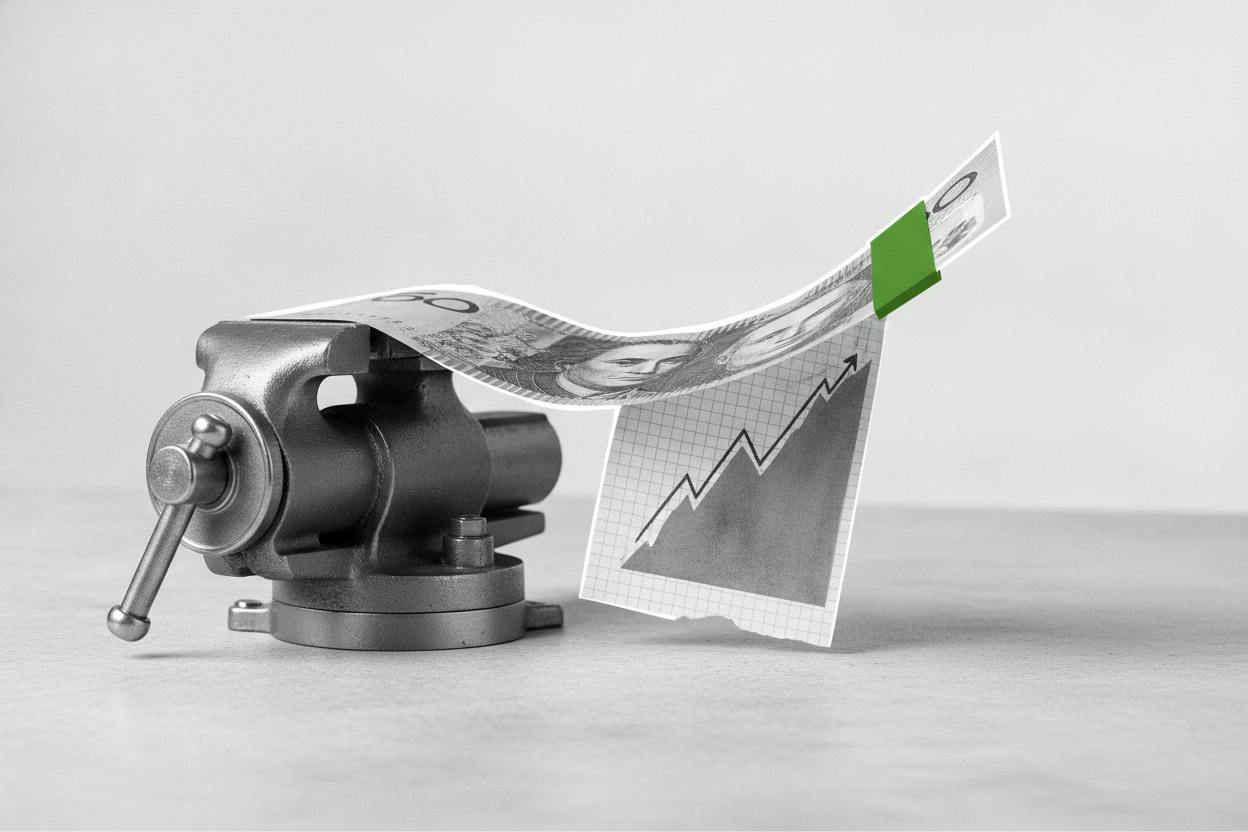
Australian workers saw their pay packets grow at the fastest pace in nearly three years during the September quarter, according to the latest wage price index. The 1.1% quarterly rise was stronger than many economists had expected, and it comes against a backdrop of a slightly cooling labour market, with unemployment edging up to 4.7%.
For everyday investors, the data is a double-edged sword. On one hand, stronger wage growth is a sign that households have more money to spend, which can support company revenues and the broader economy. On the other, it can also feed into inflation, which is why central banks watch wage figures closely when setting interest rates.
What the numbers show
The wage price index measures how much employers are paying for the same work over time, stripping out the effects of promotions or job changes. A 1.1% quarterly increase translates to an annual pace of around 4%—a level not seen since early 2021. That is a meaningful acceleration from the previous quarter and suggests that the tight labour market of recent years is still putting upward pressure on salaries.
At the same time, the unemployment rate rose to 4.7%, up from 4.1% a year ago. That might sound contradictory: how can wages be rising quickly while more people are out of work? The answer lies in the fact that the labour market remains relatively tight by historical standards. Even with unemployment creeping higher, many employers still report difficulty finding skilled workers, which forces them to offer higher pay to attract and retain staff.
This dynamic is playing out in other developed economies too. In the UK, for example, wage growth has cooled to 3.6%, but the Bank of England is still weighing another rate hike. In the eurozone, inflation remains stubbornly above target even as growth forecasts have been revised up. The common thread is that central banks are trying to balance the need to tame inflation against the risk of choking off economic growth.
Why markets think rates have peaked
Despite the hot wage print, interest rate swaps—financial instruments that let investors bet on future rate moves—still point to the Reserve Bank of Australia (RBA) having finished its tightening cycle. That may seem surprising, but it reflects a broader market view that inflation is on a downward path and that the RBA is likely to hold rates steady for an extended period before eventually cutting them.
Investors are also weighing the impact of higher rates on the economy. The RBA has raised its cash rate sharply over the past couple of years, and the full effect of those hikes is still working through the system. Mortgage holders are feeling the pinch, and consumer spending has softened. In that context, a modest uptick in wages may not be enough to push the RBA back into action, especially if it believes inflation will continue to ease.
That said, the wage data does complicate the picture. If wage growth stays strong, it could keep services inflation elevated, which would make it harder for the RBA to justify rate cuts next year. Some economists argue that the RBA may need to keep rates higher for longer to ensure inflation returns to its 2–3% target band.
What it means for investors
For investors, the key takeaway is that the Australian economy is still sending mixed signals. Strong wage growth is generally positive for consumer-facing companies, as it supports household incomes and spending. Retailers, hospitality groups, and other businesses that rely on discretionary spending could benefit if the trend continues.
On the other hand, if wage growth forces the RBA to keep rates higher for longer, that would be a headwind for rate-sensitive sectors like property and utilities. Higher rates also increase borrowing costs for companies, which can weigh on profit margins. As we've seen with Infratil cutting the value of its renewable energy stake due to higher rates, the cost of capital is a major factor in asset valuations.
For those with cash in savings accounts, the current environment remains favourable. High interest rates mean deposit rates are still attractive, and if the RBA holds steady, that could persist for a while. But for bond investors, the outlook is more nuanced. If the market is wrong and the RBA is forced to hike again, bond prices could fall.
Overall, the wage data is a reminder that the path to lower inflation is rarely smooth. Investors should expect continued volatility in rate-sensitive assets and keep an eye on upcoming inflation and employment figures for clues about the RBA's next move. As always, diversification and a long-term perspective remain the best tools for navigating uncertain markets.