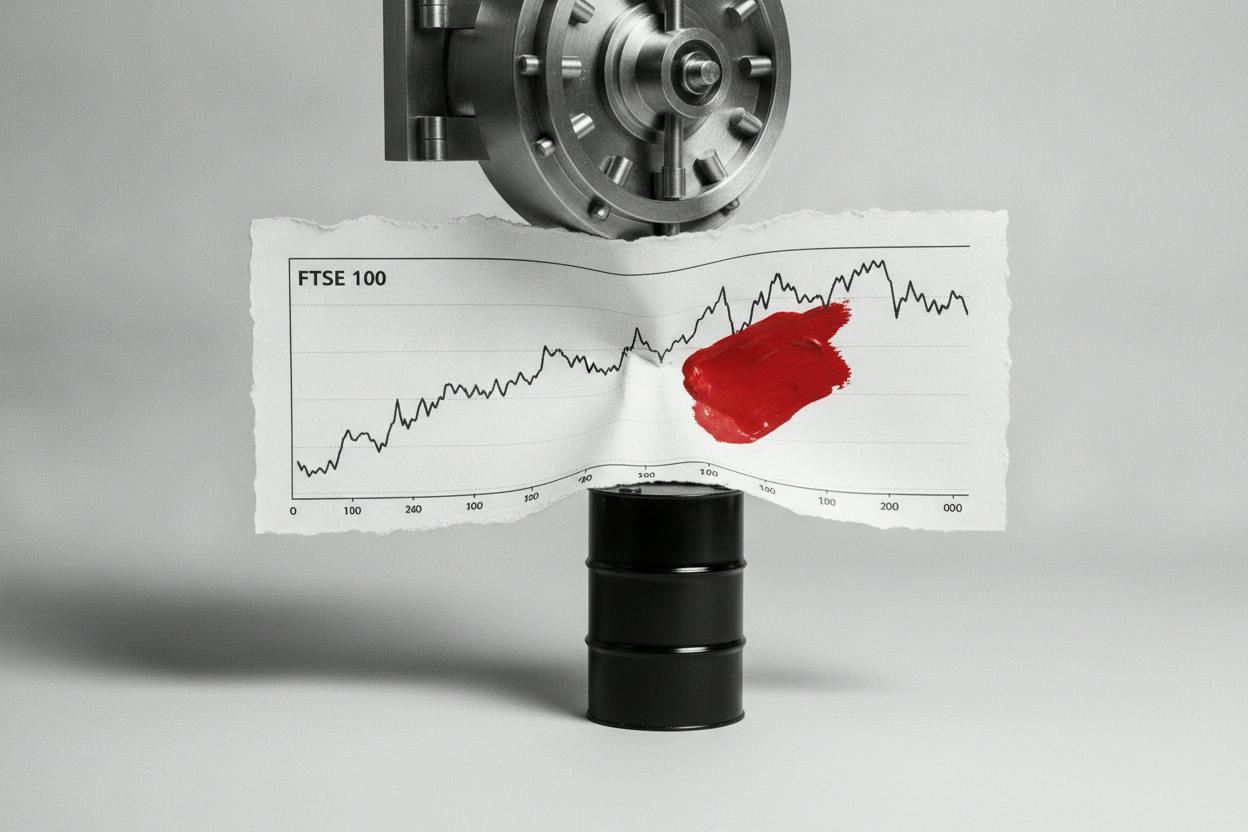
UK stocks started the week on a sour note, with the FTSE 100 slipping 0.9% as bank shares led the decline. The biggest drag came from Barclays, whose shares fell 2.7% after a report that the Bank of England is scrutinizing how its traders valued certain hard-to-price loans.
According to the Financial Times, the central bank is examining whether Barclays traders misrepresented valuations on illiquid private credit loans. These are loans made to companies that are not traded on public markets, making them difficult to price accurately. The news hit sentiment across the banking sector, which fell 1.8% as a group.
Why private credit valuations matter
Private credit has grown rapidly in recent years, as banks and other lenders have moved into a market that was once dominated by specialist funds. These loans are typically held to maturity rather than traded, so their value is often based on internal models or estimates rather than observable market prices.
That lack of transparency is what makes the Bank of England's probe significant. If regulators find that Barclays traders deliberately inflated or manipulated valuations, it could lead to fines, reputational damage, and a loss of investor confidence. Even the suggestion of such a review can spook shareholders, because banks' balance sheets are only as trustworthy as the numbers they report.
For everyday investors, the key takeaway is that bank stocks can be sensitive to any hint of accounting or regulatory trouble. A single news report can wipe billions off a bank's market value in hours, as seen with Barclays on Monday.
What this means for the FTSE 100
The FTSE 100 is heavily weighted toward financial stocks, so a slide in banks can weigh heavily on the index. Monday's drop erased some of the gains from recent sessions, when the index had been buoyed by optimism about fiscal discipline and a rally in bank shares. That earlier strength was highlighted in a recent report on the FTSE's record high.
Oil prices also remained elevated, which added to the mixed picture. While higher oil prices can boost energy companies on the index, they also raise costs for businesses and consumers, potentially slowing economic growth. The combination of bank weakness and high oil prices left investors cautious.
Investor implications
For investors, the immediate concern is whether the Barclays probe will expand or lead to broader scrutiny of how banks value private credit assets. If regulators tighten the rules, it could affect not just Barclays but the entire banking sector, as well as the growing private credit industry.
It's also a reminder that bank earnings can be opaque. While banks have reported strong profits recently, as seen in regional banks beating third-quarter forecasts, the quality of those earnings depends on accurate asset valuations. Any doubt about that can quickly undermine confidence.
Investors should watch for any official statements from the Bank of England or Barclays in the coming days. If the probe results in fines or forced write-downs, Barclays shares could face further pressure. On the other hand, if the bank is cleared, the stock might recover.
For those with diversified portfolios, a single bank's troubles are unlikely to derail long-term plans. But for anyone holding bank stocks or funds with heavy bank exposure, it's worth keeping an eye on regulatory news. The broader banking sector's 1.8% drop shows how quickly sentiment can shift.
In the meantime, the FTSE 100's slide is a reminder that markets can turn on a headline. While the index had been hitting fresh highs, as noted in that same report, such gains are not guaranteed to last. Investors should expect volatility, especially in sectors where valuations are hard to verify.
As always, it's important to focus on the long term rather than reacting to daily swings. But understanding the risks—like the opacity of private credit—can help you make more informed decisions about where your money is invested.