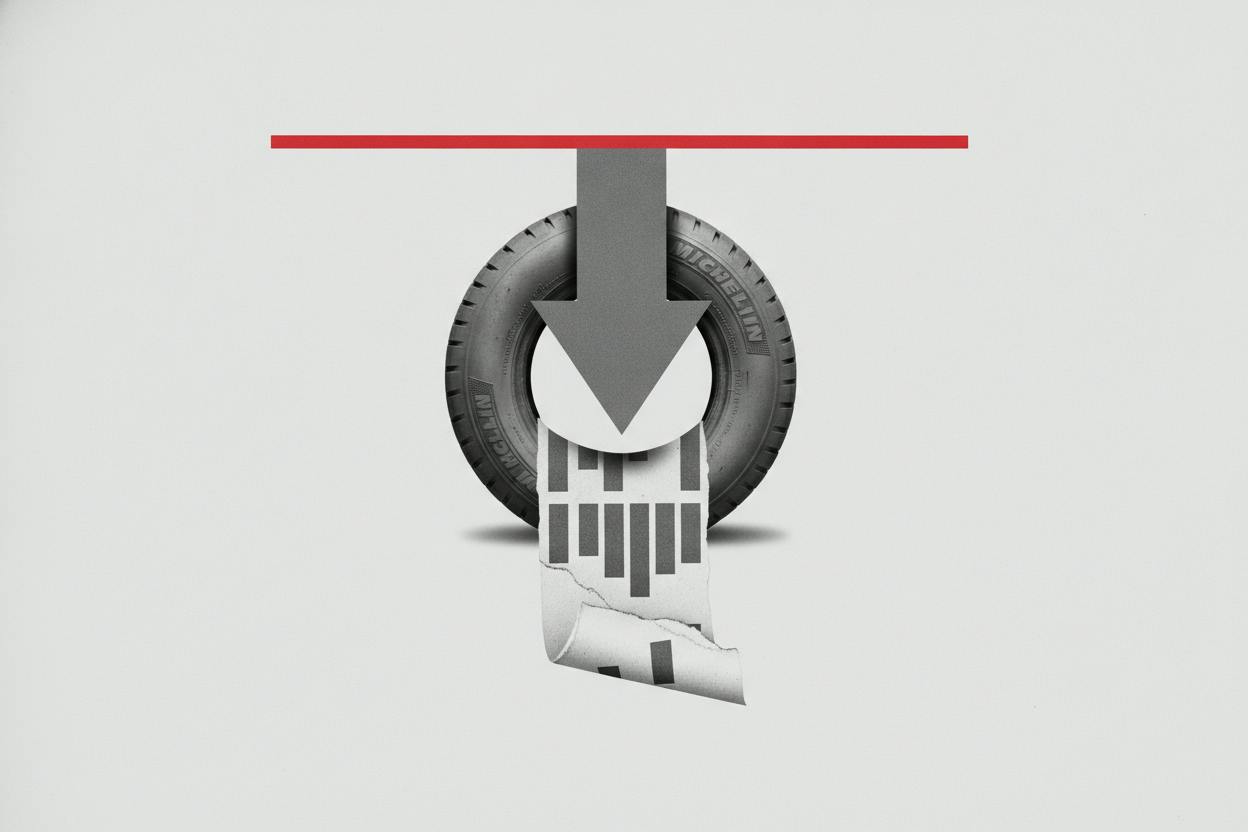
European investment bank Berenberg has maintained its hold rating and €30 price target on Michelin (ML.PA) after the tire maker's third-quarter update came in slightly light and pointed to softer volumes ahead. The bank's decision reflects a cautious stance on the stock, even as the company's long-term fundamentals remain intact.
Q3 numbers miss expectations
Berenberg noted that Michelin's third-quarter revenue missed expectations by 0.9%, while volumes fell 0.6% compared with the same period last year. Analysts had been looking for volume growth of 0.6%, so the shortfall was a clear disappointment. The miss was driven by weaker demand from automakers for original equipment tires, as well as softer replacement sales in lower-priced Tier 2 and 3 brands.
This suggests that both car production and everyday driving demand are cooling, a trend that could weigh on the company's performance in the coming quarters. Management also guided to “slightly negative” volumes into the fourth quarter and for full-year 2026, adding to the cautious outlook.
Why it matters for investors
For everyday investors, the key takeaway is that Michelin is facing a demand slowdown, not a structural problem. The company remains a global leader in tire manufacturing, with a strong brand and a diversified product portfolio. However, the near-term outlook is clouded by macroeconomic headwinds, including softer auto production and consumer spending.
Berenberg's hold rating suggests the bank sees limited upside at the current price, but also limited downside. The €30 price target implies a modest potential gain from recent levels, but it also signals that the stock may not be a bargain yet. Investors should consider whether they are comfortable with the risks of a cyclical downturn in the auto industry.
Broader market context
The tire industry is closely tied to the health of the global auto sector and consumer demand. When car sales slow, demand for original equipment tires drops, and when consumers tighten their budgets, they may delay replacing worn tires or opt for cheaper alternatives. This is exactly what Michelin is experiencing, with weaker demand in both segments.
Berenberg's stance on Michelin comes amid a broader trend of cautious analyst sentiment on European industrials. The bank has also recently adjusted forecasts for other companies in the sector, such as Anglo American's copper miss, reflecting a wider view that commodity and industrial demand is softening.
For investors, it's worth noting that tire demand is also influenced by raw material costs, particularly rubber. Recent rubber price movements have been mixed, with oil price jumps and weak tire demand creating uncertainty. This adds another layer of complexity to Michelin's earnings outlook.
What to watch next
Investors will be watching Michelin's fourth-quarter performance closely, as well as any updates on management's guidance. The company's ability to manage costs and maintain pricing power in a softer demand environment will be key. Additionally, any signs of a recovery in auto production or consumer confidence could provide a tailwind.
Berenberg's decision to keep the price target unchanged suggests that the bank sees the current valuation as fair, but not compelling. For those considering an investment, it may be wise to wait for more clarity on the demand outlook before making a move.
In the meantime, the broader market is also dealing with other pressures, such as oil price jumps and rate worries, which could influence investor sentiment across sectors. Keeping an eye on these macro factors can help you make more informed decisions about your portfolio.
Ultimately, Michelin's Q3 miss is a reminder that even industry leaders are not immune to cyclical downturns. While the company's long-term prospects remain solid, the near-term path is uncertain. As always, it's important to do your own research and consider your own financial goals before making any investment decisions.