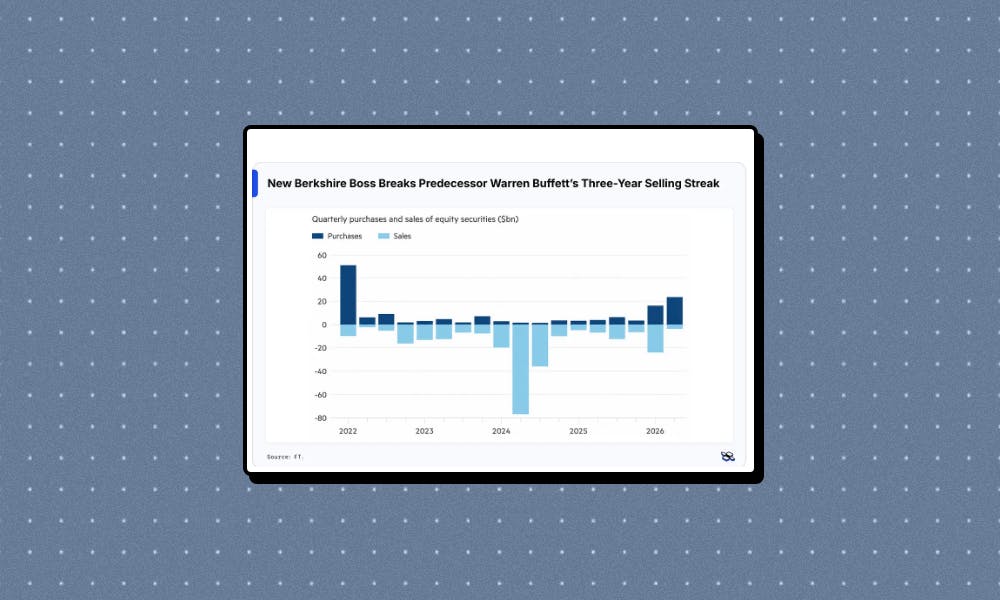
Warren Buffett's hand-picked successor, Greg Abel, is already putting his own stamp on Berkshire Hathaway. In the second quarter, the company invested a net $19.8 billion in stocks, breaking a three-year streak of selling. That marks a clear shift in strategy for the conglomerate, which had been sitting on a record cash pile.
Berkshire's cash reserves stood at a massive $365 billion at the end of the quarter. For years, Buffett had been cautious about finding good deals, especially with stock prices climbing. But Abel, who took over as CEO in 2024, appears more willing to put that money to work.
What Abel bought
The headline move was a $10 billion investment in Alphabet, Google's parent company. That's a big bet on one of the world's largest tech firms, and it signals that Berkshire sees value in big tech even after a strong run in the sector.
Berkshire also spent $4.5 billion buying back its own shares. Share buybacks are a way for a company to return cash to investors by reducing the number of shares outstanding, which can boost the value of remaining shares. It's a move Buffett has favored in the past, and Abel is continuing that tradition.
In addition, Berkshire agreed to acquire homebuilder Taylor Morrison for $8.5 billion. That's a significant deal, showing that Abel is willing to make big bets even with US stocks near record highs. Taylor Morrison is one of the country's largest homebuilders, and the acquisition fits with Berkshire's history of investing in housing and construction-related businesses.
Why this matters
For everyday investors, Berkshire's moves are often seen as a signal. When Buffett or Abel buys, it can suggest they see value in certain sectors or the market overall. Ending a three-year selling streak is notable because it suggests a change in sentiment.
Berkshire's cash pile had been growing for years, partly because Buffett complained about high valuations. By dipping into that cash, Abel is essentially saying that he sees opportunities worth pursuing, even with the market near highs.
The Alphabet investment is particularly interesting. It shows Berkshire is willing to invest in mega-cap tech, a sector that has driven much of the market's gains recently. For investors, that could be a sign that even value-oriented investors see long-term potential in companies like Alphabet.
What it means for your portfolio
If you're an investor, you might wonder what this means for your own money. First, it's a reminder that even the most cautious investors can find opportunities. Berkshire's move suggests that there are still good deals to be had, even when the market feels expensive.
Second, the Taylor Morrison acquisition highlights the housing sector. Homebuilders have been in focus as interest rates and housing demand shift. If Berkshire sees value there, it might be worth paying attention to the sector.
Finally, the share buyback is a signal that Berkshire believes its own stock is undervalued. That's often seen as a positive sign for a company's shares.
Of course, this isn't a recommendation to buy or sell anything. But watching what Berkshire does can give you a sense of where some of the smartest money in the market is heading.
As Abel continues to put his stamp on Berkshire, investors will be watching closely. The second-quarter moves suggest he's not afraid to act, and that could mean more changes ahead.