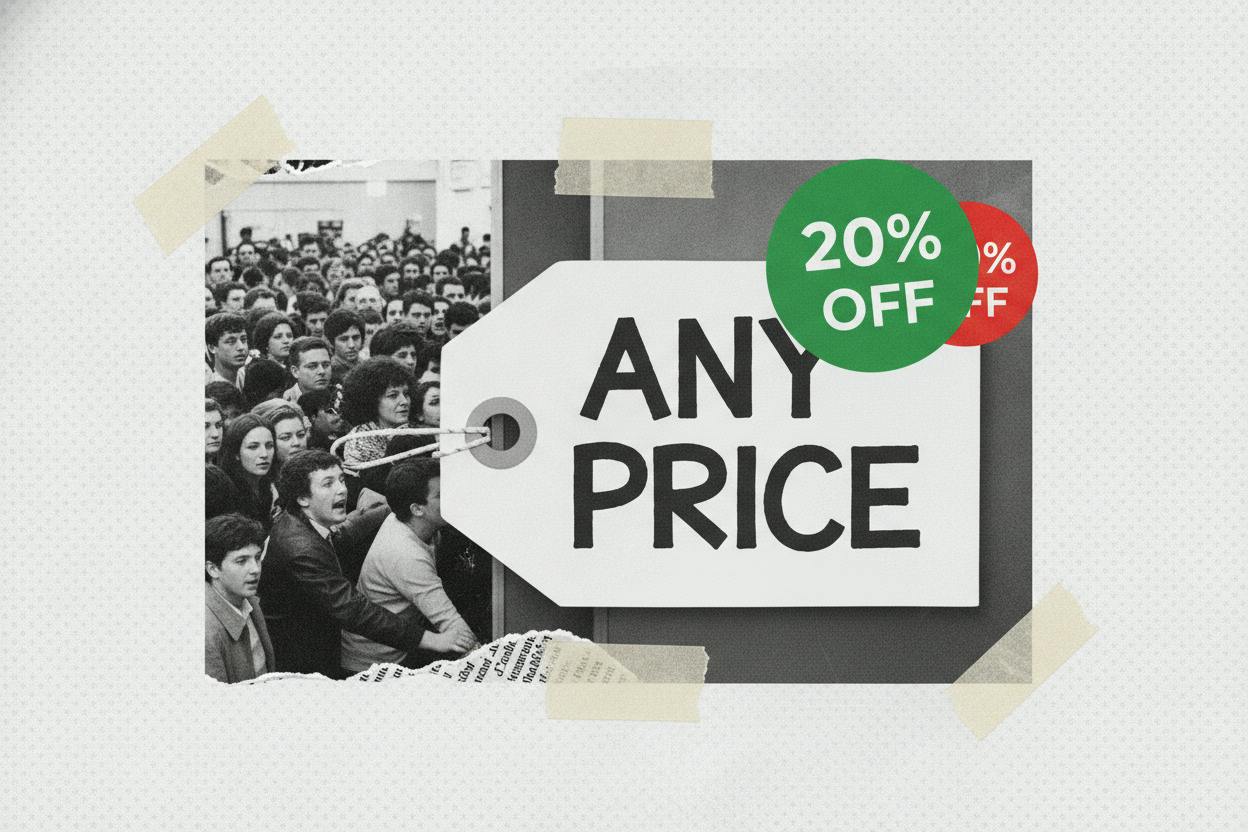
Black Friday shoppers showed up in force, but they weren't willing to pay just any price. Early data shows US store visits running about 2% behind last year, even as overall holiday sales are expected to climb. The gap between foot traffic and spending tells a familiar story: consumers are feeling the pinch of higher costs and are being more selective about what they buy.
Healthy headline numbers, with a catch
The headline figures still look solid. The National Retail Federation, an industry trade group, forecasts November-December retail sales to rise 4.2% from last year, topping $1 trillion. Adobe Analytics, which tracks online transactions, pegged Black Friday online spending at $12.9 billion, up 9.2% from a year earlier.
But inflation is still running at 3.8%, meaning some of that "growth" is simply higher prices rather than more items in shoppers' baskets. When prices rise faster than the volume of goods sold, the increase in dollar sales can mask weakness underneath.
That's exactly what the foot-traffic data suggests. Passby, a firm that tracks store visits, counted about 530 million visits by mid-afternoon on Black Friday, roughly 2% below the same time last year. Fewer people walking through doors is a warning sign for retailers that rely on impulse purchases and full-price sales.
Shoppers feel squeezed by everyday costs
The disconnect between spending and traffic points to a broader consumer mood. An NRF survey found that 82% of consumers are taking steps to manage their holiday spending. That could mean setting stricter budgets, hunting for deals, or cutting back on non-essentials.
Everyday costs like groceries and gas are eating into disposable income, leaving less for discretionary purchases. Even with discounts, many shoppers said the markdowns weren't enough to offset the higher cost of living. This is a shift from previous years when Black Friday was a day to splurge on electronics, toys, and clothing.
Retailers are responding by leaning harder on promotions, gift cards, and late-season markdowns to clear inventory. That strategy can keep revenue up, but it tends to squeeze gross margin—the profit left after paying for the goods sold. When a retailer discounts heavily, it sells more units but earns less on each one.
What it means for investors
For investors, the key number isn't just the sales growth rate—it's what happens to profit margins. With NRF's 4.2% sales growth barely outpacing 3.8% inflation, weaker foot traffic can quickly turn "more spending" into "the same baskets, just pricier."
That dynamic usually pushes chains to compete on discounts to move products, and those markdowns can eat into profitability even if revenue holds up. So this holiday season may be less about who posts the biggest sales number and more about who can defend margins.
Investors will be listening closely to guidance from promotion-heavy retailers like Target and Best Buy, and from discretionary brands like Mattel, after toy prices rose 13.2% since the start of the year. If those companies signal that discounting is cutting into profits, their stocks could feel the pressure.
The broader market context matters too. With AI stocks bouncing in thin holiday trading and rate-hike odds still on the table, retail earnings will be a key test of consumer health. If shoppers are spending but not at full price, that's a signal for the entire economy.
For everyday investors, the takeaway is to watch not just sales headlines but also the language companies use about margins and inventory. A retailer that beats on sales but warns about profit pressure may not be as strong as it looks.
As the season unfolds, Black Friday's month-long price war is already squeezing retailer profits. The question is whether the holiday cheer will translate into bottom-line gains or just a lot of discounted merchandise moving out the door.