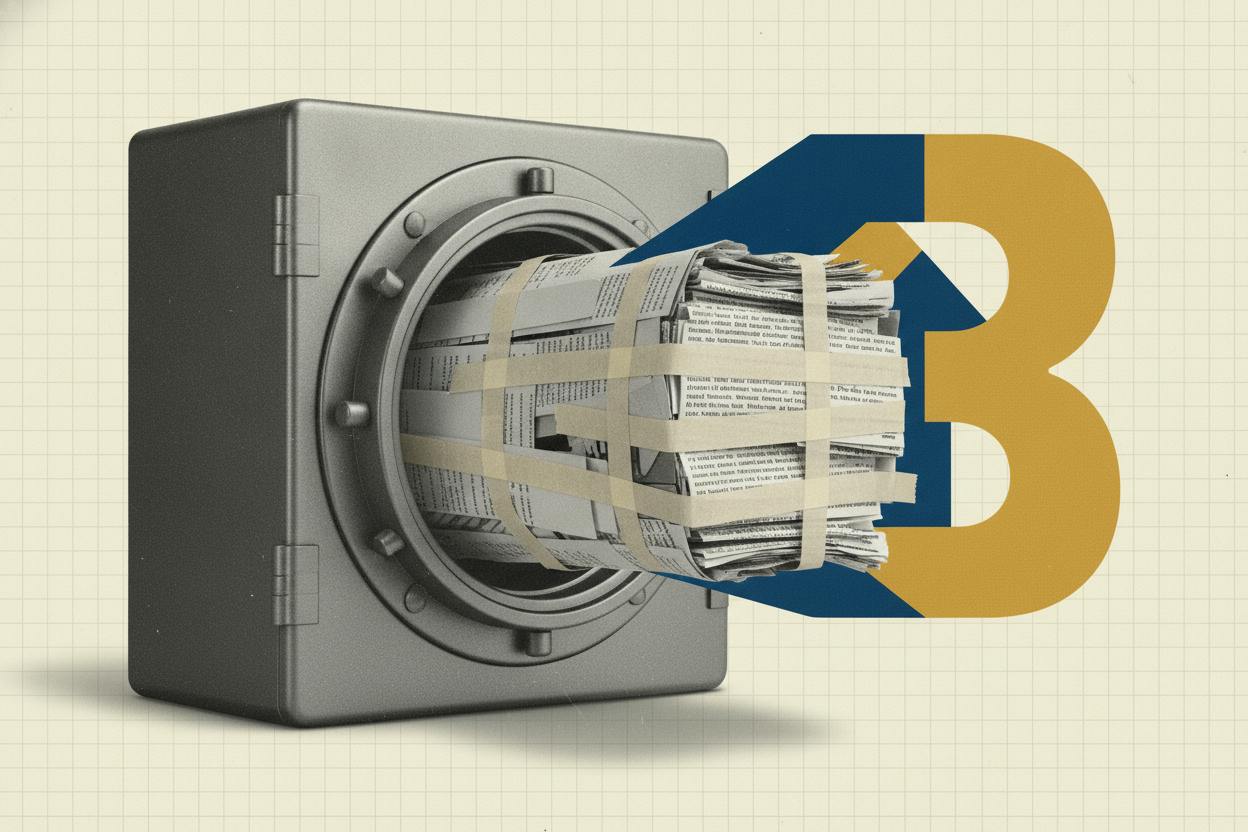
Blackstone, the world's largest alternative asset manager, reported third-quarter results that underscore a growing challenge for the private equity industry: getting money back out of investments. The firm's net realizations—a measure of cash returned to investors from selling companies or properties—fell 34% from a year earlier, while distributable earnings, the cash available to pay dividends to shareholders, dropped 13%.
Yet the same quarter saw investors pour more than $63 billion of new money into Blackstone's funds, pushing total assets under management to a record $1.37 trillion. That contrast—strong fundraising but sluggish exits—captures the current state of private markets, where capital is abundant but the doors to sell are only slightly ajar.
Why exits have become harder
For alternative asset managers like Blackstone, an "exit" is the moment they sell a portfolio company or a piece of real estate, converting paper gains into actual cash. That cash is then returned to the limited partners—pension funds, endowments, and wealthy individuals—who invested in the fund. Exits are the lifeblood of the business model: they generate fees, prove performance, and free up capital for new deals.
But the exit window has narrowed considerably. Higher interest rates have raised the cost of financing for potential buyers, making them more cautious about acquisitions. At the same time, the market for initial public offerings (IPOs) and mergers and acquisitions has slowed, as companies and investors wait for more clarity on the direction of rates and the economy. When buyers are hesitant and public markets are less welcoming, selling a business at an attractive price becomes harder.
This isn't unique to Blackstone. Across the private equity industry, firms have been holding onto assets longer than they'd like, waiting for conditions to improve. The result is that distributions to investors have slowed, even as fundraising remains robust.
What the numbers say
Blackstone's net realizations fell to about $332 million in the third quarter, down 34% from the same period last year. Distributable earnings, which reflect the fees and investment gains the firm can actually pay out, declined 13%. These figures are closely watched by investors because they directly affect the dividends Blackstone pays to its own shareholders.
Despite the slowdown, the firm's ability to attract new capital remains a bright spot. The $63 billion in inflows came from a mix of institutional investors and wealthy individuals, drawn to Blackstone's private credit, real estate, and infrastructure strategies. The growth in assets under management to $1.37 trillion shows that even in a tough exit environment, investors are still willing to commit money to private markets.
Blackstone's shares have been under pressure this year, as investors worry about the impact of higher rates on its real estate portfolio and the pace of dealmaking. The company's stock, like that of other alternative asset managers, is sensitive to expectations about future earnings and distributions.
What it means for everyday investors
For most people, Blackstone's results matter indirectly. If you have a pension, an endowment, or a 401(k) that includes private equity exposure, the slowdown in exits could mean slower returns from those investments. Private equity funds typically hold assets for several years before selling, and when exits are delayed, the timeline for realizing gains stretches out.
For individual investors who own shares of Blackstone (ticker: BX) directly, the drop in distributable earnings is a sign that the dividend they receive may not grow as quickly as it did in previous years. Blackstone pays a quarterly dividend that is tied to its distributable earnings, so a decline in that metric could lead to a smaller payout.
However, the strong inflow of new money is a positive signal. It suggests that institutional investors, who are often seen as sophisticated, still have confidence in Blackstone's ability to generate returns over the long term. The firm's scale and diversification across asset classes—from private equity to real estate to credit—give it flexibility to navigate the current environment.
Looking ahead
Investors will be watching whether the exit environment improves in the coming quarters. If interest rates stabilize or begin to fall, financing costs could ease, and buyers might become more active. A revival in IPO markets would also help, as it would give private equity firms a clearer path to sell their companies.
Blackstone's management has said it remains optimistic about the long-term outlook, pointing to a large pipeline of deals and a strong fundraising environment. But for now, the firm—and the broader private equity industry—is in a waiting game, holding assets and hoping for a more favorable window to sell.
For everyday investors, the key takeaway is that private markets are not immune to the broader economic cycle. Higher rates and slower dealmaking affect even the largest and most sophisticated investors. While Blackstone's ability to raise new money is a testament to its franchise, the difficulty in exiting deals is a reminder that returns in private markets can be lumpy and take time to materialize.