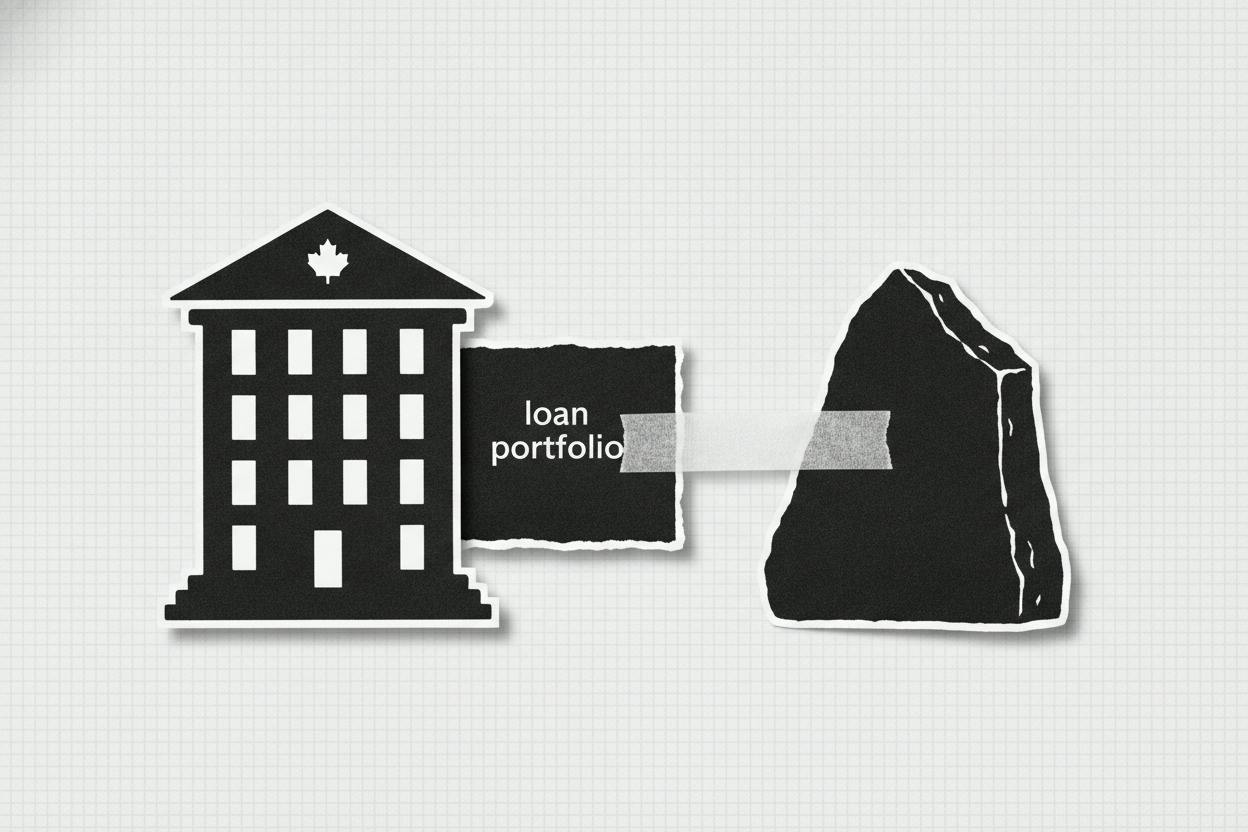
BMO Financial Group has completed the sale of its Transportation Finance and Vendor Finance units to investment firm Stonepeak, a move that shifts roughly CA$11 billion in loans off the Canadian bank's balance sheet and frees up capital for future growth.
The transaction, first announced earlier this year, covers about CA$14.5 billion in total loans and leases. At closing, approximately 75% of that portfolio—around CA$11 billion—transferred to the buyer. The remaining portion is expected to move in the first quarter of fiscal 2027, assuming standard conditions are met.
What the deal involves
BMO, one of Canada's largest banks, is stepping back from day-to-day ownership of these lending businesses. The units provide financing for transportation equipment, such as trucks and trailers, and for vendors that sell equipment to businesses. Stonepeak, a global investment firm focused on infrastructure and real assets, will manage the acquired operations, which will now operate under the name Longview Capital Solutions.
Although BMO is no longer the owner, it has kept a 19.9% interest in the Stonepeak-managed vehicle that bought the assets. That means BMO can still share in any longer-term gains from the businesses, without carrying the full portfolio—and its associated risks—on its own books.
For customers of the finance units, BMO will provide temporary support services during the handover to ensure a smooth transition.
Why the capital boost matters
For investors, the most important number is the expected improvement in BMO's common equity Tier 1 (CET1) ratio. This is a key measure of a bank's financial strength, representing the amount of high-quality capital it holds relative to its risk-weighted assets. Regulators closely watch CET1 ratios to ensure banks can absorb losses and continue lending during tough times.
BMO said the sale should lift its CET1 ratio by about 23 basis points in the fourth quarter of fiscal 2026. A basis point is one-hundredth of a percentage point, so 23 basis points equals 0.23 percentage points.
How does selling loans boost the ratio? When a bank moves a loan portfolio off its books, the risk-weighted assets attached to those loans also disappear. Because the bank's capital stays roughly the same while the measured risk falls, the CET1 ratio rises—even without raising new equity.
That's the real payoff here: a slightly thicker capital cushion gives BMO more room to make choices that markets care about, such as how quickly it expands new lending or how comfortably it can maintain shareholder-return programs like dividends and buybacks, without bumping against regulatory limits.
What it means for investors
For everyday investors, this deal is a sign that BMO is actively managing its balance sheet to improve efficiency. By selling lower-growth or capital-intensive lending units, the bank can redeploy capital toward areas with potentially higher returns. The retained 19.9% stake also means BMO keeps some economic exposure to the businesses' future performance, but without the full balance-sheet impact.
The transaction is part of a broader trend among large banks to streamline operations and focus on core businesses. Similar moves have been seen across the industry, as lenders look to optimize capital in a regulatory environment that demands higher buffers.
Investors will likely watch how BMO uses its improved capital position—whether it accelerates loan growth, increases dividends, or pursues other strategic initiatives. The completion of this sale removes a degree of uncertainty, as the deal had been pending for some time.
For those holding BMO shares, the key takeaway is that the bank is taking steps to strengthen its financial foundation. While the immediate impact on the stock may be modest, the long-term benefit of a stronger capital ratio can support sustainable returns.
As with any major transaction, there are execution risks, including the transfer of the remaining loans and the performance of the retained stake. But for now, BMO has delivered on a key part of its capital-management strategy.