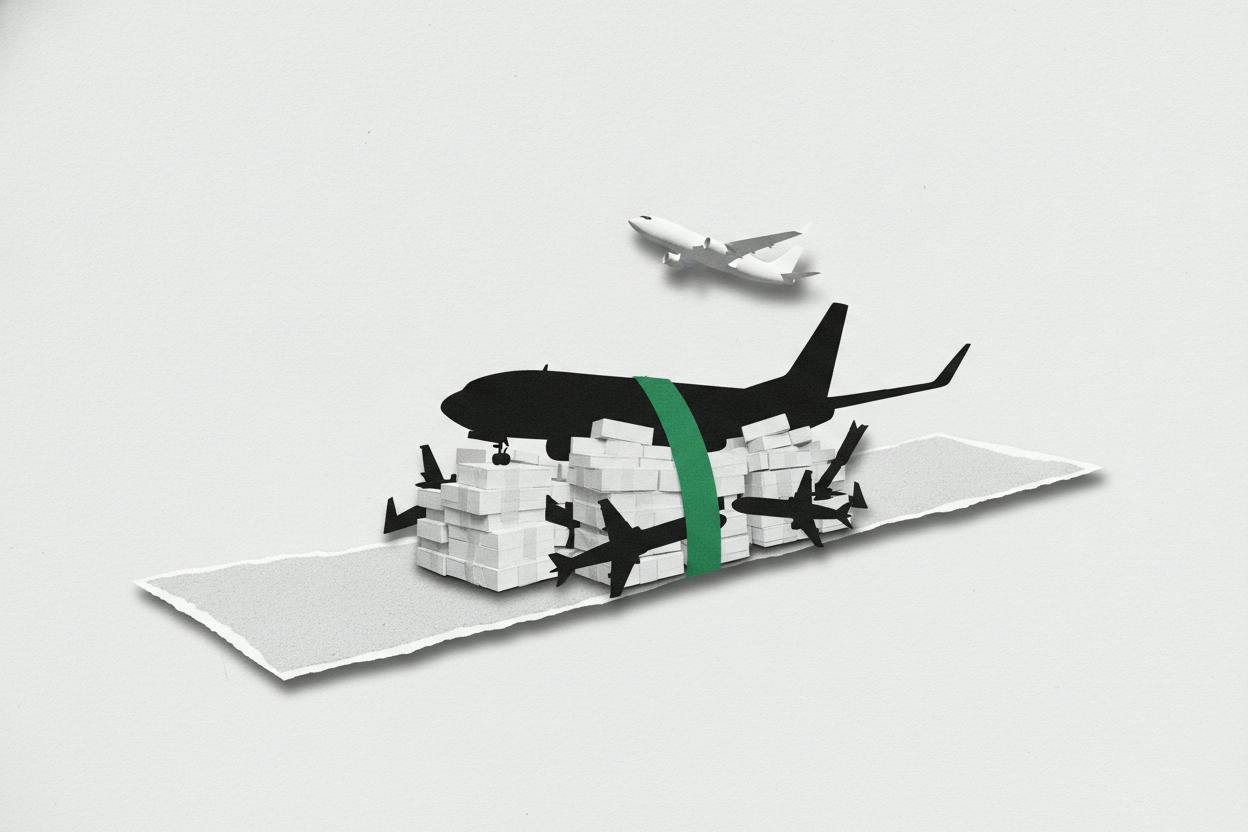
Boeing reported a strong month for new jet orders in October, logging 165 orders, but the company's deliveries lagged far behind rival Airbus, underscoring the production and regulatory challenges that continue to weigh on the planemaker.
The bulk of October's orders came from Avolon, a major aircraft leasing company, which agreed to buy 140 of Boeing's 737-10 model, the largest variant of the 737 Max family. That single deal accounted for most of the month's order total, but orders are not the same as deliveries. Deliveries are what generate revenue and cash flow for Boeing, and in October, the company handed over just 49 planes, down from September and well short of Airbus's 74 deliveries for the month.
Why deliveries matter more than orders
For investors, the distinction between orders and deliveries is crucial. An order is a commitment to buy a plane in the future, often years down the line. It builds Boeing's backlog, which is a measure of future demand, but it does not immediately translate into revenue. Deliveries, on the other hand, are the point at which Boeing gets paid and can recognize the sale on its income statement. That is why Wall Street watches monthly delivery numbers closely as a gauge of the company's near-term financial health.
Boeing's October delivery count of 49 was a step back from September, though the company's year-to-date total is still ahead of where it was at the same point last year. Airbus, however, remains ahead on the same measure, having delivered 74 jets in October and a higher cumulative total for 2024. The gap between the two manufacturers has been a persistent theme as Boeing works to recover from a series of production and safety issues.
Production and certification remain the bottleneck
The core problem for Boeing is not demand, which is clearly rebounding as airlines and leasing companies look to modernize their fleets and meet growing travel demand. Instead, the bottleneck is on the factory floor and in the regulatory approval process. Boeing has been under increased scrutiny from the Federal Aviation Administration (FAA) following a series of incidents, including a mid-air panel blowout on a 737 Max 9 in January. The FAA has capped Boeing's production rate for the 737 Max, limiting how many jets the company can build each month.
In addition, the 737-10, the model that Avolon ordered, has not yet received certification from the FAA. That means Boeing cannot deliver those jets until regulators sign off, which could take months or even years. The company has also faced supply chain disruptions and quality control issues that have slowed production across its commercial jet programs.
Boeing's commercial jet unit recently announced plans to cut 5% of its staff as production growth slows, a sign that the company is bracing for a prolonged period of constrained output. The layoffs are part of a broader cost-cutting effort as Boeing tries to stabilize its finances while dealing with the fallout from its safety crisis.
What it means for investors
For everyday investors, Boeing's October numbers are a reminder that a company's order book and its actual financial performance can diverge significantly. While a flood of orders may look like a positive sign, it is the pace of deliveries that will determine when Boeing can convert that demand into cash. Until production and certification issues are resolved, Boeing's revenue growth will likely remain muted, even as its backlog grows.
Investors should also keep an eye on the broader economic backdrop. Interest rates, for example, play a role in how airlines and leasing companies finance their purchases. Higher rates can make it more expensive to buy planes, potentially dampening future orders. Recent inflation data, such as the hot October CPI report, has shifted expectations for Federal Reserve rate cuts, which could influence the cost of financing for aircraft buyers.
Boeing's stock price has been volatile this year, reflecting the uncertainty around its production recovery and the potential for further regulatory actions. The company's ability to ramp up deliveries will be a key factor in whether it can close the gap with Airbus and restore investor confidence.
For now, the message from October is clear: demand for Boeing's jets is strong, but the company's ability to deliver them remains constrained. Until that changes, Boeing's financial results will likely continue to lag its order activity, and Airbus will keep its lead in the global jet market.