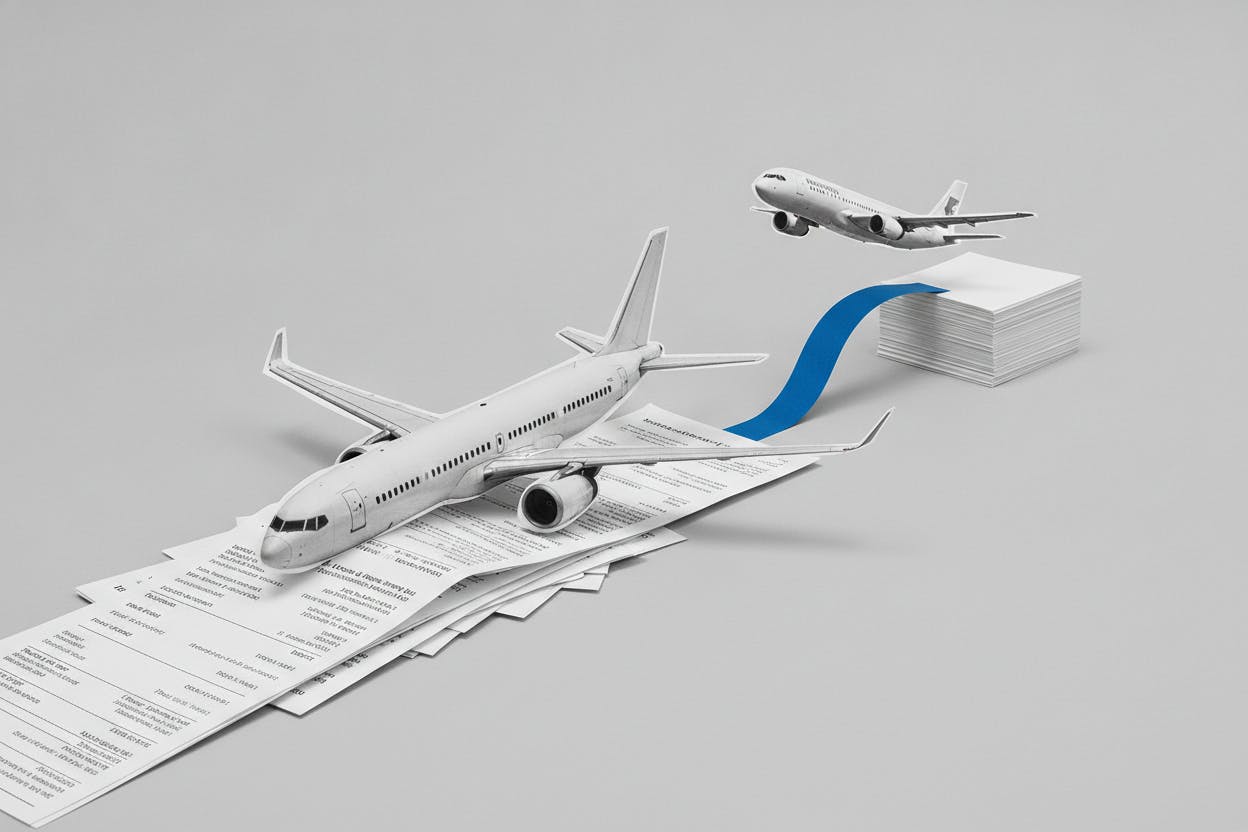
Boeing fell further behind its European rival Airbus in August, as the US planemaker delivered fewer jets and booked far fewer new orders than its competitor. The latest monthly figures, posted by both companies, show Boeing handed over 51 aircraft and logged just 15 new orders, while Airbus delivered 57 jets and recorded 67 gross orders.
The gap is a familiar one in recent years, but the August numbers underscore how Boeing continues to struggle to match Airbus on both production output and commercial demand. For investors, the monthly delivery and order tallies are closely watched signals of how quickly each company can convert its backlog into cash.
Why deliveries matter
In commercial aerospace, deliveries are the moment when the financial picture becomes concrete. Airlines typically pay the largest portion of an aircraft's price when they actually take possession of the plane, not when they sign the order. So a steady stream of deliveries is what turns a manufacturer's order book into revenue and operating cash flow.
Boeing's August deliveries included 41 of its best-selling 737 Max narrow-body jets, the workhorse of its commercial lineup. The remaining ten aircraft were spread across its wide-body models, including the 787 Dreamliner and the 777. Airbus, by contrast, shipped 57 jets to 31 different customers, a sign of its broader customer base and its ability to keep production lines moving.
The delivery gap has been a persistent theme. Airbus has consistently out-produced Boeing in recent years, helped by a more stable production environment and fewer self-inflicted disruptions. Boeing, meanwhile, has been working through a series of quality-control issues, regulatory scrutiny, and supply-chain bottlenecks that have slowed its assembly lines.
Orders: a tale of two backlogs
August's order figures also painted a stark contrast. Boeing booked just 15 net new orders, down sharply from 38 in July. Airbus, on the other hand, logged 67 gross orders, giving it a healthy pipeline of future work. While gross orders don't account for cancellations, they are a useful gauge of near-term demand and confidence in a manufacturer's product lineup.
For Boeing, the low order count is not necessarily a sign of weak demand for air travel—global airlines continue to expand fleets to meet passenger growth. Rather, it reflects the company's current position: airlines may be hesitant to commit to new Boeing jets while the company works through its production and certification challenges. Some carriers have also shifted orders to Airbus in recent years, a trend that has helped the European planemaker build a record backlog.
Airbus's strong order intake in August helps it fill production slots well into the future, giving it revenue visibility that investors value. Boeing's thinner order book, by contrast, raises questions about how quickly it can rebuild its backlog and generate the cash it needs to pay down debt and fund its turnaround.
What it means for investors
For everyday investors, the monthly delivery and order numbers are more than just a scoreboard. They are leading indicators of each company's financial health. Deliveries drive revenue and cash flow, while orders signal future demand and pricing power.
Boeing's persistent lag behind Airbus suggests the US planemaker still has a long road ahead in its recovery. The company has been working to stabilize its 737 Max production after a series of incidents and regulatory actions, but the August figures show it has not yet caught up to its rival's output. Investors will be watching whether Boeing can accelerate deliveries in the coming months, especially as it aims to boost production rates and win back customer confidence.
Airbus, meanwhile, continues to benefit from its operational stability and strong order book. Its ability to deliver more jets and book more orders gives it a competitive edge that is likely to persist in the near term. However, the company is not without its own challenges—it has faced supply-chain pressures and has been working to ramp up production of its A330 wide-body line, as noted in our recent look at Airbus's delivery performance.
For investors holding either stock, the key takeaway is that the aerospace duopoly remains a long-term story. Boeing's struggles are well-documented, but its backlog of over 5,000 aircraft still provides a foundation for future recovery. Airbus's lead in deliveries and orders gives it momentum, but the industry's cyclical nature means conditions can shift.
Beyond the two manufacturers, the broader economic backdrop matters. Airline demand is tied to consumer spending and business travel, which are influenced by interest rates and inflation. Recent data, such as strong August jobs data, can affect the cost of financing new aircraft and the willingness of airlines to invest. Similarly, small business optimism slipping could signal softer demand for air travel down the line.
In the end, August's numbers are a snapshot, not a verdict. Boeing still has time to close the gap, but the clock is ticking. Investors will be watching the next few months of delivery data to see if the US planemaker can finally turn the corner.