Swedish mining company Boliden is in discussions to acquire Nexa Resources, a move that analysts at RBC say could vault the combined entity into the position of the world's third-largest zinc producer. But for investors, the strategic logic of the tie-up may be overshadowed by a more immediate question: how will Boliden pay for it?
The deal, if completed, would mark a significant consolidation in the global zinc market. Zinc is a key industrial metal used primarily for galvanizing steel to prevent rust, making it essential for construction, infrastructure, and automotive manufacturing. A larger, more diversified producer could benefit from economies of scale and a stronger bargaining position with customers and suppliers.
The funding puzzle
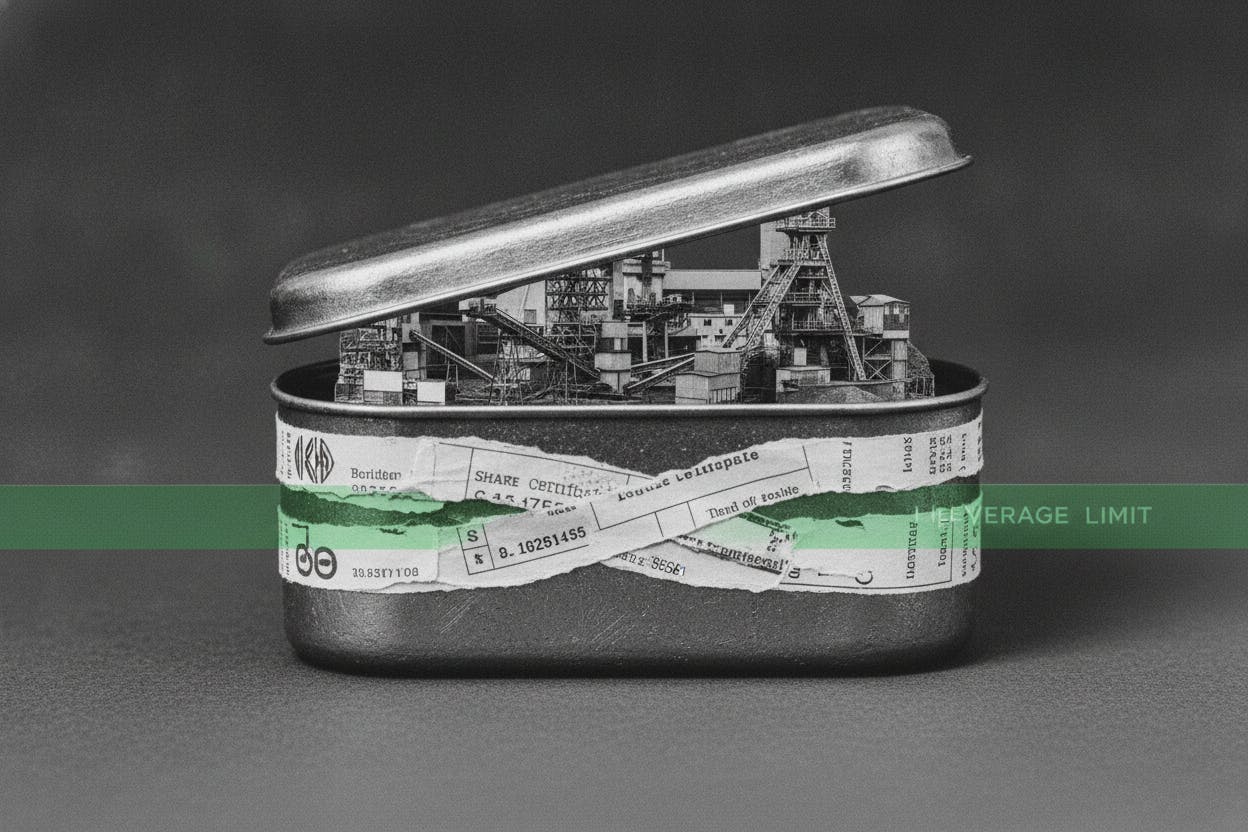
RBC analysts noted that while the acquisition makes strategic sense, the method of financing is the critical variable. Boliden currently carries a manageable level of debt, but taking on a large amount of new borrowing to fund the purchase could push its leverage—the ratio of debt to earnings—above levels that investors and credit rating agencies consider comfortable.
To keep leverage in check, RBC estimates that Boliden may need to raise between $700 million and $1 billion through an equity offering. That would mean issuing new shares, which dilutes the ownership stake of existing shareholders. In the short term, dilution can weigh on a stock's price because each share now represents a smaller slice of the company's profits.
Equity raises are a common tool for companies making large acquisitions, especially when they want to avoid overloading their balance sheets with debt. But they also signal to the market that management is not confident in generating enough cash flow from operations alone to fund the deal. For Boliden, the decision will likely come down to a trade-off between financial prudence and shareholder returns.
What it means for investors
For everyday investors, the key takeaway is that the stock's performance in the coming months may depend less on the operational benefits of combining two mining companies and more on the financing structure. If Boliden opts for a large equity raise, the stock could face downward pressure as the market adjusts to the dilution. If it finds a way to fund the deal with a mix of debt and internal cash, the impact on the share price could be less severe.
Investors should also consider the broader context of the zinc market. Zinc prices have been volatile in recent years, influenced by global economic growth, supply disruptions, and shifts in industrial demand. A larger, more efficient producer like the combined Boliden-Nexa could be better positioned to weather downturns, but it also becomes more exposed to the cyclical nature of commodity prices.
RBC's analysis suggests that the market is currently focused on the funding risk rather than the long-term strategic benefits. That means any news about Boliden's financing plans—whether it announces an equity raise, a debt offering, or a combination—could trigger significant moves in the stock.
Broader market backdrop
The mining sector has seen a wave of consolidation in recent years as companies seek to cut costs and gain scale in a challenging pricing environment. Boliden's potential acquisition of Nexa fits this trend, but it also comes at a time when investors are increasingly wary of companies taking on too much debt. Rising interest rates have made borrowing more expensive, and many companies are prioritizing balance sheet strength over aggressive expansion.
For comparison, other miners that have pursued large acquisitions have sometimes seen their stocks lag until they demonstrated a clear path to deleveraging. Boliden will need to convince the market that the deal's benefits—greater scale, cost synergies, and a stronger position in the zinc market—outweigh the short-term pain of dilution or higher debt.
Investors should also keep an eye on Nexa's own financial health. Nexa is a major zinc producer with operations in Brazil and Peru, but it has faced its own challenges, including operational disruptions and volatile commodity prices. A merger could help stabilize its performance, but it also introduces integration risks that Boliden will need to manage carefully.
What to watch next
The next catalyst for Boliden's stock will likely be any formal announcement about the deal's structure. If the company confirms an equity raise in the $700 million to $1 billion range, investors should expect some near-term volatility. If it announces a more debt-heavy financing plan, the focus will shift to whether credit rating agencies downgrade its debt, which could increase borrowing costs.
Beyond the financing, the deal's success will depend on Boliden's ability to integrate Nexa's operations smoothly and realize the expected synergies. That process can take years, and the market's patience may be tested if the benefits are slow to materialize.
For now, the story is a reminder that in M&A, the price tag is only half the equation. How a company pays for a deal can be just as important as what it buys.