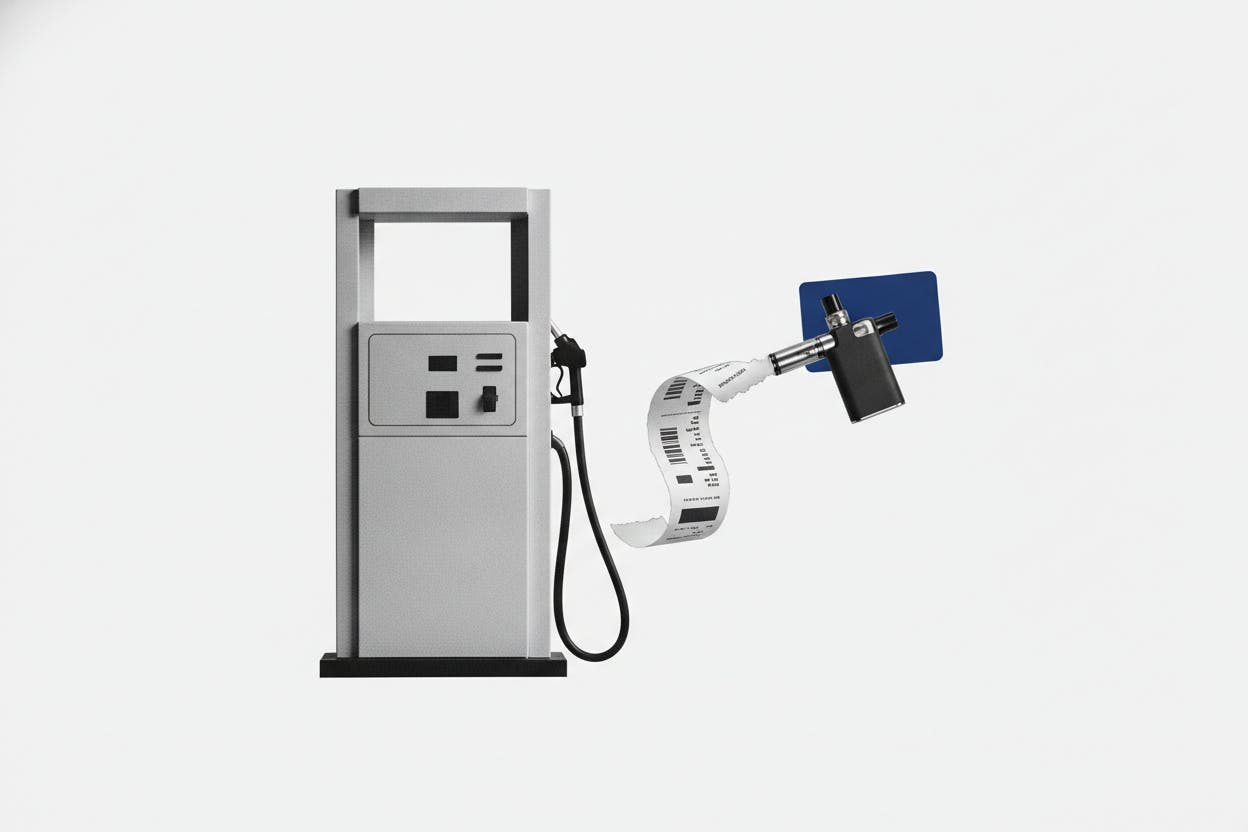
Gas station convenience stores face a new and immediate threat: selling illegal vapes could cost them hundreds of thousands of dollars in fines and, more critically, their ability to accept credit and debit card payments. BP, Marathon, and Valero have issued warnings to store owners, according to a Reuters report, signaling a shift in how compliance is enforced at the checkout counter.
What the warnings say
The warnings, reported Friday, come from three of the largest fuel companies that operate branded gas station networks. BP's notice specifically cited Mastercard compliance-violation notices tied to sales of illegal electronic nicotine delivery systems, or vapes. Fiserv's CardConnect, a payment processor, warned partners they could face "corrective action" if vape sales don't comply with relevant laws.
For stores that depend on card transactions—the vast majority of convenience stores—a processor restriction can hurt immediately. Unlike many regulatory actions that play out over months, payment networks can act quickly, cutting off a store's ability to accept taps, swipes, or online wallet payments. That's an operational shock for businesses built around quick, low-ticket trips.
Why payment networks hold the power
The key leverage point here is the payments pipe. Mastercard and Visa set the rules for their networks, and acquirers like Fiserv's CardConnect enforce them. If a network flags a merchant and an acquirer tightens terms or terminates service, the store can't process card payments. For convenience retailers, where most transactions are small and fast, losing card acceptance can be devastating.
This shifts the burden from suppliers to retailers. Previously, enforcement against illegal vapes often targeted manufacturers or distributors. Now, the risk falls directly on the store owner, who must ensure every vape product on the shelf complies with federal and state laws. Even one violation can trigger a mid-six-figure fine, according to BP's warning, and potentially lead to loss of card-processing access.
What it means for investors
For investors in fuel companies and convenience store chains, this development highlights a growing compliance cost that could squeeze margins, especially for independent operators. Larger chains may have the resources to invest in age-verification systems, inventory controls, and staff training, but smaller operators could struggle.
The warnings also underscore the increasing power of payment networks like Mastercard and processors like Fiserv. As they take on more enforcement roles, they gain a bigger say in what products stay on shelves. This could lead to higher compliance spending across the industry, potentially benefiting companies that provide compliance technology or services.
For investors in Mastercard and Fiserv, the news reinforces their moat: their networks are becoming essential gatekeepers for retail operations. However, it also raises the risk of regulatory scrutiny if payment networks are seen as overreaching.
Broader context
The crackdown on illegal vapes is part of a wider trend of increased enforcement against unauthorized nicotine products. The U.S. Food and Drug Administration has been stepping up actions against manufacturers and retailers, but the new warnings from fuel companies show that private-sector enforcement is accelerating.
This isn't the first time payment networks have been used to enforce compliance. Similar tactics have been used against illegal online gambling, adult content, and counterfeit goods. The difference here is the speed and severity: a store can lose card acceptance almost overnight, while regulatory fines can take months or years to impose.
For investors in convenience store operators or fuel retailers, the key question is how quickly they can adapt. Companies that already have robust compliance programs may be better positioned, while those that rely on independent operators could face reputational and financial risks.
What to watch next
Investors should watch for further warnings from other fuel companies and payment processors. If Mastercard or Visa expand their enforcement to other product categories, the impact could ripple across retail. Also watch for any regulatory response: if payment networks are seen as overstepping, lawmakers could step in.
For now, the message from BP, Marathon, and Valero is clear: selling illegal vapes is no longer just a regulatory risk—it's an existential threat to a store's payment operations. That's a warning every convenience store owner should take seriously.