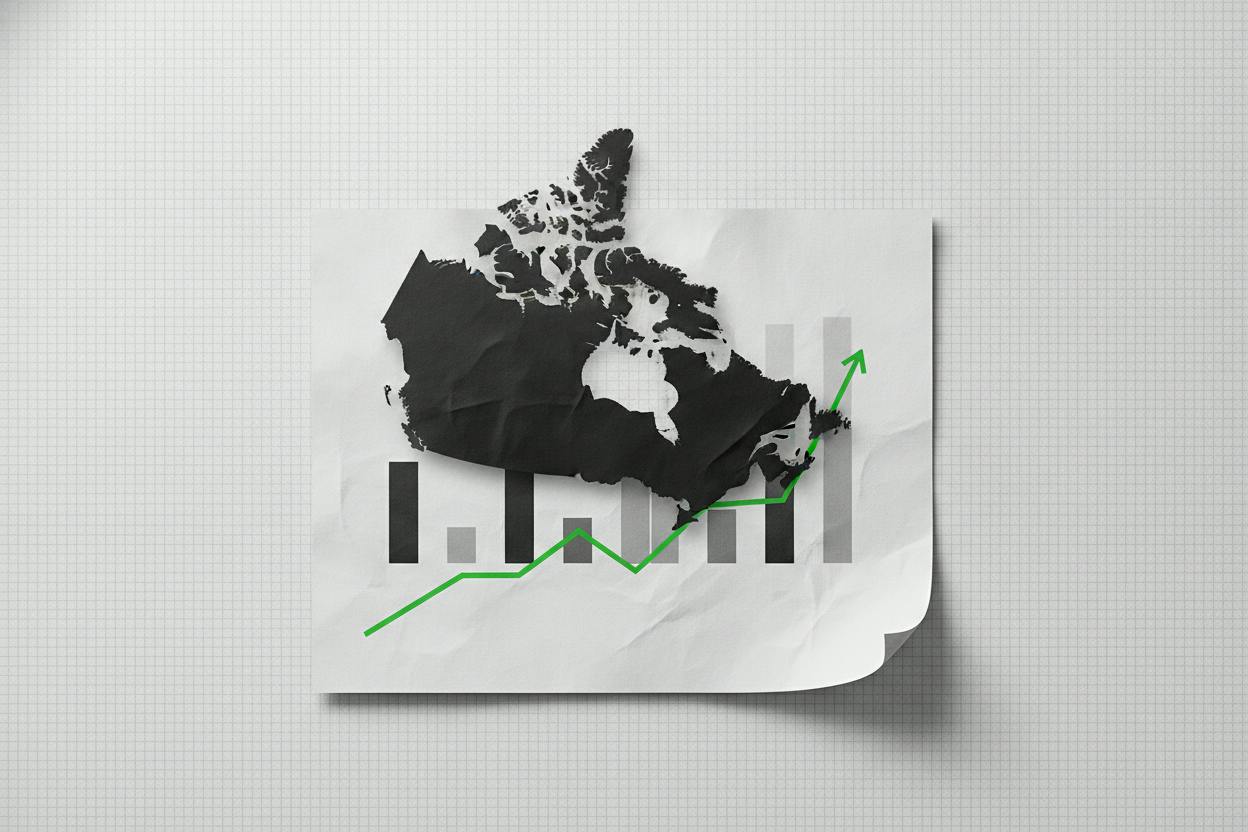
Canada's economy continued to sputter in August, with output flat for the second consecutive month, according to fresh data from Statistics Canada. The agency also released an early estimate suggesting the economy may have contracted by 0.1% in September, adding to signs that growth is losing steam.
The August reading missed economists' expectations of a 0.2% gain. Strength in retail trade, manufacturing, and construction was mostly offset by weakness in services, which slipped 0.1%. Wholesale trade fell 1.4%, while a group of public services—including education, health care, and public administration—dropped 0.2%, its first decline in six months. Utilities also contracted as electric power activity cooled.
What's behind the slowdown?
The September advance estimate points to declines in manufacturing and in mining, quarrying, and oil and gas extraction. If confirmed, that would mark the first monthly contraction since earlier this year and reinforce the picture of an economy running below its potential.
Adding up the industry-level data, Statistics Canada's numbers imply about 1.3% annualized real growth in the third quarter. That's well below the Bank of Canada's projection of 2% for the same period. The gap matters because it suggests the economy is carrying less momentum than the central bank assumed when setting monetary policy.
For context, the Bank of Canada has been navigating a delicate balance. It has raised interest rates aggressively over the past couple of years to tame inflation, but now faces the risk of over-tightening as growth cools. A weaker-than-expected economy could prompt the bank to reconsider its stance.
What it means for investors
For markets, the key takeaway is the divergence between actual growth and the Bank of Canada's forecast. When growth lands below a central bank's baseline, investors often adjust their expectations for future policy moves. In this case, the odds of another rate hike may diminish, and the possibility of earlier rate cuts could come into focus.
That shift tends to show up first in short-dated Government of Canada bonds, where yields closely track expectations for the policy rate over the next year or two. If traders move toward a lower-rate path, the Canadian dollar could also feel the impact, since currencies often follow interest-rate differentials between countries.
So this isn't just a GDP headline—it feeds directly into how markets price the Bank of Canada's next steps. For everyday investors, that means potential implications for bond yields, currency exchange rates, and the broader stock market, particularly rate-sensitive sectors like real estate and utilities.
It's worth noting that the Canadian economy has shown resilience in the face of high borrowing costs, but the recent flat readings and the September contraction estimate suggest that resilience may be wearing thin. The Bank of Canada will likely pay close attention to upcoming data, including inflation and employment figures, before making its next move.
For now, the message is clear: Canada's economy is stalling, and the central bank may need to adjust its course. Investors should watch for further signs of weakness and any hints from the Bank of Canada about its policy intentions.