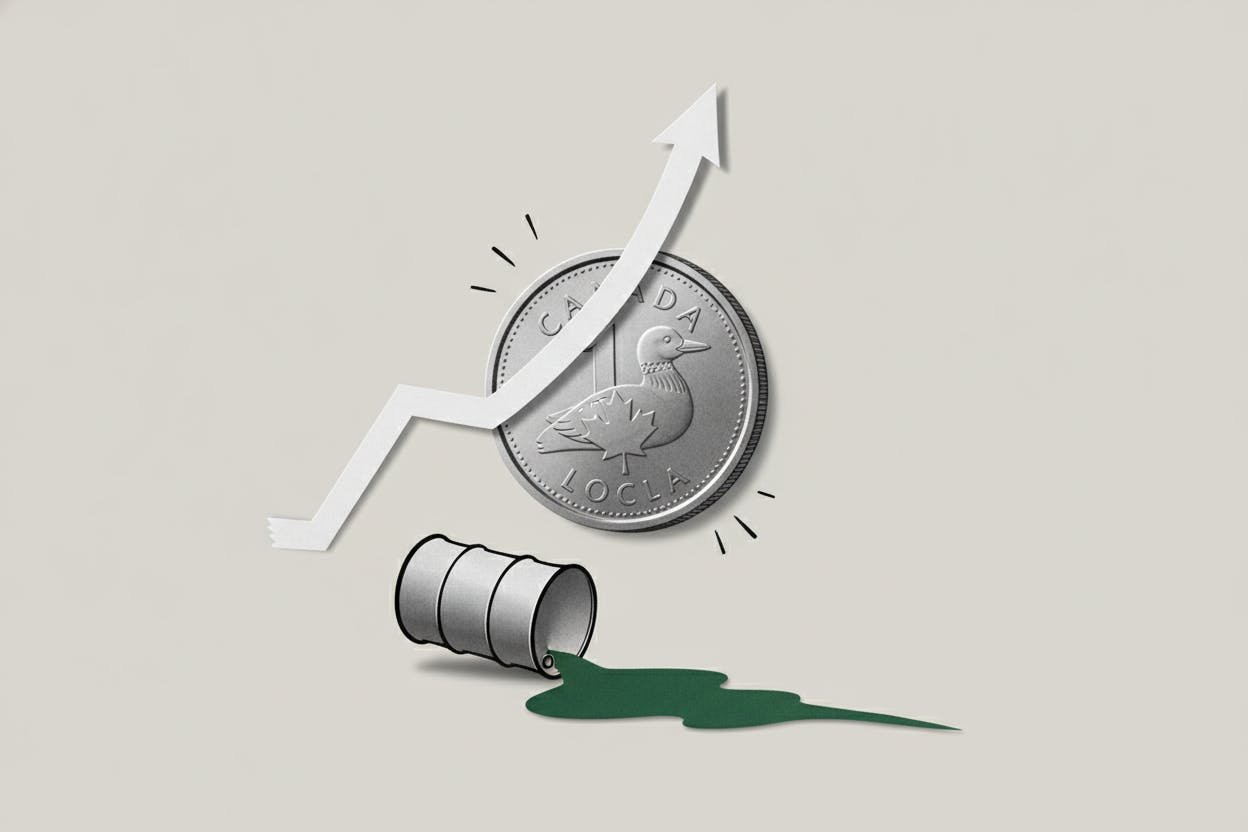
The Canadian dollar has lost a key source of support that often lifts it when markets turn optimistic, according to analysts at MUFG, one of Japan's largest financial groups. In a note published this week, the bank said the loonie's traditional link to rising oil prices has weakened, leaving the currency more exposed to other pressures — namely higher US interest rates and trade uncertainty.
Oil's fading lift
Canada is a major oil exporter, and the Canadian dollar has long benefited when crude prices rise. Higher oil prices mean more US dollars flowing into the country from energy sales, which tends to push the loonie higher. But MUFG argues that a pullback in crude prices in June has removed that so-called tailwind. Even on days when global stock markets rally — a so-called risk-on mood — the Canadian dollar may not gain as much as it used to, unless oil also rebounds.
The bank notes that the loonie's sensitivity to oil has diminished, making it harder for the currency to pop higher even when investor sentiment improves. This shift matters because it changes the dynamics for anyone holding Canadian dollars or trading USD/CAD.
The rate gap widens
At the same time, short-term US Treasury yields have climbed, widening the gap between US and Canadian interest rates. That gap is important because it affects the so-called carry — the return an investor earns from holding one currency versus another. When US yields are higher, holding US dollars offers a better yield than holding Canadian dollars, which makes USD more attractive.
MUFG expects the Bank of Canada to keep its policy rate on hold for now, as economic growth looks soft and any energy-driven inflation is likely temporary. That means the rate gap may not close quickly, giving the US dollar a built-in advantage. The bank says this dynamic is keeping USD/CAD supported — meaning the pair is likely to stay at current levels or edge higher — even without another rate hike from the Federal Reserve.
This is a shift from earlier this year, when the loonie was buoyed by both high oil prices and expectations that the Bank of Canada would keep raising rates. Now, with oil lower and the central bank on pause, the currency is losing its dual support.
USMCA uncertainty adds to the mix
Adding to the pressure on the Canadian dollar is uncertainty around the future of the USMCA trade agreement. The pact, which replaced NAFTA, is due for a review in 2026, but trade tensions have already resurfaced. The US has imposed tariffs on Canadian lumber and is considering other measures, while Canada has retaliated with its own tariffs. This uncertainty gives traders another reason to demand a little extra return before owning Canadian dollars, MUFG says.
The combination of lower oil, a wider rate gap, and trade uncertainty has left the Canadian dollar near its weakest level in 14 months. In a separate note, analysts pointed to the loonie stalling near that low as US trade concerns weigh on sentiment. The Canadian dollar has stalled near a 14-month low, with traders watching for any progress on trade talks.
What it means for investors
For everyday investors, the key takeaway is that the Canadian dollar's relationship with oil has changed. It's no longer a simple bet on crude prices. Instead, the currency is now more sensitive to the US-Canada interest rate gap and trade policy developments.
That has practical implications. If you hold Canadian dollars or invest in Canadian assets, a weaker loonie means your returns in US dollar terms are lower. It also means that Canadian stocks, which are heavily weighted toward energy and financials, may not get the same currency boost they once did when oil rallies.
On the flip side, a weaker loonie can be a tailwind for Canadian exporters, especially those that sell to the US. Companies that earn revenue in US dollars but report in Canadian dollars benefit from a lower loonie, as their US earnings translate into more Canadian dollars.
Investors should also watch the Bank of Canada's next moves. If the economy softens further, the central bank may cut rates, which would widen the rate gap even more and put further pressure on the loonie. Conversely, if oil prices rebound and trade tensions ease, the loonie could regain some of its lost ground.
For now, MUFG's analysis suggests that the Canadian dollar is in a more fragile position than it was earlier this year. The oil tailwind is gone, and the rate gap is working against it. Until those dynamics shift, the loonie may struggle to find its footing.