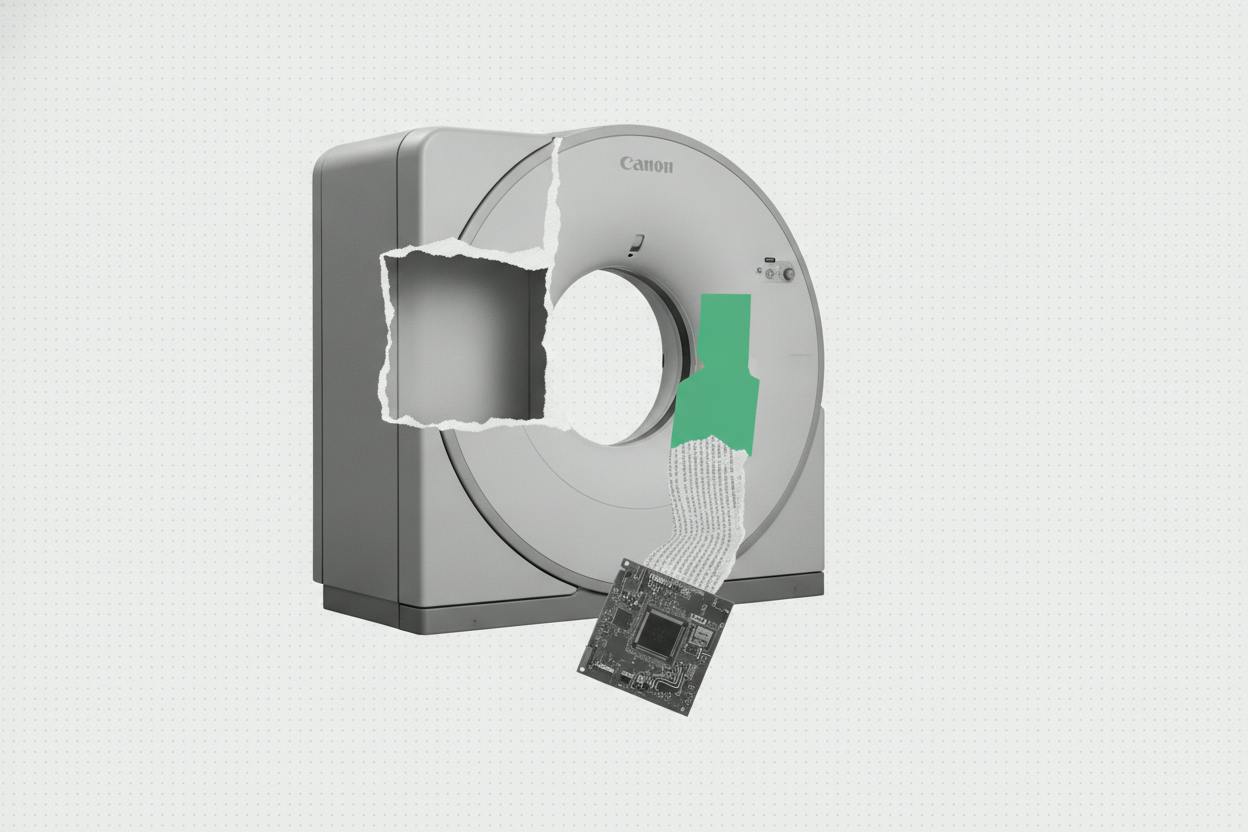
Canon, the Japanese imaging and office-equipment giant, trimmed its full-year profit forecast on Wednesday, blaming AI-driven shortages of printed circuit boards (PCBs) and other components for disrupting production. The news sent its shares down more than 5% in Tokyo, as investors weighed the impact of supply-chain bottlenecks on the company's bottom line.
PCBs are the flat boards that hold and connect the electronic components inside virtually every modern device, from cameras and printers to medical imaging machines. A surge in demand for AI hardware—such as servers and data-center equipment—has tightened global supplies of these boards and the chips that go on them, leaving manufacturers like Canon scrambling for parts.
What the company said
Canon told shareholders that the component crunch has led to “missed sales opportunities,” particularly in its medical business, which makes diagnostic imaging equipment like CT scanners and ultrasound machines. The company now expects those constraints to shave 90 billion yen (roughly $600 million) off medical sales this year.
That shortfall is a significant blow, even though overall sales for the first nine months of the year still rose 4% to 3.433 trillion yen. The problem is that the supply hit is landing at a time when costs are climbing. Operating expenses jumped 93.9 billion yen to 1.339 trillion yen in the January-to-September period, driven by base-pay hikes and higher foreign-currency spending made pricier by a weaker yen.
As a result, Canon lowered its full-year operating profit forecast to 456 billion yen—only slightly above last year's level. That leaves little cushion if the shortages persist or worsen in the coming months.
Why margins matter more than sales
For investors, the key takeaway is that Canon's profit target now hinges on how quickly supply chains recover. When a company can't ship devices because it lacks PCBs, the damage isn't limited to the revenue it can't book. Many expenses—from factory overhead to payroll—don't fall much just because fewer units go out the door. That means margins can shrink faster than sales.
With operating expenses already up 93.9 billion yen this year, profits become unusually sensitive to any additional supply disruption. That makes step-by-step forecast cuts more likely, and it can translate into sharper share-price swings, even if the company is still reporting modest top-line growth overall.
This isn't an isolated problem. Across the tech and manufacturing sectors, companies are grappling with similar component shortages as AI demand sucks up supply. Recent dealmaking activity shows how cash-rich tech firms are positioning themselves, but for hardware makers like Canon, the immediate challenge is operational.
What it means for investors
For everyday investors, Canon's warning is a reminder that supply-chain issues can hit even well-established companies in unexpected ways. The medical division is a high-margin business, so losing 90 billion yen in sales there is more painful than a similar drop in lower-margin products like printers.
The weaker yen, which normally helps Japanese exporters by making their goods cheaper abroad, is a double-edged sword here. While it boosts the value of overseas revenue when converted back to yen, it also raises the cost of imported components and foreign-currency expenses. Canon's rising costs show that currency moves don't always work in a company's favor.
Looking ahead, investors will be watching whether Canon can secure enough PCBs to meet demand in the fourth quarter, and whether the component shortage eases as AI hardware supply chains expand. Other companies have managed to raise outlooks despite headwinds, but Canon's situation is more constrained.
The company's revised forecast also raises the bar for its 456 billion yen profit target. If shortages persist, further cuts could follow, and that would likely weigh on the stock again. For now, the market is pricing in a cautious view, with shares down sharply on the news.
Canon's experience is a case study in how AI's rapid growth can create winners and losers across the supply chain. While AI hardware makers benefit from surging demand, companies that rely on the same components for their own products can find themselves squeezed. Some firms have navigated similar challenges by diversifying suppliers or adjusting product mixes, but Canon's near-term outlook remains clouded.
For investors, the lesson is to pay attention not just to a company's sales growth, but to the health of its supply chain and cost structure. A company can report rising revenue and still see profits shrink if it can't get the parts it needs to ship products efficiently.