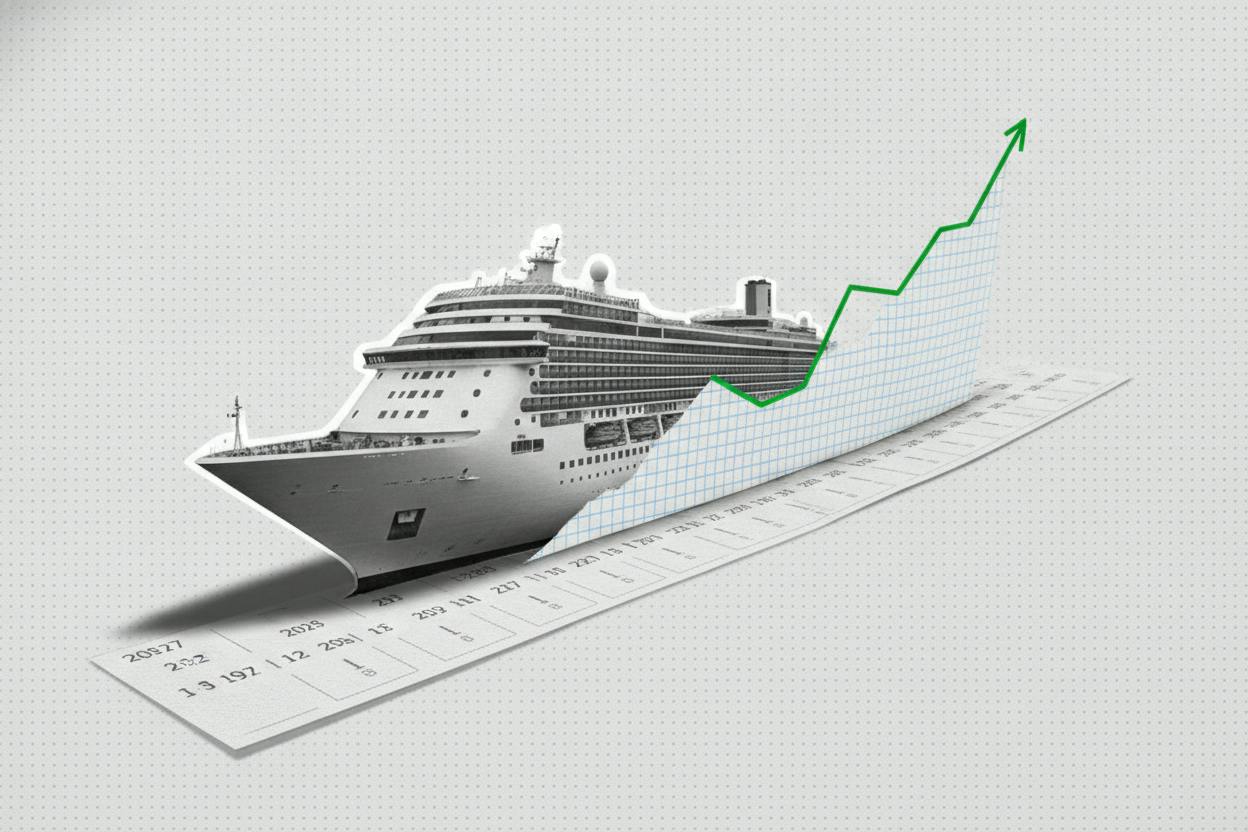
Carnival, the world's largest cruise operator, gave investors a fresh reason for optimism on Tuesday: demand for cruises is not just holding up—it's still growing, with bookings stretching well into 2027. The company raised its annual profit forecast and reported quarterly revenue that beat Wall Street's expectations, a sign that consumers continue to prioritize travel experiences even as other discretionary spending cools.
A better-than-expected quarter
For the quarter, Carnival posted revenue of $8.44 billion, topping the $8.30 billion that analysts had penciled in, according to data from LSEG. The beat was driven by higher ticket prices and steady booking volumes, which allowed the company to keep pricing firm across its fleet.
CEO Josh Weinstein said booking volumes are "meaningfully ahead of last year" and growing faster than the company's capacity. That's a crucial detail: when bookings outpace the number of available cabins, cruise lines can raise prices without scaring away customers. Carnival said it expects to maintain that pricing power on both tickets and onboard spending—things like drinks, excursions, and specialty dining.
Why the long booking window matters
Cruise lines typically sell a large share of their cabins well in advance, often 12 to 18 months out. So when a company says demand is strong into 2027, it's not just a vague prediction—it's a concrete signal that the order book is filling up for years ahead. That gives Carnival better visibility into future revenue and helps it plan capacity and costs.
For investors, this is a meaningful update because it suggests the post-pandemic travel boom hasn't faded. Many had worried that rising prices and economic uncertainty would push consumers to cut back on big-ticket vacations. Carnival's numbers suggest that, at least for now, cruises remain a priority for many households.
What it means for investors
Carnival's raised outlook is a positive sign for the broader cruise and travel sector. When the largest player in the industry sees strong demand, it often bodes well for competitors like Royal Caribbean and Norwegian Cruise Line, though each company has its own cost structure and booking patterns.
For everyday investors, the key takeaway is that Carnival is managing to grow revenue while also improving profitability. The company has been working to pay down debt taken on during the pandemic, and a stronger profit outlook helps that effort. However, cruise stocks are still sensitive to fuel prices, interest rates, and any sudden shifts in consumer confidence—so the picture can change quickly.
It's also worth noting that Carnival's success isn't happening in a vacuum. Other companies have recently reported strong demand for travel and experiences, even as some retailers and manufacturers warn of softer spending. That divergence suggests consumers are still willing to spend on memories, even if they're more cautious about goods.
Risks to watch
While the outlook is bright, there are always risks. A sharp economic downturn could cause consumers to cancel or delay bookings. Geopolitical events, health scares, or fuel price spikes could also hit the industry. And Carnival's heavy debt load means it remains more leveraged than some peers, so any prolonged weakness would be felt more acutely.
Investors should also keep an eye on how Carnival manages capacity. If the company adds too many ships too quickly, it could dilute its pricing power. So far, management says demand is growing faster than capacity, which is the right balance.
The bottom line
Carnival's latest update is a clear signal that cruise demand is not just recovering—it's thriving. With bookings extending into 2027 and pricing power intact, the company is in a strong position to keep improving its financials. For investors, it's a reminder that travel and leisure stocks can still offer growth, even in a mixed economic environment.
As always, it's wise to consider how any single company's news fits into your broader portfolio. Carnival's performance is encouraging, but it's just one piece of a much larger market picture.