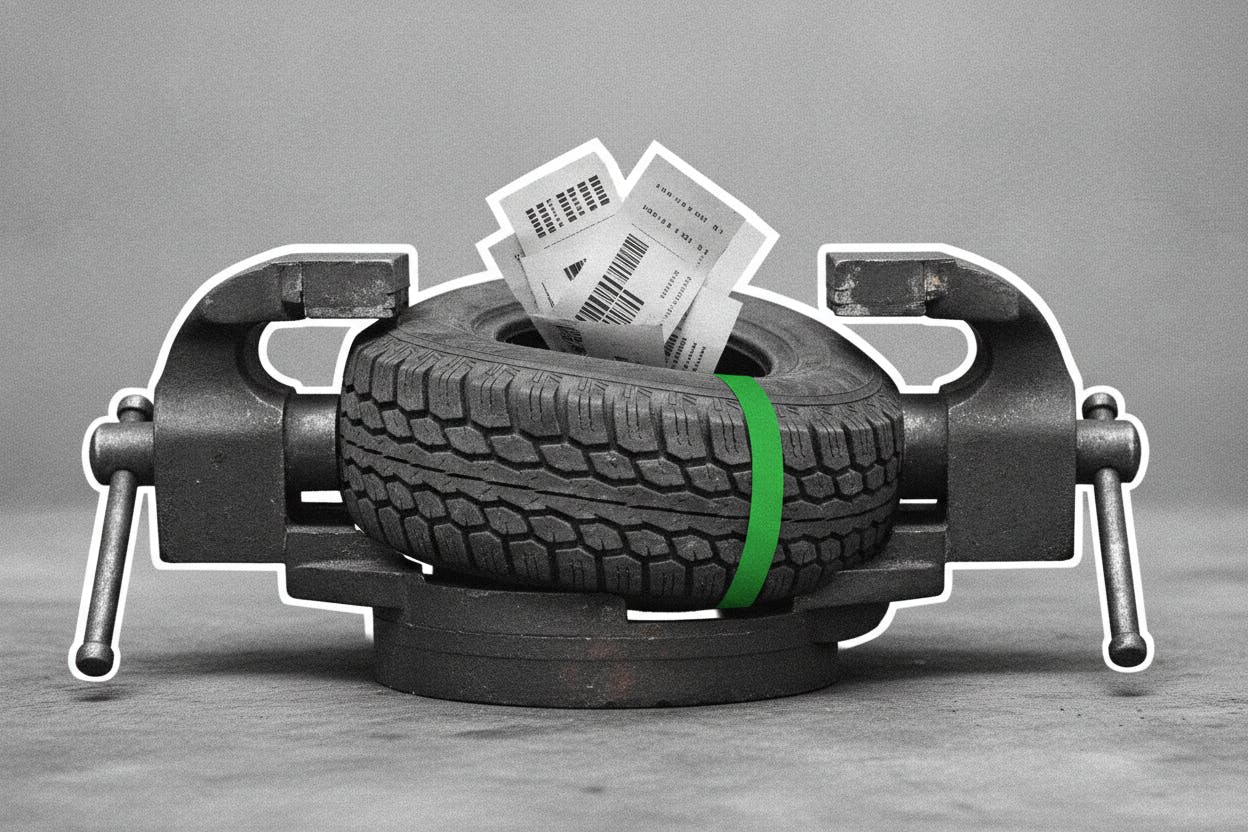
Indian tire maker CEAT reported a stunning 96.4% drop in net profit for the quarter ended June 30th, as rising raw material costs overwhelmed the company's efforts to pass on higher expenses to customers. The result underscores a broader challenge facing manufacturers globally: even aggressive price increases may not be enough to protect margins when input costs surge.
Profit Nearly Vanishes
CEAT's consolidated net profit fell to just 40 million rupees (about $480,000) from 1.1 billion rupees a year earlier, according to LSEG data cited by Reuters. That was far below the 927 million rupees analysts had expected, making it a significant earnings miss.
The company said cumulative price increases of 5% across its product range failed to keep pace with higher raw material costs. Tire makers rely heavily on natural rubber, synthetic rubber, carbon black, and other petrochemical-derived inputs, all of which have risen sharply in recent months due to global supply chain pressures and sticky inflation.
A Sector-Wide Squeeze
CEAT is not alone. Rivals Apollo Tyres and JK Tyre have also announced price increases this year, but the industry is struggling to fully recover rising costs. The problem is particularly acute in India, where tire demand is price-sensitive and competition is intense.
The earnings miss highlights how cost inflation can quickly erode profitability, even for companies that take proactive steps to raise prices. For investors, it's a reminder that pricing power—the ability to pass on higher costs without losing customers—is not unlimited.
What It Means for Investors
For everyday investors, CEAT's results offer a cautionary tale about the risks of cost inflation. When a company's input costs rise faster than its selling prices, margins get squeezed, and profits can collapse. This is especially true in commodity-intensive industries like tire manufacturing, where raw materials account for a large share of total costs.
Investors should watch how CEAT and its peers manage this challenge in coming quarters. If raw material prices stabilize or decline, margins could recover quickly. But if inflation persists, further price hikes or cost-cutting measures may be needed. The broader lesson is that companies with strong pricing power—those selling essential or differentiated products—are better positioned to weather cost shocks.
For context, similar margin pressures have been seen in other sectors. For example, Apple's memory costs have threatened its margins, while Albertsons faces a profit squeeze in Q2. These examples show that cost inflation is a broad challenge, not limited to any one industry.
Looking Ahead
CEAT's management will likely face tough questions on the earnings call about their strategy to restore profitability. Analysts will be watching for signs that raw material costs are peaking, or that the company can push through additional price increases without losing market share.
For now, the results serve as a stark reminder that in an inflationary environment, even a 5% price hike may not be enough. Investors should keep a close eye on input cost trends and company guidance to gauge when the pressure might ease.