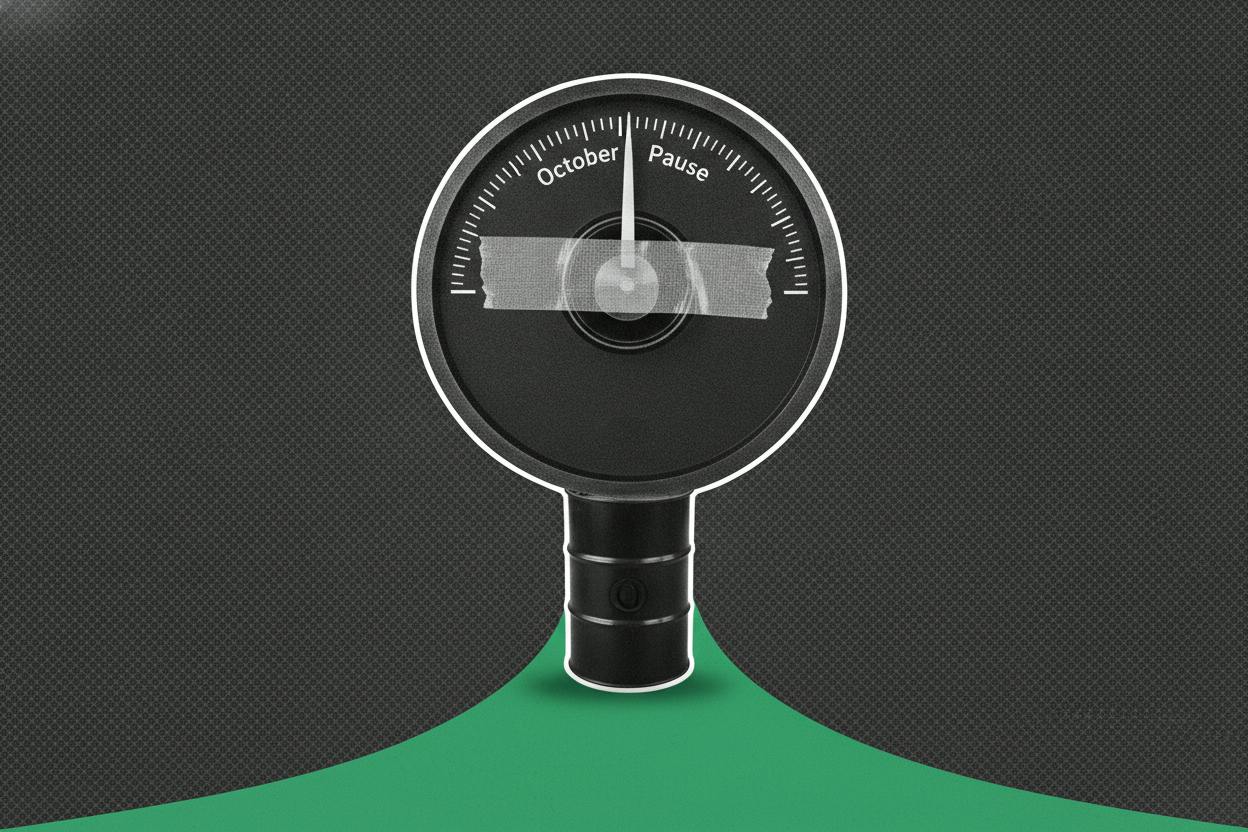
After a flurry of interest rate hikes in September, the world's biggest central banks collectively hit the brakes in October. But with oil prices climbing sharply, the pause looks less like a turning point and more like a strategic timeout.
According to a Reuters review, among the central banks that oversee the ten most-traded currencies—the so-called G10—only Canada raised rates in October. The U.S. Federal Reserve, the European Central Bank, the Reserve Bank of New Zealand, and the Bank of Japan all held steady. Several others, including Switzerland, Australia, Sweden, Norway, and the UK, didn't even have scheduled meetings.
Yet the mood among policymakers was far from relaxed. BNP Paribas, a French bank, cautioned that the pause "does not mark the end of the cycle," suggesting that further hikes could still come if inflation doesn't cool enough.
Oil's ripple effect
The main complication is energy. Brent crude futures logged double-digit percentage gains in both September and October. That matters because oil isn't just a commodity—it's an input for everything from shipping and manufacturing to heating and groceries. When oil prices rise quickly, those costs tend to filter through the economy, pushing up inflation.
Oxford Economics, a research firm, summed up the dilemma: policy is "tight, but probably not tight enough yet." In plain terms, central banks have slowed the pace of tightening, but they're keeping the door open to do more if inflation re-accelerates.
For everyday investors, this means the era of ultra-cheap money is firmly in the rearview mirror. Borrowing costs for mortgages, car loans, and business credit are likely to stay elevated for a while, and the path of rates will depend heavily on what inflation data shows in the coming months.
What it means for markets
For markets, the October pause shifts the focus from today's rate level to the timing of the last hike and the first cut. When oil prices rise quickly for long enough, investors start to worry that inflation will stay sticky, forcing central banks to keep a "hiking bias" even while they hold rates steady.
That's why the Fed and ECB's October pauses didn't bring universal relief. Instead, attention turns to each new inflation report, and short-dated government bonds—which are highly sensitive to rate expectations—are likely to see more two-way trading, with yields jumping or dropping on each data release.
Rate-sensitive assets, such as growth stocks and real estate, can feel those moves more sharply because borrowing costs feed directly into valuations. For example, higher rates tend to compress the future earnings that growth stocks are valued on, and they make property financing more expensive.
Recent data from Europe shows the mixed picture: Germany's services growth cooled in October as hiring dipped, while France's services sector shrank faster than expected. Meanwhile, Spain's services growth also cooled but remained strong. These diverging signals make it harder for the ECB to chart a clear course.
What to watch next
Investors should keep an eye on two things: oil prices and inflation data. If crude continues its climb, central banks may feel compelled to resume hiking sooner rather than later. If inflation shows clear signs of cooling, the pause could stretch into a longer hold.
For now, October looks like a holding pattern. Central banks have slowed the pace of hikes, but they're keeping the option open to do more if inflation flares up again. That means volatility in bond markets and rate-sensitive sectors is likely to persist.
As always, it's wise to stay diversified and avoid making big bets based on a single month's moves. The path of interest rates remains uncertain, and the data will ultimately decide the next step.