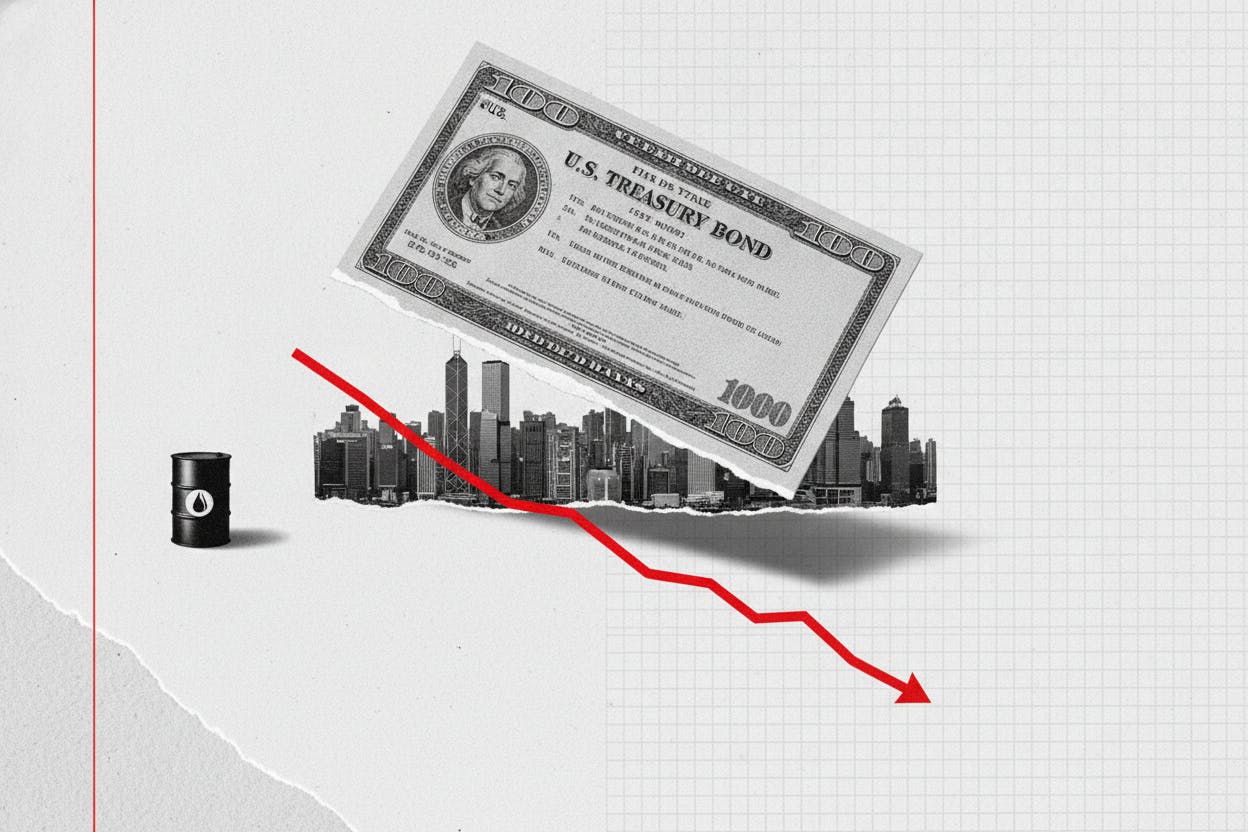
Stocks in China and Hong Kong fell on [day], dragged down by a global bond selloff that pushed the 10-year US Treasury yield to its highest level since 2023. The move rippled through Asian markets, with investors reassessing the appeal of riskier assets like equities.
Adding to the pressure were higher oil prices, which stoke inflation concerns, and a post-IPO dip in shares of Shein, the fast-fashion giant that recently listed in Hong Kong. The combination of rising yields, firmer crude, and a high-profile stock stumble weighed heavily on sentiment.
Why bond yields matter for stocks
Bond yields and stock prices often move in opposite directions, and the reason comes down to the math of investing. When yields on safe government bonds rise, they offer investors a higher guaranteed return. That makes the relative risk of stocks less attractive, so investors typically demand a bigger potential payoff from equities to compensate.
Higher yields also reduce the present value of future earnings. Many stocks, especially growth companies, are valued based on profits expected years down the road. When the discount rate—effectively the yield on safe bonds—goes up, those future profits are worth less in today's dollars. That can hit high-valuation stocks particularly hard.
The 10-year US Treasury yield is a key benchmark for global borrowing costs. When it climbs, it can lift yields on bonds around the world, raising the cost of capital for companies and governments alike. For everyday investors, this means the environment for stocks can become more challenging, especially for those in sectors like technology and consumer discretionary that rely on long-term growth expectations.
Oil and Shein add to the gloom
Oil prices have been climbing, partly due to geopolitical tensions in the Middle East. Higher energy costs feed into inflation, which could prompt central banks to keep interest rates higher for longer. That would put further upward pressure on bond yields, creating a feedback loop that hurts stocks.
Shein's post-IPO dip was another drag on Hong Kong's market. The company, known for its ultra-fast fashion and viral popularity, made its trading debut recently. After an initial surge, shares have pulled back, reflecting investor caution about its valuation and the competitive landscape. While one stock's decline isn't usually enough to move an entire index, Shein's size and visibility made its slide a notable negative for sentiment.
What it means for investors
For ordinary investors, the key takeaway is that rising bond yields can signal a tougher period for stocks. When yields are high, it's a good time to review your portfolio's exposure to growth stocks and consider whether your risk tolerance still matches your holdings. Diversification—spreading investments across different asset classes—can help cushion the impact of market swings.
It's also worth watching oil prices and geopolitical developments. If crude keeps climbing, inflation could stay sticky, and central banks might delay rate cuts. That would keep yields elevated and continue to pressure equity valuations.
On the other hand, higher yields also mean better returns on cash and bonds. For savers, this can be a silver lining, as money market funds and short-term bonds offer more attractive yields than they did a few years ago.
The broader context is that global markets are interconnected. A selloff in US Treasuries can quickly spread to Asia, as seen today. Investors should keep an eye on US economic data and Federal Reserve signals, as those will likely drive the next big move in yields.
For now, the mood in China and Hong Kong is cautious. The combination of rising yields, higher oil, and a high-profile IPO stumble has left investors wondering whether the recent rally in stocks has room to continue. As always, patience and a long-term perspective remain valuable tools in navigating market volatility.



