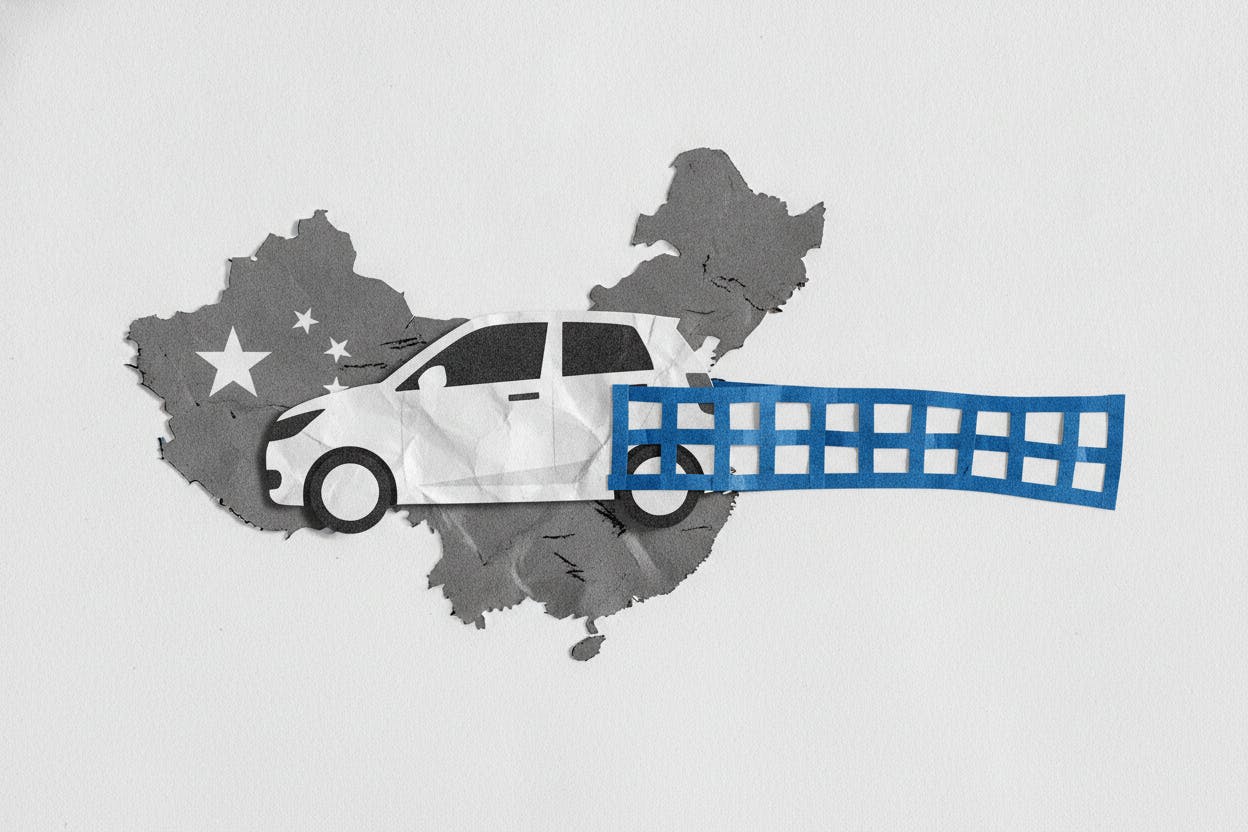
China's car market is stuck in a deep rut. Domestic passenger vehicle sales fell for the ninth straight month in June, dropping 23.4% from a year earlier to 1.62 million units, according to data from the China Passenger Car Association (CPCA) cited by Reuters. The prolonged slump reflects squeezed household spending and reduced government subsidies, hitting the cheapest end of the market hardest.
Domestic Weakness Deepens
The China Association of Automobile Manufacturers (CAAM) reported that sales of gasoline cars priced under 80,000 yuan (about $11,000) fell 34% in the first five months of the year. Electrified models in that same budget bracket saw an even steeper decline of 43%. With subsidies scaled back, many price-sensitive buyers are simply staying out of the market.
Meanwhile, the premium segment is gaining ground. Wang Xianbin, vice president of Gasgoo Research Institute, noted that drivers are upgrading older cars to new models with pricier features. That shift has helped younger Chinese brands like Nio gain traction, while challenging some traditional German marques that once dominated the luxury space.
First-half domestic sales overall fell 20.4% to 8.8 million vehicles, underscoring the depth of the downturn. The weakness has been broad-based, affecting both local brands and foreign joint ventures that manufacture in China.
Exports Provide a Pressure Valve
With the home market struggling, China's automakers are increasingly looking abroad. CPCA data showed June exports rose to 882,000 vehicles, a jump of 82.1% from a year earlier. For the first half of the year, exports climbed 70.6% to 4.28 million vehicles, even as domestic sales slumped.
That export surge is being driven by both Chinese brands and foreign joint ventures chasing demand in Europe, Southeast Asia, Latin America, and the Middle East. BYD, the country's largest electric vehicle maker, is among those leaning heavily on overseas growth to offset softer sales at home. Reuters recently reported that BYD is close to choosing a location for a second European plant, a move that echoes Japan's auto industry strategy from the 1980s.
What It Means for Investors
An 82.1% jump in exports sounds like a quick fix, but it can pull carmakers into a new kind of risk: destination-market politics. When growth depends on shipping more vehicles into Europe and elsewhere, the bottleneck can become market access rather than factory capacity. That raises the odds of trade remedies like tariffs, quotas, or local-content rules.
One common response is to shift from exporting finished cars to building them locally. That can preserve sales while lowering the political heat around imports. BYD's potential second European plant fits that pattern, and it's similar to how Japan's auto boom ultimately translated into more overseas production, not endlessly rising export volumes.
For investors, the key question is whether Chinese automakers can navigate these trade tensions while maintaining profitability. The domestic market remains weak, and the export surge may not be sustainable if trade barriers rise. Companies with strong local production plans in key markets may be better positioned than those relying solely on exports.
Broader market conditions also matter. China stocks have been under pressure from geopolitical tensions and inflation concerns, while the yuan recently slipped to a one-week low as the central bank signaled a tougher stance on currency defense. A weaker yuan can make exports cheaper, but it also raises import costs and can fuel capital outflows.
Meanwhile, Asian stocks have been volatile amid doubts about the AI trade, adding to the uncertain backdrop for Chinese automakers. Investors should watch for further trade policy developments and company-specific plans for overseas production.
The Bottom Line
China's auto industry is at a crossroads. Domestic demand shows no signs of a quick recovery, and the export boom brings its own set of risks. For everyday investors, the takeaway is that Chinese automakers are becoming more global, but that transition comes with political and operational challenges. Companies that can successfully build local production capacity in key markets may have a smoother path ahead than those relying solely on exports.