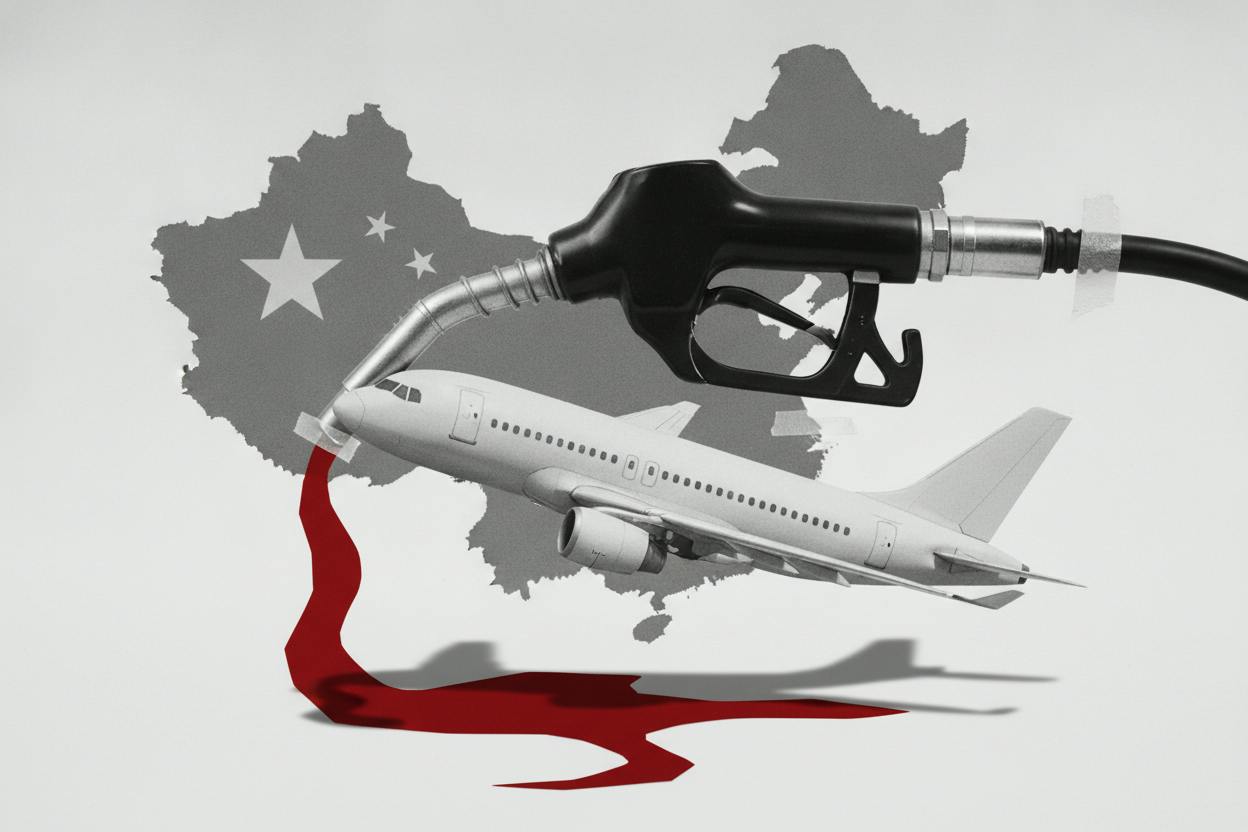
China's three largest state-owned airlines—Air China, China Eastern, and China Southern—have reported a sharp deterioration in their third-quarter results, the period that typically generates the bulk of their annual profits. The weak showing puts the carriers back on track for full-year losses, reversing the recovery they had been enjoying as travel demand rebounded after the pandemic.
According to Reuters, the peak summer quarter was hit by higher jet fuel prices, weak domestic ticket prices, and disruptions from typhoons. Air China's net profit plunged 92.6% year on year to 270.6 million yuan (about $40.6 million). China Eastern's profit fell 98.2% to 64 million yuan, while China Southern swung to a loss of 609 million yuan, compared with a profit of 3.84 billion yuan a year earlier.
What's behind the slump?
The airlines are facing a combination of pressures that have squeezed their margins. Jet fuel is one of the largest cost items for any carrier, and rising oil prices have directly eaten into profitability. At the same time, domestic airfares in China have been weak, reflecting intense competition and a cautious consumer. Chinese travelers, like many around the world, have become more price-sensitive, and airlines have struggled to raise ticket prices even during the busy summer travel season.
Typhoons also disrupted flight schedules, causing cancellations and delays that added to operational costs and reduced revenue. These weather events are a recurring risk for airlines operating in the region, but their impact this year was particularly severe during the peak travel period.
The broader economic backdrop in China has been subdued, with consumer confidence still fragile. China's official PMIs slipped back into contraction in October, signaling that the manufacturing sector is struggling, which often correlates with weaker business travel demand. While domestic leisure travel has recovered, the mix of passengers and the pricing power of airlines remain under pressure.
Fuel exposure is a key risk
One of the biggest issues for the big three is their exposure to fuel costs. Unlike some global carriers that hedge fuel prices, Chinese airlines have limited hedging, leaving them more vulnerable to swings in oil prices. When jet fuel prices rise, their costs rise almost immediately, and they have little ability to pass those costs on to passengers in a competitive market.
This is a structural challenge that has weighed on Chinese airlines for years. Even in good times, their profit margins are thin compared with international peers. The recent quarter highlights how quickly those margins can evaporate when costs rise and revenue softens.
What it means for investors
For investors, the results are a reminder that airline stocks are highly cyclical and sensitive to factors beyond their control—fuel prices, weather, and the broader economy. The big three are also heavily indebted, having taken on significant debt during the pandemic to stay afloat. That leverage amplifies the impact of any downturn in earnings.
Analysts polled by LSEG suggest the red ink could continue, with forecasts pointing to further losses in the coming quarters. The carriers are likely to face continued pressure from fuel costs and fare competition, and any recovery will depend on a stronger economy and a pickup in both business and leisure travel.
For everyday investors, the key takeaway is that airline stocks are not for the faint-hearted. They can offer sharp rebounds when conditions improve, but they can also deliver steep losses when they don't. The current environment—high fuel, weak pricing, and economic uncertainty—is a challenging one for the sector.
Investors should also watch for any signs of consolidation or government support. China's airlines are state-controlled, and Beijing has stepped in before to provide financial assistance. However, such support is not guaranteed and may come with conditions that dilute existing shareholders.
In the meantime, the big three are likely to focus on cost control and route optimization. They may also benefit from any easing in fuel prices or a stronger-than-expected recovery in travel demand. But as the third-quarter numbers show, the path back to sustained profitability is far from smooth.
For more context on the broader Chinese economy, see our coverage of factory activity slipping back into contraction and the big four banks' profit growth, which together paint a mixed picture of the country's recovery.