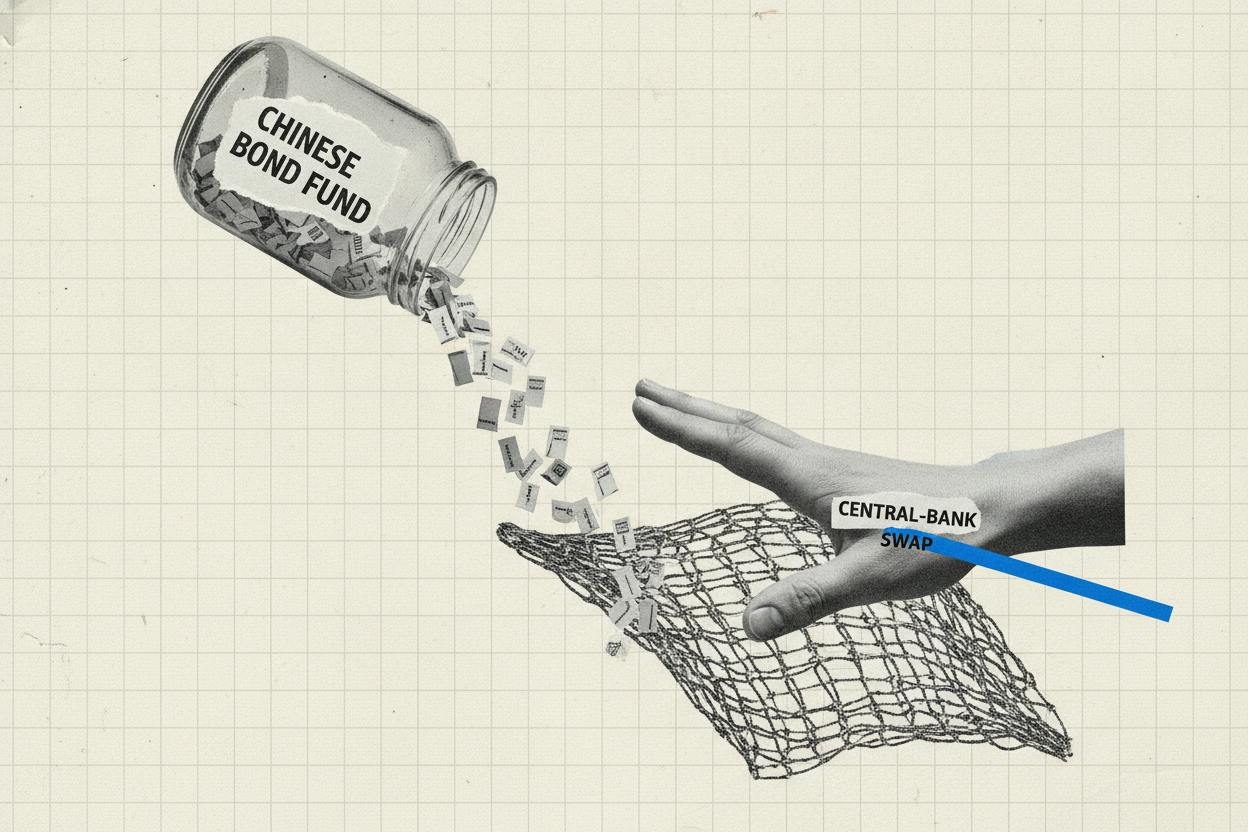
China's central bank has moved to shore up the country's bond market with a new emergency lending tool aimed at preventing a wave of investor redemptions from spiraling into a broader market crisis. The People's Bank of China (PBOC) announced on Monday that it will establish a swap facility for systemically important wealth managers and mutual funds, as well as their parent companies.
The facility is designed to act as a backstop. When large-scale redemptions threaten market stability, eligible firms can borrow central bank bills, use them as collateral to raise cash in the repurchase agreement (repo) market—essentially a short-term, collateral-backed loan—and then use that cash to meet investor withdrawals. This allows fund managers to avoid selling bonds into a falling market, which could exacerbate price declines and trigger further redemptions.
How the swap facility works
In a typical repo transaction, one party sells a security to another with an agreement to buy it back later at a slightly higher price. The difference represents the interest paid for the short-term funding. By providing central bank bills as collateral, the PBOC is giving eligible institutions a high-quality asset that is widely accepted in the repo market, making it easier for them to secure cash quickly.
The move is part of a broader toolkit that central banks use to support financial stability. Similar facilities exist in other major economies, where central banks lend government bonds or other high-grade securities to banks and primary dealers in exchange for less liquid collateral. The goal is to keep credit flowing and prevent forced selling during periods of stress.
For China, the timing is notable. Bond markets have been under pressure as investors have pulled money from some funds, and there are concerns about the broader economic outlook. The PBOC's action signals that policymakers are watching the situation closely and are willing to step in to prevent a disorderly sell-off.
What it means for investors
For everyday investors, the facility is a reassurance that the authorities are trying to prevent a repeat of past episodes where bond fund redemptions led to sharp price drops and contagion. By giving fund managers an alternative to dumping bonds, the PBOC aims to reduce the risk of a self-reinforcing cycle of falling prices and more redemptions.
However, the facility is not a guarantee that bond funds will never lose money. It is a liquidity tool, not a bailout. Fund managers still have to manage their portfolios prudently, and investors should remember that bond funds can decline in value, especially when interest rates rise or credit conditions deteriorate.
The announcement comes amid a busy week for Asian markets, with several central bank decisions and economic data releases on the calendar. Investors are also watching Beijing's party meeting and other events that could influence market sentiment. The PBOC's move adds to the backdrop of policy support for the Chinese economy, which has been facing headwinds from property sector troubles and weak consumer confidence.
Broader context
China's bond market is one of the largest in the world, and its stability matters not just for domestic investors but for global markets. The PBOC has been gradually opening up its bond market to foreign investors, and any signs of stress could affect capital flows. The new facility is a sign that the central bank is proactive in managing risks.
For investors with exposure to Chinese bonds or funds that invest in them, the key takeaway is that the authorities are taking steps to cushion the impact of redemptions. But it's also a reminder that bond investing carries risks, and diversification remains important.
As the week unfolds, market participants will be watching how the facility is used and whether it succeeds in calming nerves. The PBOC's action is a clear signal that it stands ready to act if needed, but the ultimate test will be whether investor confidence is restored.