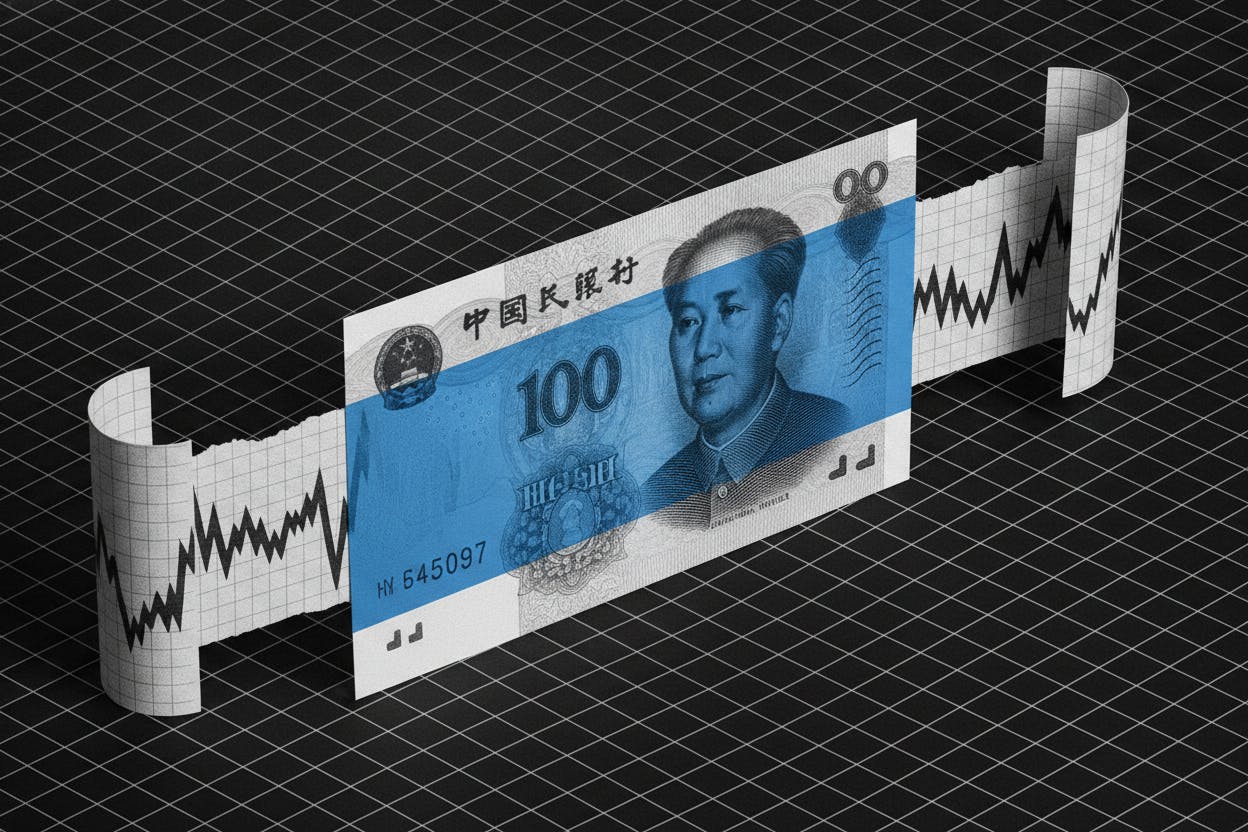
The Chinese yuan edged higher on Tuesday after the People's Bank of China (PBOC) set a firmer daily reference rate, signaling its intent to keep the currency stable. The move comes as investors turn their attention to a high-level political meeting later this month that could reveal the next steps in Beijing's economic support strategy.
What Happened
Each morning, the PBOC sets a "fix" — the official midpoint for the yuan against the US dollar — and then allows the onshore yuan to trade within a 2% band around that level. On Tuesday, the central bank set the fix at 6.7917 per dollar, 31 "pips" (a pip is a tiny price increment in foreign exchange trading) stronger than the previous day's 6.7948. The yuan responded by trading firmer near 6.766 in both onshore and offshore markets.
This slight tightening of the fix suggests the PBOC is comfortable with the yuan's current level and wants to prevent excessive depreciation, which could fuel capital outflows or import inflation. The move comes amid a broader backdrop of a strong US dollar, which has been pressuring many emerging market currencies. For context, the dollar has been holding near weekly highs recently, driven by oil volatility and lingering rate fears, as covered in our earlier report.
Why It Matters
The yuan's movement is closely watched by global investors because China is the world's second-largest economy and a major trading partner for many countries. A stable yuan helps keep Chinese exports competitive and reduces uncertainty for companies doing business with China. Conversely, a sharp depreciation could spark competitive devaluations elsewhere and unsettle financial markets.
The PBOC has a range of tools to manage the yuan, including the daily fix, direct market intervention, and adjustments to reserve requirements for foreign exchange. By setting a firmer fix, the central bank is sending a clear signal that it wants to maintain orderly trading conditions.
What Investors Are Watching Next
The next big catalyst for the yuan and broader Chinese markets is the late-July Politburo meeting. The Politburo is a top decision-making body of the Communist Party, and its meetings often set the economic policy agenda. Investors will be looking for signs of additional stimulus measures, such as infrastructure spending, tax cuts, or monetary easing, to support a recovery that has been uneven after the end of COVID-19 lockdowns.
Any hints of stronger support could boost risk appetite and further support the yuan. On the other hand, if the meeting disappoints, the yuan could come under renewed pressure. The outcome will also have implications for other assets, such as Chinese steel and iron ore markets, which have seen complex dynamics recently, as noted in our analysis of China's steel output and iron ore imports.
What It Means for Everyday Investors
For ordinary investors, the yuan's movements matter in a few ways. If you hold Chinese stocks or bonds, a stronger yuan can boost the value of your holdings when converted back to dollars or other currencies. It also affects companies that export to China or compete with Chinese goods. A stable yuan reduces uncertainty for global supply chains.
However, currency markets are complex and influenced by many factors, including interest rate differentials, trade flows, and geopolitical tensions. The PBOC's actions are just one piece of the puzzle. Investors should also keep an eye on the US dollar's broader trend, as a strong dollar tends to weigh on emerging market currencies. For more on that, see our piece on how Middle East tensions are boosting the dollar.
In the near term, the yuan is likely to remain range-bound as markets wait for the Politburo meeting. Any surprises in policy direction could trigger a more significant move. As always, diversification and a long-term perspective are key to navigating currency fluctuations.



