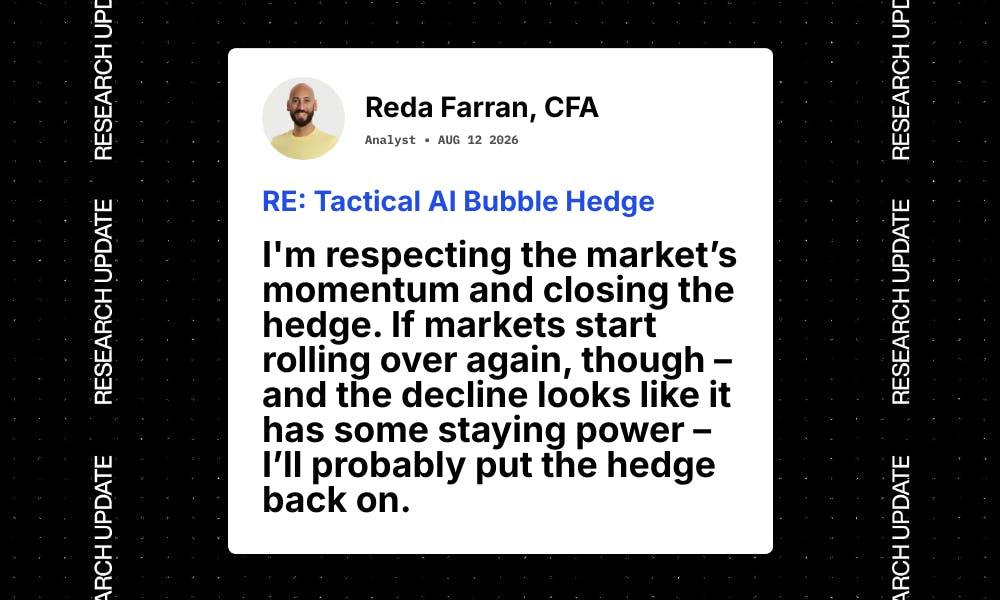
About a month ago, with markets showing signs of strain, a defensive trade was put in place to cushion against a deeper selloff. The hedge worked as intended—for a while. Now, with conditions shifting, the decision has been made to close it. That doesn't mean the trade was a mistake. In fact, it underscores a key lesson for everyday investors: knowing when to exit a hedge is just as important as knowing when to set one up.
The hedge and its brief success
The original setup was based on five specific worries about the market's direction. These concerns were detailed in a follow-up analysis a week later, laying out the risks in greater depth. The hedge was designed to soften the blow if those risks materialized into a broader selloff.
For a period, it did exactly that. Markets dropped in the second half of July, and the hedge's value climbed more than 20% at its peak. That kind of performance is precisely what a hedge is meant to deliver: a counterweight to losses elsewhere in a portfolio.
But markets are dynamic. The conditions that made the hedge valuable began to change. A major AI-focused hedge fund was revealed to be a forced seller of stocks—a sign of distress that could have amplified selling pressure. However, before that situation could escalate, another fund stepped in to provide a bailout, stabilizing the situation.
Why closing a hedge can be the right move
Hedges are not meant to be permanent. They are insurance policies with a cost, and holding them too long can drag on returns once the original threat fades. In this case, the forced seller was rescued, removing a key source of downward pressure. With that risk diminished, the rationale for maintaining the hedge weakens.
Closing a hedge that has gained value locks in those gains, which can offset losses taken elsewhere. It also frees up capital that can be redeployed. For everyday investors, the takeaway is that a hedge is a tactical tool, not a long-term strategy. It should be reviewed regularly and adjusted as market conditions evolve.
What this means for your portfolio
For most investors, the practical lesson is about discipline. It's easy to become attached to a winning trade, but the goal of a hedge is not to make money—it's to protect against losses. Once the threat passes, the hedge has served its purpose.
This episode also highlights the importance of monitoring the broader market for signs of stress. The fact that a major fund was forced to sell, and then needed a bailout, is a reminder that leverage and forced selling can amplify market moves. While the immediate crisis was averted, such events can leave lasting scars on market confidence.
Investors should also consider the cost of hedging. Options and other hedging instruments have premiums that can eat into returns over time. If the market continues to recover, holding a hedge could mean missing out on gains. That's why many professionals treat hedges as temporary measures, to be unwound when the original thesis no longer holds.
Looking ahead
The decision to close this hedge doesn't signal a new bullish stance. It simply reflects that the specific risks identified a month ago have largely been addressed. The AI fund's bailout removed a major overhang, and markets have stabilized since the July dip.
That said, investors should remain vigilant. Market conditions can change quickly, and new risks can emerge. The same discipline that led to setting up the hedge should now guide the search for any new threats on the horizon.
For those who don't use formal hedges, the broader lesson is about risk management. Diversification, maintaining an emergency fund, and avoiding over-leverage are all ways to protect against market downturns. And when you do take protective action, remember that the exit is as important as the entry.
As always, this is not a recommendation to buy or sell any specific investment. It's a reminder that successful investing is about making thoughtful, informed decisions—and knowing when to change course.