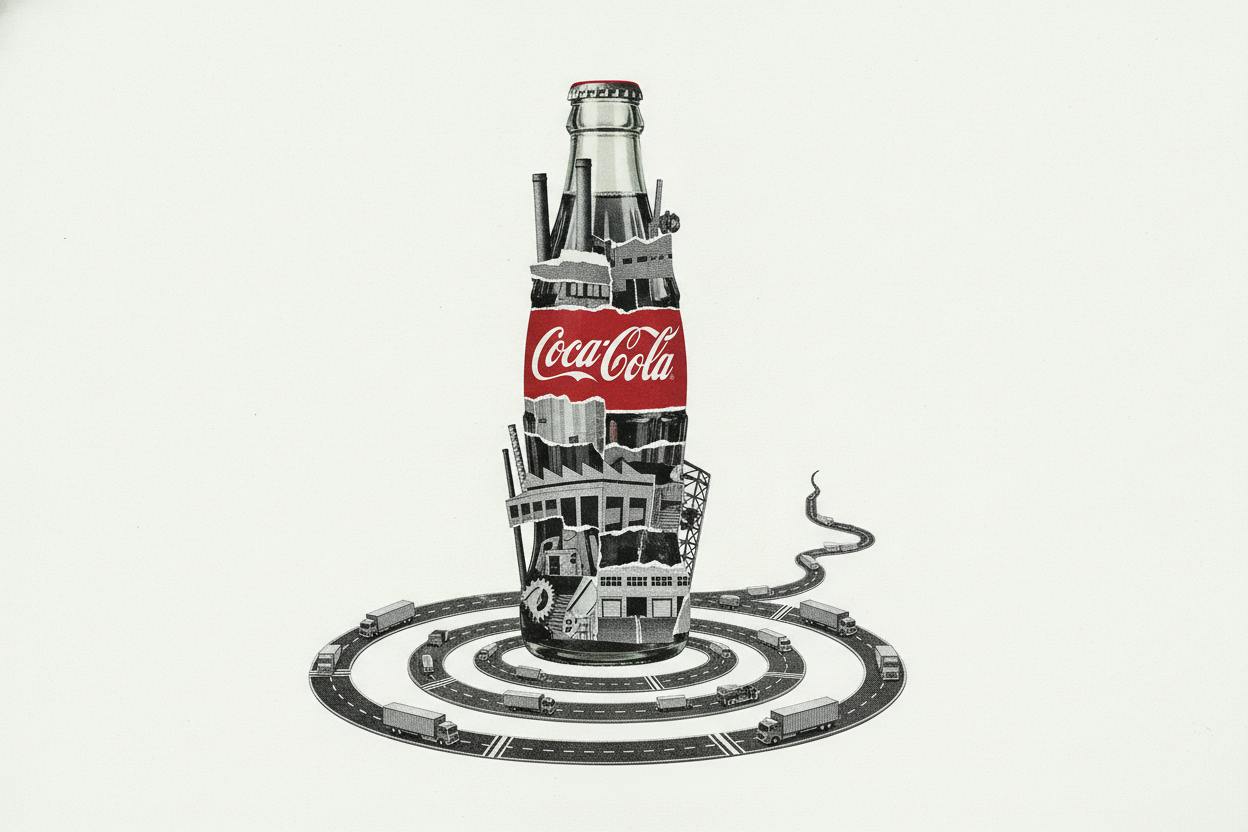
Coca-Cola has announced a $10 billion investment in US infrastructure, with projects slated to run from 2026 through 2030. The spending will cover the company's own operations as well as its network of independent bottling partners, which manufacture and distribute Coke products across the country.
The announcement, made public this week, signals a significant long-term commitment to upgrading the physical backbone of Coca-Cola's American business. But the headline number comes with an important caveat: the investment is "system-wide," meaning a substantial portion will be funded by bottlers rather than by Coca-Cola itself.
What the investment covers
According to CFO John Murphy, who spoke to Fortune, the $10 billion figure represents the collective spending of the entire US system. That includes Coca-Cola's own facilities as well as those of its bottling partners, which are independently owned and operated. The money is earmarked for upgrading factories, warehouses, trucks, and packaging lines—the kind of capital-intensive assets that keep soda moving from plant to shelf.
For context, Coca-Cola's bottling partners are a crucial part of its business model. Rather than owning every step of production and distribution, the company licenses its brands to bottlers that handle manufacturing and local delivery. This structure means that when Coca-Cola talks about system-wide investment, it's not just writing one giant check. Instead, the spending is spread across a network of companies, each responsible for its own portion.
This isn't the first time Coca-Cola has leaned on its bottling partners for major capital projects. The company has long used this model to expand capacity and modernize operations without bearing the full financial burden itself. By coordinating with bottlers, Coca-Cola can ensure that its products are made and delivered efficiently, while sharing the costs and risks.
Why infrastructure spending matters
For a consumer goods giant like Coca-Cola, infrastructure isn't just about buildings and equipment—it's about staying competitive. Upgraded factories can produce more with less waste, newer trucks can cut fuel costs, and modern packaging lines can adapt to changing consumer preferences, such as the shift toward smaller cans and bottles.
The investment also comes at a time when many companies are reassessing their supply chains. After years of disruptions, from pandemic-era shortages to geopolitical tensions, businesses are increasingly looking to strengthen their domestic operations. Coca-Cola's commitment to US infrastructure fits that broader trend, though the company hasn't specified exactly which projects will be funded or how the money will be allocated across different states.
It's worth noting that the $10 billion figure is a commitment, not a guarantee. The actual spending will depend on how plans evolve over the next several years. Economic conditions, demand for Coca-Cola's products, and the financial health of its bottling partners could all influence whether the full amount is ultimately invested.
What it means for investors
For everyday investors, this announcement is a signal about Coca-Cola's long-term strategy rather than an immediate catalyst. The spending is planned to begin in 2026, so it won't show up in the company's financial results for a while. But it does offer some insight into how management views the future.
Investing in infrastructure typically suggests that a company expects demand to remain solid. Coca-Cola's decision to commit billions to its US system implies confidence in its ability to sell more drinks in the years ahead. It also indicates that the company is prioritizing operational efficiency, which could help protect profit margins over time.
However, investors should be aware that system-wide spending means the financial impact will be spread across multiple entities. Coca-Cola's own capital expenditures may rise, but so will those of its bottling partners, which are often publicly traded or privately held. For shareholders of Coca-Cola, the key metric to watch is whether the company can generate a return on this investment—through higher sales, lower costs, or both.
There's also a potential risk: if the economy slows or consumer tastes shift away from sugary drinks, the planned infrastructure spending could become a burden. Companies in this position often have to scale back or delay projects, which can hurt investor confidence.
For now, the announcement is a positive sign for Coca-Cola's commitment to its home market. It's a reminder that even the biggest consumer brands need to keep investing in the basics—factories, trucks, and warehouses—to stay ahead. As the projects unfold over the next five years, investors will be watching to see whether the spending translates into tangible results.