Copper's recent rally hit a pause on Wednesday, with benchmark three-month prices on the London Metal Exchange (LME) slipping to $14,133 a ton. The dip came as traders took profits after a strong run, even as signs of tightening supply persist.
The pullback was part of a broader easing in industrial metals, with aluminum also giving back some gains. Investors are weighing a cloudy global growth outlook against a backdrop of constrained supply, according to Reuters.
What's behind the price dip?
The day-to-day move is largely about positioning. After a sustained rally, some traders chose to lock in profits, a common pattern in commodity markets. The question now is whether this is a temporary breather or the start of a deeper correction.
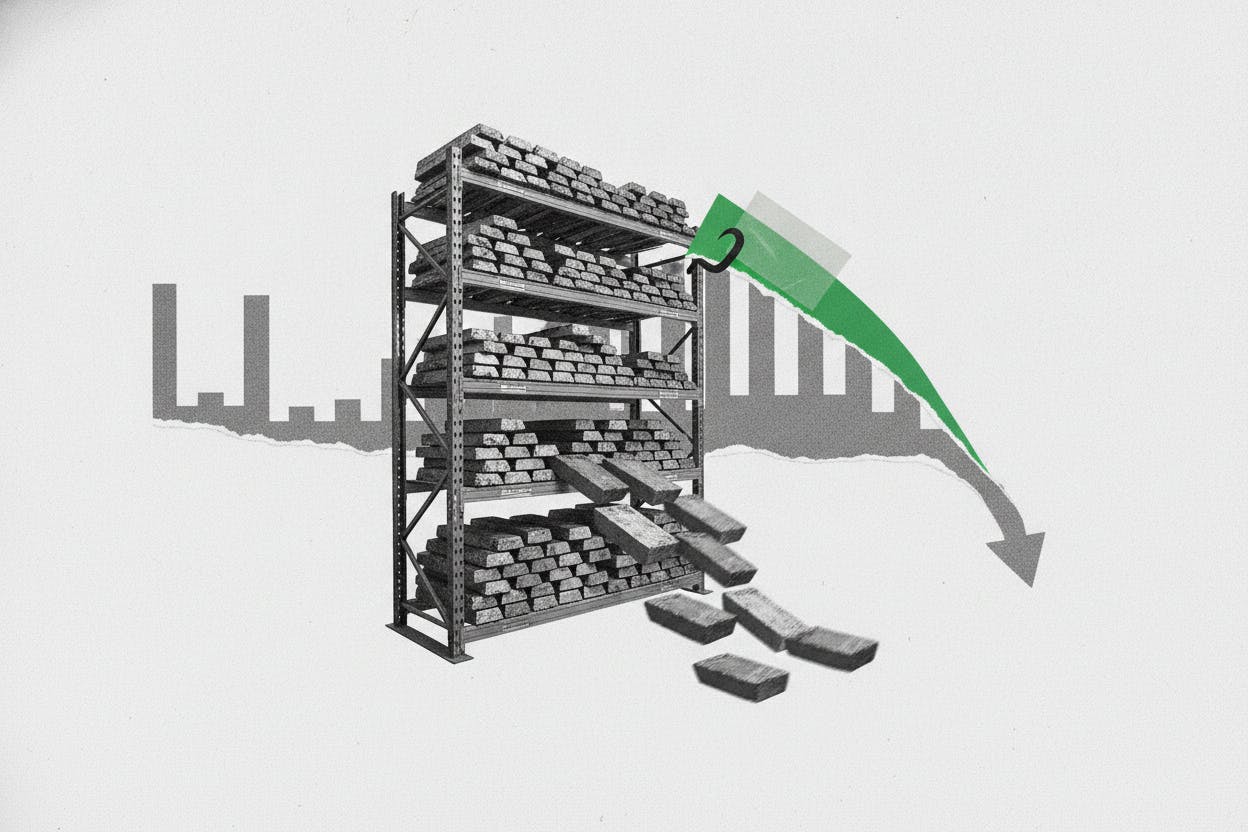
But beneath the surface, the market is sending a clear signal about near-term supply. LME copper inventories have fallen to 204,975 tons, down 48% since late May. That is a sharp drawdown, indicating that metal is being pulled out of warehouses faster than it is being replenished.
Even more telling is the structure of the futures curve. The "cash" contract, which covers immediate delivery, is trading at a premium of $256.50 a ton over the three-month contract. That is the strongest backwardation—the term for when near-term prices exceed longer-dated ones—since June 2025. In plain terms, buyers are willing to pay a hefty premium to get copper right now, a classic sign of scarcity.
Why copper matters
Copper is often called "Dr. Copper" because its price movements have historically been a reliable indicator of global economic health. The metal is used in everything from construction and power grids to electric vehicles and electronics. When demand is strong, prices tend to rise; when the economy slows, they fall.
This time, the supply side is doing a lot of the heavy lifting. Mine disruptions, lower ore grades, and a lack of new large-scale projects have kept supply tight. At the same time, demand from the energy transition—think wind turbines, solar panels, and EV charging networks—continues to grow, adding a structural tailwind.
However, the demand outlook is not without risks. A slowdown in China, the world's largest copper consumer, or a broader global recession could quickly change the picture. That is why traders are watching economic data closely, as well as any signs of policy shifts from major central banks.
What it means for investors
For everyday investors, copper's moves matter in a few ways. First, they can affect the earnings of mining companies, which are often listed on stock exchanges. A sustained rise in copper prices can boost profits for miners, while a sharp drop can hurt them. For example, Antofagasta recently beat profit forecasts but trimmed its 2026 output outlook, highlighting the delicate balance between prices and production.
Second, copper prices can influence inflation and interest rates. Higher commodity prices can feed into broader inflation, which may prompt central banks to keep rates higher for longer. That has knock-on effects for bond yields and stock valuations.
Third, for those with exposure to copper through exchange-traded funds (ETFs) or mutual funds, the current tightness could support prices in the near term. But it is worth remembering that commodity markets are volatile, and profit-taking can happen at any time.
Investors should also keep an eye on the broader market context. S&P 500 futures paused after a record close as oil prices weighed, showing that risk sentiment is fragile. Similarly, copper's weekly winning streak has faded as demand doubts resurface, a reminder that rallies can stall.
What to watch next
The key question is whether the cash premium and falling inventories will eventually force prices higher again, or whether demand concerns will dominate. Traders will be watching weekly LME stock data, as well as any news on mine supply or Chinese demand.
For now, the pause looks like a natural consolidation after a strong run. But the underlying tightness suggests that any significant dip could attract buyers looking for bargains. As always, investors should focus on their own time horizon and risk tolerance, rather than trying to time short-term moves.
In the meantime, the broader metals complex remains in focus, with corn futures also slipping on profit-taking, showing that the pattern is not unique to copper. The lesson for investors is that rallies often pause, but the fundamentals—like supply and demand—ultimately drive long-term trends.