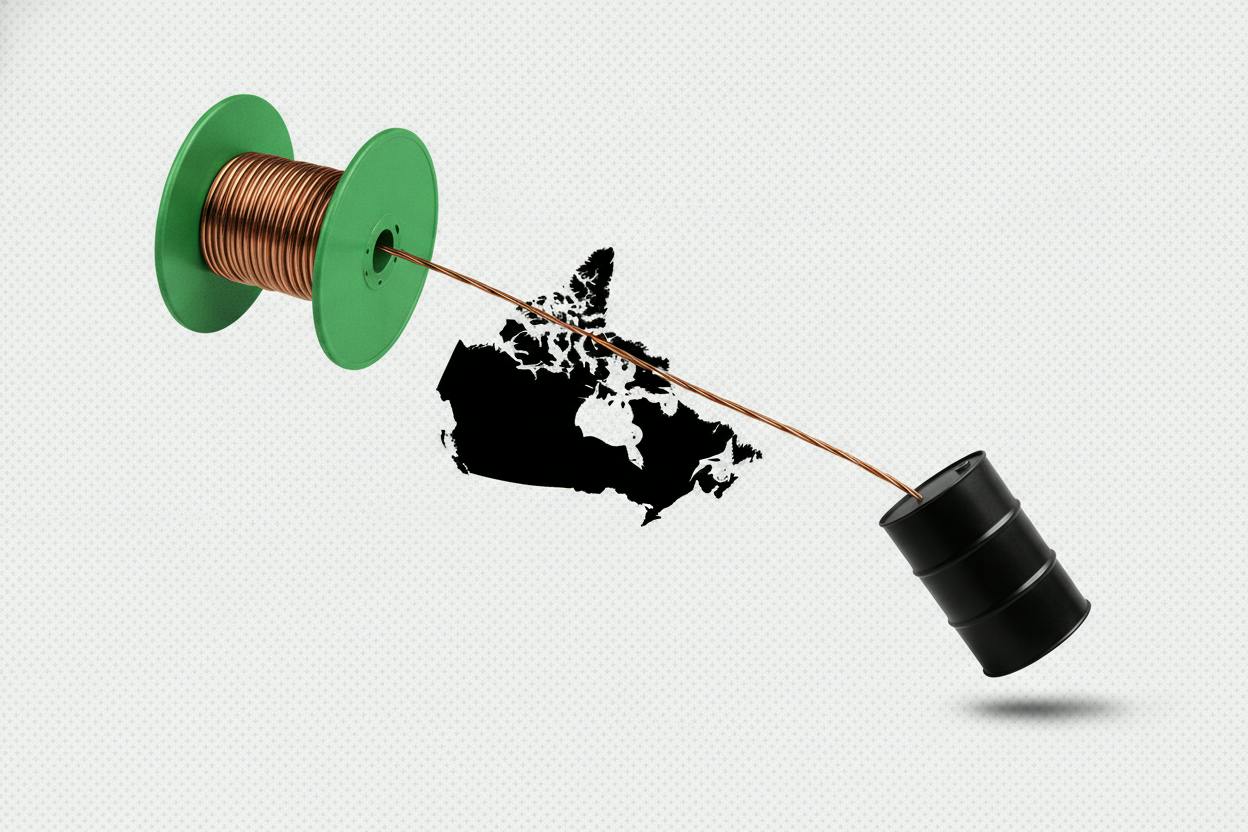
Canada's S&P/TSX Composite Index edged higher in Tuesday morning trading, but the move masked a sharp split beneath the surface. Base metals stocks climbed 2.3% as December copper futures rose 1%, while energy shares fell 1% on softer oil prices. The tug-of-war between commodity-heavy sectors left the headline index nearly flat, a pattern that has become familiar to Canadian investors.
Commodities drive the day
The materials sector got a double boost: copper's gain was joined by a 0.3% rise in gold prices, giving miners and precious metals producers a lift. Copper, often seen as a barometer for global industrial demand, has been firming recently on hopes of stronger demand from China and the artificial-intelligence buildout. Copper's recent strength has been a recurring theme in global markets.
On the other side, energy stocks lagged as oil prices slipped. The TSX's heavy weighting in both materials and energy means that a day like Tuesday can look calm at the index level even when individual sectors are moving sharply. For everyday investors, the key takeaway is that the index's direction often depends on which commodity-linked group is leading, rather than a broad "Canada stocks up" story.
Operating leverage: why small price moves matter
The outsized moves in mining and energy stocks relative to the underlying commodities reflect a concept called operating leverage. Many miners and oil producers have costs that are largely fixed in the short run—equipment, labor, and infrastructure don't change much from month to month. So when the selling price of their output rises, a small percentage gain can translate into a much larger jump in expected profits. Conversely, a small drop in prices can hit earnings disproportionately.
That's why a 1% rise in copper can push base metals stocks up 2.3%, and why a 1% drop in oil can drag energy shares down by a similar or larger amount. Investors who own TSX-listed funds or individual stocks in these sectors should be aware that volatility in commodity prices often amplifies in share prices.
BCE sells tower stake to La Caisse
Outside commodities, company-specific news was mixed. BCE, Canada's largest telecom company, said its Bell Canada unit will sell a 49.9% stake in its wireless tower business to La Caisse, a major Canadian pension manager, for CA$2.45 billion. The deal, reported earlier, is part of a broader trend among telecoms to monetize infrastructure assets. By selling a minority stake, BCE raises cash while retaining control of the towers, which are critical to its wireless network.
Telecom stocks as a group lagged on the day, possibly reflecting concerns about competition or the financial impact of the transaction. For BCE shareholders, the deal provides a cash infusion that could be used to pay down debt, fund dividends, or invest in network upgrades. For La Caisse, it's a long-term infrastructure investment with steady, predictable cash flows.
Celestica pops on earnings beat
Celestica, a Canadian electronics manufacturer, saw its shares jump after the company beat quarterly earnings expectations and raised its 2026 revenue and profit outlook. The company, which makes components for data centers and other technology hardware, has benefited from strong demand related to artificial intelligence and cloud computing. The upbeat guidance suggests that the AI-driven spending boom is continuing to support companies in the supply chain.
Celestica's move is a reminder that individual stock stories can still drive meaningful gains, even when the broader index is muted. For investors, it highlights the importance of looking beyond the headline index to find opportunities in specific sectors and companies.
What it means for investors
For those with money in Canadian stocks, Tuesday's session underscores the importance of understanding the index's composition. The TSX is heavily weighted toward financials, energy, and materials, so its daily moves often reflect commodity prices and interest-rate expectations rather than broad economic news. Traders are also watching the Bank of Canada, which is set to make a rate decision soon, and that could influence the financial sector and the overall market.
The BCE deal and Celestica's earnings are examples of how company-specific developments can create pockets of volatility. For everyday investors, the lesson is to diversify across sectors and not to read too much into a single day's index move. The underlying currents—commodity prices, interest rates, and corporate earnings—are what drive long-term returns.
As the trading day progresses, all eyes will be on whether copper can hold its gains and whether oil stabilizes. If commodity prices continue to diverge, the TSX could remain range-bound, with the real action happening beneath the surface.