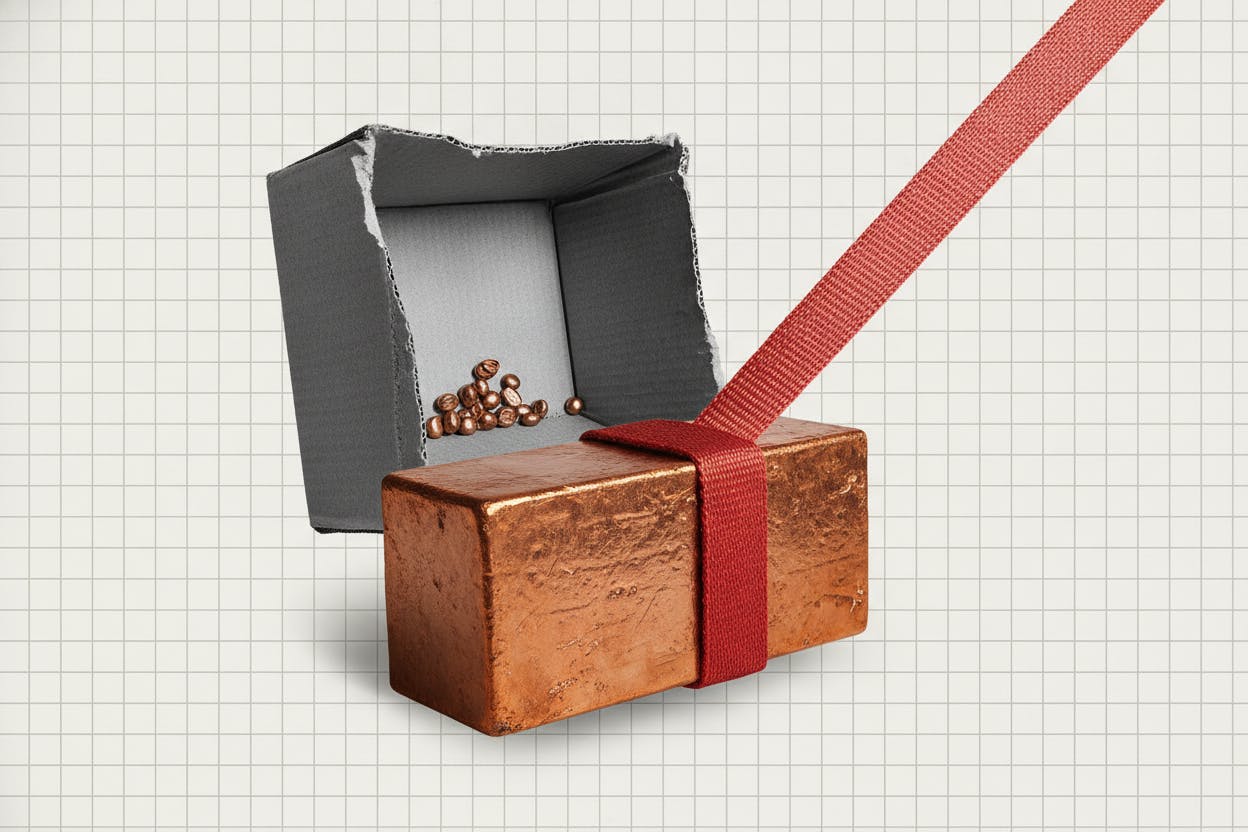
Copper's spot price is pulling away from its futures, and the gap is flashing a clear warning: the market is running short of metal right now. On Tuesday, cash copper on the London Metal Exchange (LME) traded about $200 a metric ton above the three-month futures contract, the widest premium in nearly 10 months. That gap, known as backwardation, is a sign that buyers are willing to pay extra for immediate delivery, often because they need the metal now and can't wait for later shipments.
According to Reuters, the cash-to-three-month spread hit $196 a ton, the steepest since October 13 of last year. The move comes as exchange inventories continue to shrink. LME "available" copper stocks fell to 90,025 tons, which is roughly a bit more than a day's worth of global consumption. On China's Shanghai Futures Exchange, inventories sat just above 70,000 tons, also thin.
Why is copper in short supply?
The squeeze is being driven by a combination of factors. One key trigger is an outage at a smelter linked to the Grasberg mine in Indonesia, which has delayed exports of copper concentrate. Grasberg is one of the world's largest copper mines, and any disruption there can ripple through the global supply chain. The outage means less refined copper is reaching the market at a time when demand is already robust.
At the same time, exchange inventories have been trending lower for weeks. When stocks on visible exchanges like the LME and SHFE fall, it reduces the buffer that normally absorbs sudden demand spikes. With less metal sitting in warehouses, any buyer needing copper promptly has to bid up the spot price, widening the backwardation.
This is not the first time copper has shown signs of tightness. Earlier this year, copper processing fees in China fell to near zero, a sign that smelters were struggling to find enough raw material. That dynamic is still playing out, and the latest backwardation suggests the problem is now moving from the concentrate market to the refined metal market.
What does backwardation mean for investors?
For everyday investors, backwardation is a jargon term, but it has a simple meaning: the market is telling you that copper is scarce right now. When the spot price is higher than futures, it usually indicates that buyers are anxious about getting metal immediately, and that anxiety can push the overall price of copper higher.
Copper is often called "Dr. Copper" because it has a PhD in economics—its price tends to reflect the health of the global economy. It's used in everything from construction and electronics to electric vehicles and renewable energy infrastructure. So when copper tightens, it can signal stronger demand or supply disruptions, both of which matter for inflation and industrial activity.
For investors, the immediate takeaway is that copper prices could stay elevated or even rise further if the supply squeeze persists. That's good news for copper miners and producers, whose profits are directly tied to the metal's price. But it could be a headwind for manufacturers and construction companies that use copper as an input, as higher costs may eat into margins.
It's also worth noting that copper is a cyclical commodity. Prices can swing sharply as supply and demand shift, and backwardation is often a temporary condition. Investors should watch whether the premium continues to widen or starts to narrow, as that will signal whether the squeeze is easing or intensifying.
What to watch next
The key factors to monitor are exchange inventory levels and any news about the Grasberg smelter outage. If inventories keep falling, the backwardation could widen further, putting more upward pressure on prices. If the smelter comes back online and exports resume, the squeeze could quickly reverse.
Investors should also keep an eye on broader economic data. Copper demand is closely tied to industrial production, especially in China, which consumes about half of the world's copper. Any signs of slowing Chinese manufacturing could soften demand and ease the tightness.
In the meantime, the copper market is sending a clear signal: metal is hard to come by right now. For those with exposure to copper through stocks or funds, that's a trend worth watching closely.