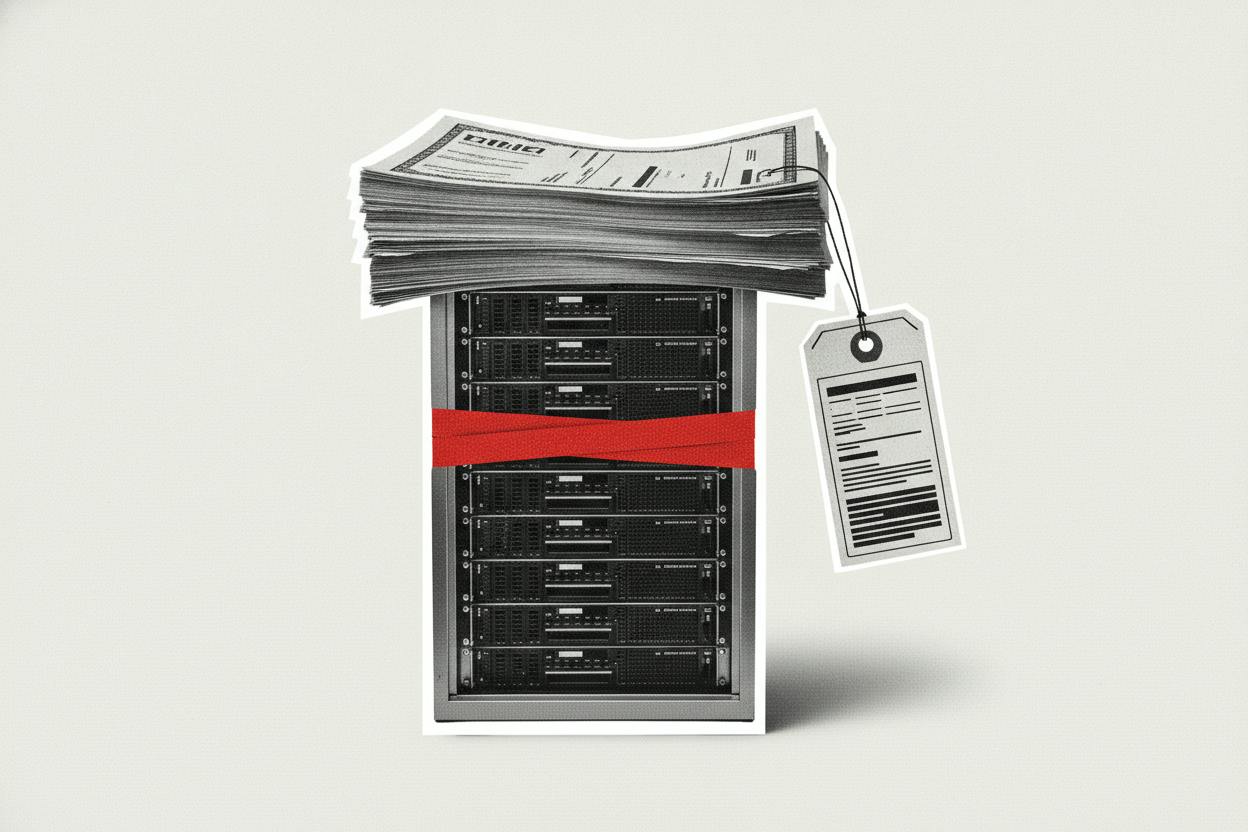
CoreWeave, the Nvidia-backed cloud computing company, reported third-quarter revenue that beat analysts' expectations, but the good news did little to calm investors' concerns about its mounting debt. The company's shares remained under pressure as the market focused on its financing risks, including more than $50 billion in debt and bonds due in 2030 that are yielding around 15.2%.
Revenue growth strong, but debt looms
For the quarter ended September, CoreWeave said revenue reached $3.66 billion, up sharply from $1.37 billion in the same period last year. That figure also came in slightly above the $3.55 billion that analysts had expected, according to Reuters. The company attributed the growth to strong demand for its cloud computing services, which are designed to handle the heavy workloads required by artificial intelligence applications.
However, the market's reaction was muted. Investors are increasingly focused on how CoreWeave plans to manage its debt load, which has ballooned as it builds out a network of data centers. The company's business model is capital-intensive: it must spend heavily on chips, land, and power to construct facilities before it can lease capacity to customers. That means cash outflows come first, and revenue only follows once the data centers are operational and contracted.
Why the debt matters
CoreWeave's debt situation is not unusual for companies in the AI infrastructure space, but the scale is notable. With more than $50 billion in debt, the company is relying on future revenue to service its obligations. The 15.2% yield on its 2030 bonds is a clear signal of the risk investors see: that's a very high yield, reflecting the market's view that there is a meaningful chance of default or financial distress.
For context, a bond yield that high is typically associated with companies that have weak credit profiles or are in sectors with high uncertainty. In CoreWeave's case, the yield suggests that bond investors are demanding a big premium to compensate for the risk that the company might struggle to repay its debts, especially if the AI boom slows or if customer contracts don't materialize as expected.
The company's reliance on Nvidia, both as a major investor and as a key supplier of the chips that power its data centers, adds another layer of complexity. Any disruption in that relationship—such as the reported probes into Nvidia's chip sales—could have ripple effects on CoreWeave's ability to build out its capacity.
What it means for investors
For everyday investors, CoreWeave's situation highlights the risks of investing in companies that are growing fast but carrying heavy debt. The revenue beat is a positive sign, but it doesn't address the fundamental question: can the company generate enough cash to cover its financing costs?
Investors should also consider the broader context. The AI boom has driven huge demand for cloud computing, but it has also led to a surge in capital spending by companies like CoreWeave. That spending is a bet on future demand, and if that demand doesn't grow as quickly as expected, the debt could become a bigger problem.
CoreWeave's high bond yield is a warning sign that the market is already pricing in some risk. For those considering an investment in the company, it's important to weigh the potential upside of AI-driven growth against the very real possibility of financial strain. As always, diversification is key—putting all your money into a single high-risk stock is rarely a wise move.
Looking ahead
Investors will be watching CoreWeave's next steps closely. The company needs to show that it can convert its massive investments into steady, recurring revenue. It also needs to manage its debt, either by refinancing at better terms or by generating enough cash flow to pay it down.
The broader tech sector has been volatile recently, with concerns about inflation and regulatory probes weighing on sentiment. CoreWeave's performance will be seen as a test case for the AI infrastructure business model. If it can succeed, it could reassure investors about the viability of other companies in the space. If it stumbles, it could raise questions about the sustainability of the entire AI buildout.
For now, the market's message is clear: revenue growth is nice, but it doesn't erase the debt. CoreWeave still has a lot to prove.



